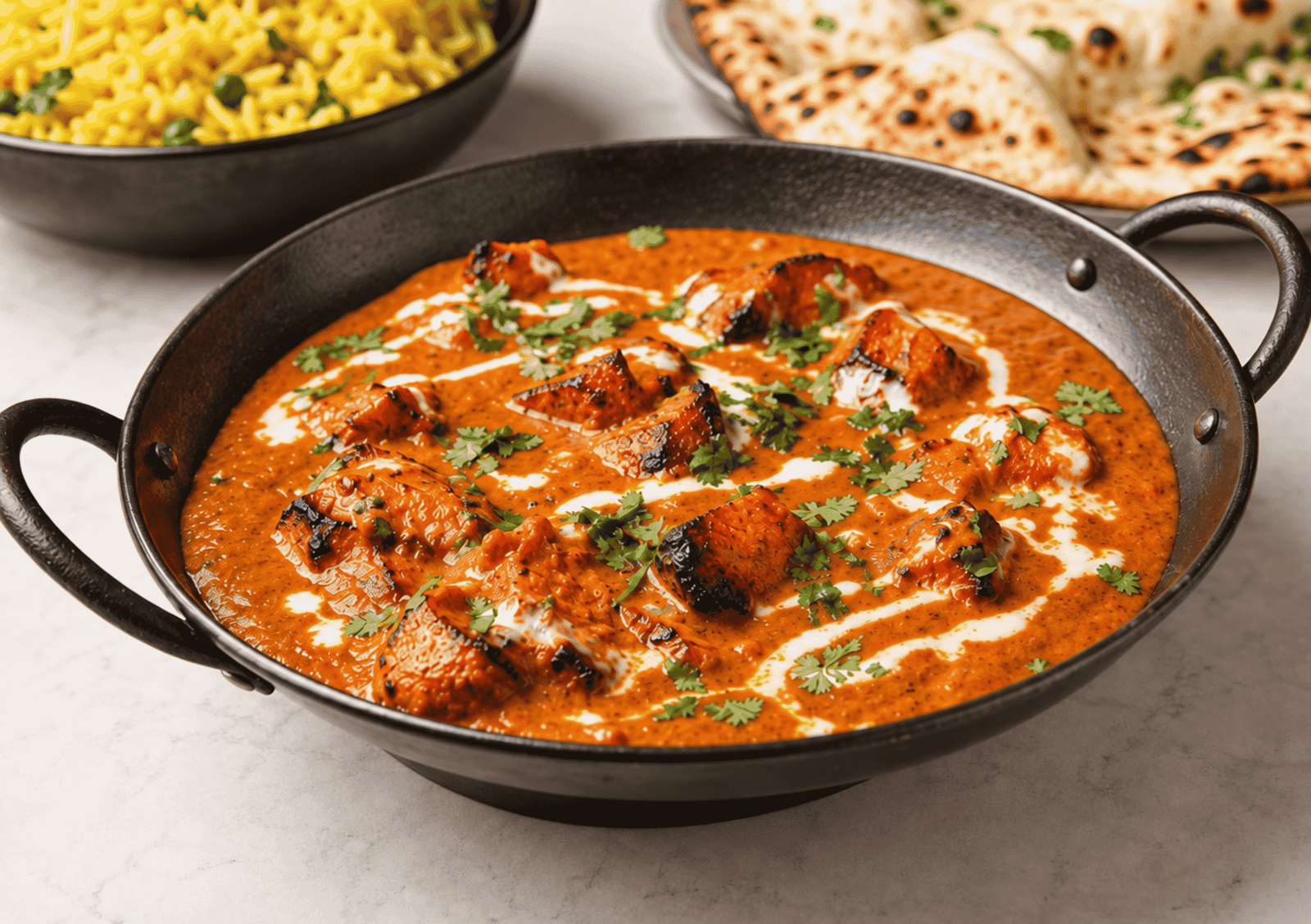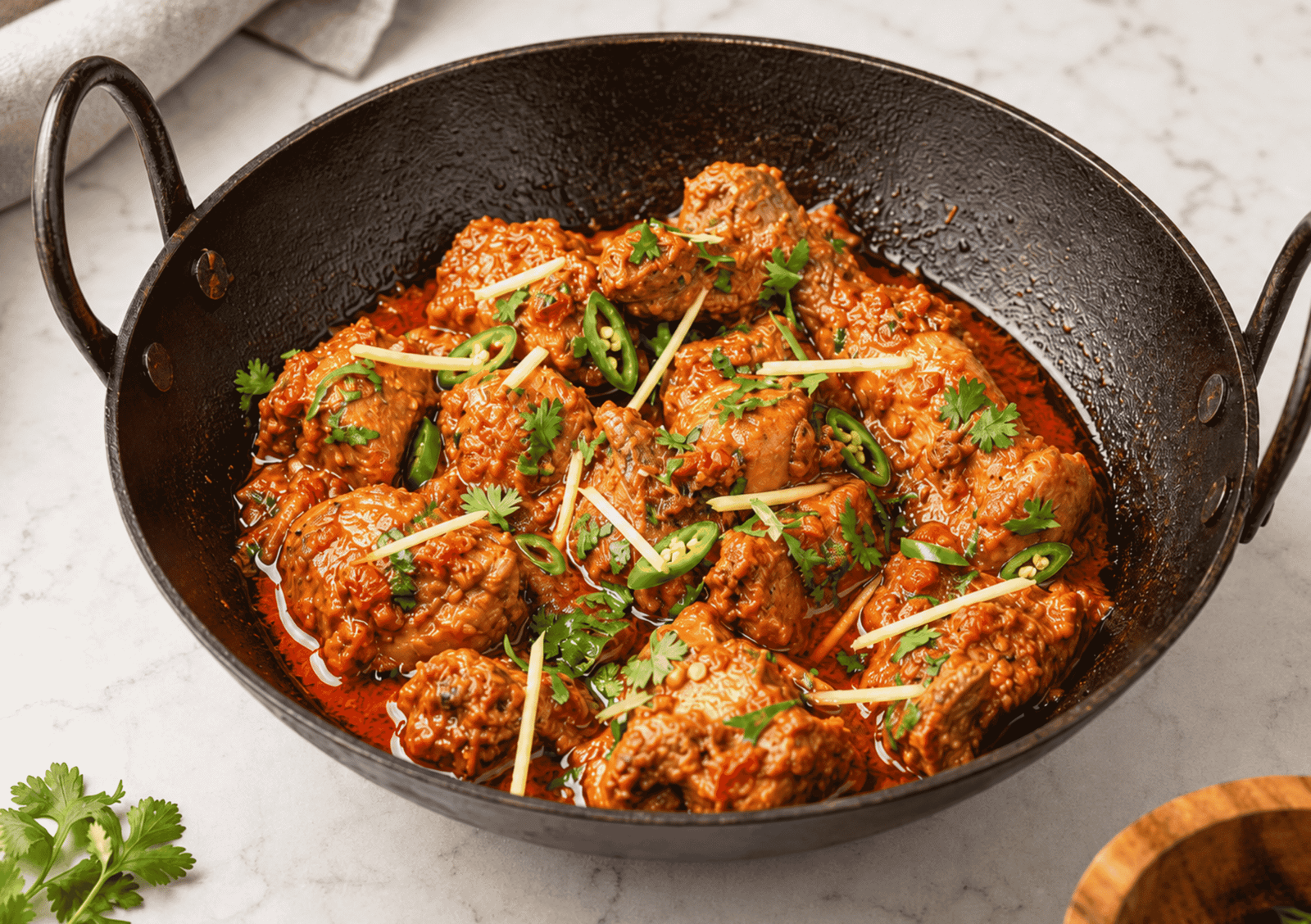
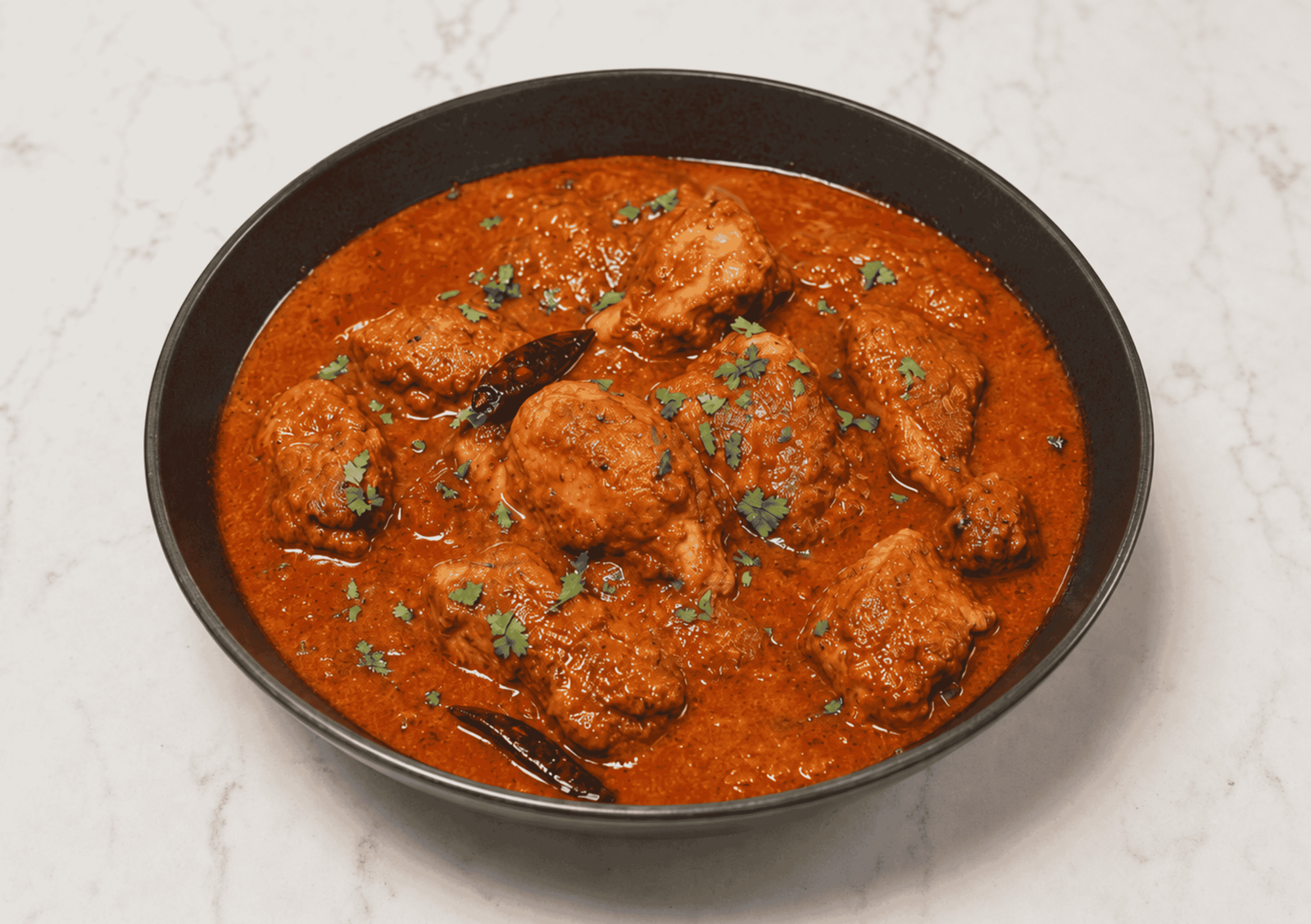
Curry House Chicken Madras
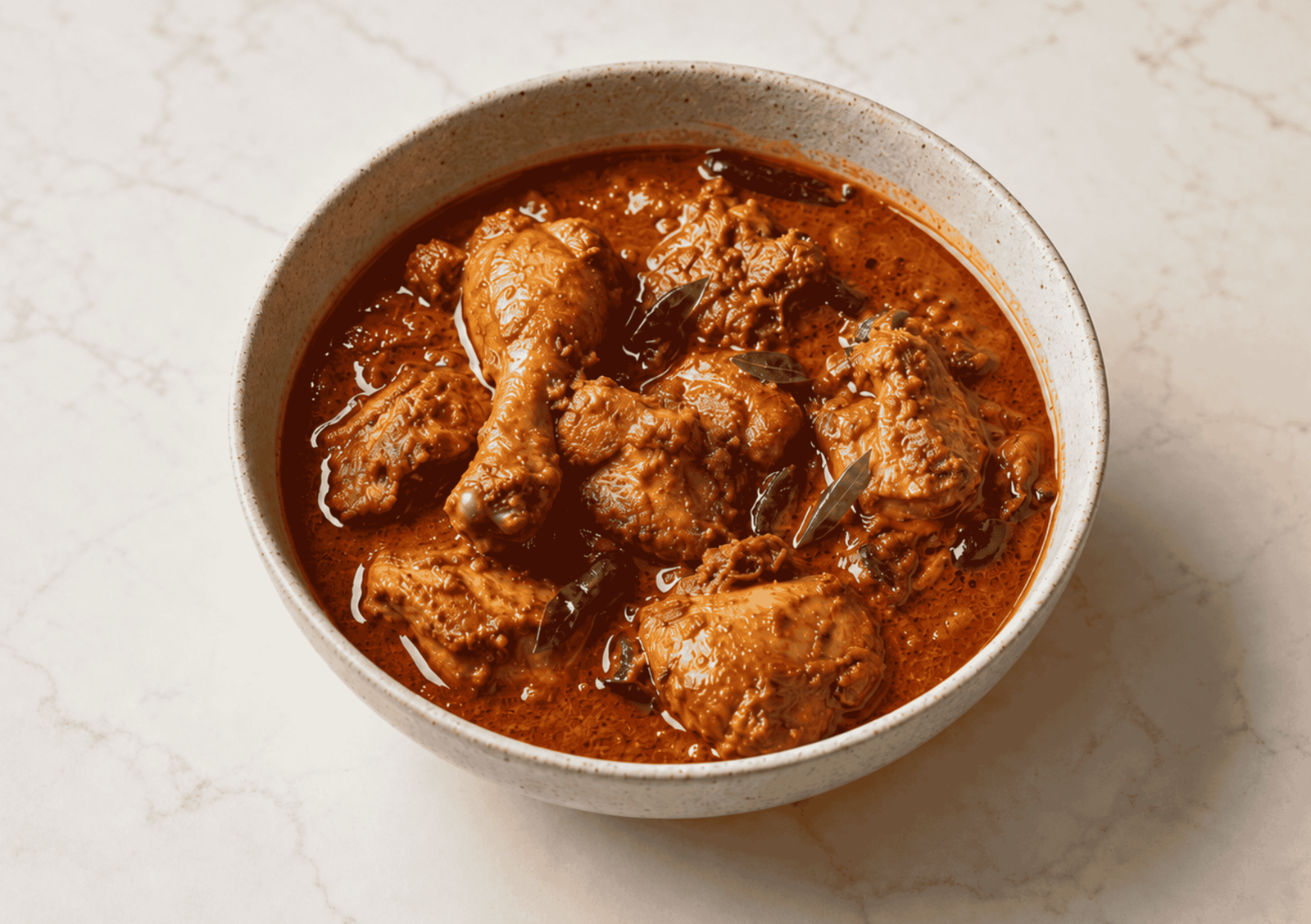
This Chicken Madras is a British curry house style dish made with tender pre-cooked chicken in a smooth, tomato-based sauce. Fresh chillies and chilli powder provide the heat, while lime juice and a small amount of mango chutney give the finished curry the sharp, balanced flavour expected from a Madras.
The final curry cooks quickly because the chicken and base curry sauce are prepared in advance. Once everything is measured and beside the hob, the sauce can be built, reduced and finished in one wide pan.
What Is Chicken Madras?
Chicken Madras is a hot British Indian Restaurant curry rather than a single traditional regional recipe from India. Curry houses developed the dish around a smooth base curry sauce, prepared chicken and a mixture of fresh and ground chillies.
The sauce is usually hotter and sharper than a standard medium curry but less aggressive than a curry house vindaloo. Tomato, lime and a small amount of sweetness prevent the chilli from dominating every other flavour.
For this version, the chicken is already cooked before it enters the sauce. The short final simmer reheats it and allows the sauce to cling to the pieces without drying them out.
Which Ingredients Define a Curry House Madras?
Pre-cooked chicken makes the fast curry house method possible. It must already be tender and fully cooked because the finished curry does not simmer long enough to cook raw chicken safely.
Curry house base sauce provides the smooth onion based body. It should be heated before cooking and added in stages so the pan continues to simmer.
Mixed Powder forms the background seasoning, while extra cumin, coriander and turmeric make the spice profile more pronounced.
Kashmiri chilli powder supplies a rich red colour and a rounded chilli flavour. Fresh bird’s eye chillies and optional hot chilli powder control the sharper heat.
Diluted tomato puree adds acidity, colour and body. Diluting it before cooking helps it spread through the spices without catching in the pan.
Smooth mango chutney softens the harsher edge of the chilli. It should not make the curry noticeably sweet. Lime juice is added at the end to restore freshness and acidity.
How to Make Chicken Madras
Prepare the base curry sauce and chicken before starting the final curry. Heat the base sauce until steaming and use a wide frying pan or sauté pan with a capacity of at least 3 litres. A broad pan gives the sauce enough surface area to reduce without requiring restaurant strength burners.
Keep the heat controlled when frying the ground spices. They need only a brief sizzle before the tomato mixture is added. Once the sauce begins simmering, add the base curry sauce gradually and judge the final portion according to the reduction in your pan. See the recipe card at the bottom for exact quantities and printable directions
Ingredients
- Rapeseed oil or another neutral cooking oil
- Dried Kashmiri chillies
- Green cardamom pods
- Garlic and Ginger Paste
- Green bird’s eye chillies
- Mixed Powder
- Ground cumin
- Ground coriander
- Ground turmeric
- Kashmiri chilli powder
- Hot chilli powder, optional
- Double concentrated tomato puree
- Hot water
- Curry house base sauce
- Curry House Pre-Cooked Chicken
- Smooth mango chutney
- Lime juice
- Garam masala
- Fine salt
- Fresh coriander
Cooking Instructions
Step 1: Prepare the sauce ingredients. Stir the tomato puree into the hot water until completely smooth. Heat the base curry sauce until steaming, divide it into the required portions and place all the measured ingredients beside the hob.
Step 2: Infuse the whole spices. Heat the oil in a wide pan over a medium high heat. Add the dried Kashmiri chillies and lightly crushed cardamom pods. Stir them through the oil for about 30 seconds, until aromatic but not darkened.
Step 3: Fry the aromatic paste and fresh chillies. Add the Garlic and Ginger Paste and sliced bird’s eye chillies. Stir continuously for 30 to 45 seconds, until the raw aroma begins to soften. Lower the heat if the paste starts to colour.
Step 4: Bloom the ground spices. Reduce the heat to medium. Add the Mixed Powder, cumin, coriander, turmeric, Kashmiri chilli powder and optional hot chilli powder. Stir for 20 to 30 seconds, just until fragrant. Do not allow the spices to burn.
Step 5: Start the Madras sauce. Pour in the diluted tomato puree and stir vigorously to release any spices from the base of the pan. Add the first portion of hot base curry sauce, bring to a lively simmer and cook for 2 minutes.
Step 6: Add the chicken. Stir in the pre-cooked chicken and the second portion of base curry sauce. Simmer for 4 to 5 minutes, turning the chicken through the sauce so it reheats evenly.
Step 7: Balance and reduce the curry. Stir in the mango chutney and add the final portion of base curry sauce only as needed. Simmer for another 4 to 6 minutes, until the chicken is steaming hot throughout and the sauce coats the pieces without becoming dry.
Step 8: Finish the Madras. Stir in the lime juice, garam masala, salt and most of the coriander. Taste carefully and adjust the salt, lime or chilli if required. Remove the cardamom pods if you can see them, then garnish with the remaining coriander and serve.
How Spicy Is Chicken Madras?
A curry house Madras should be distinctly hot, but the heat still needs to leave room for the cumin, coriander, tomato and lime. Bird’s eye chillies provide a direct fresh heat, while hot chilli powder builds warmth throughout the sauce.
For a milder curry, use fewer bird’s eye chillies and omit the hot chilli powder. Keep the Kashmiri chilli powder because it contributes colour and flavour without delivering the same intensity. To make the curry hotter, increase the hot chilli powder gradually rather than adding a large amount at once.
Which Chillies Work Best?
Dried Kashmiri chillies add aroma and gentle warmth as they infuse in the oil. Green bird’s eye chillies provide the fresher, more immediate heat associated with a Madras. Kashmiri chilli powder deepens the colour, while hot chilli powder allows the strength to be adjusted precisely.
If bird’s eye chillies are unavailable, use another small hot green chilli. Larger mild green chillies can provide fresh chilli flavour, but they will not produce the same heat. Avoid relying entirely on generic chilli powder because brands vary considerably in strength.
Why Is the Base Curry Sauce Added in Stages?
Adding the sauce in several portions keeps the pan hot and makes the final consistency easier to control. Pouring it all in at once can stop the simmer, extend the cooking time and encourage the pre-cooked chicken to become dry before the sauce reduces.
The final portion is deliberately optional. A broad pan on a powerful hob may need it, while a smaller pan or gentler hob may already contain enough liquid. The finished sauce should flow around the chicken and coat a spoon without appearing watery.
Can You Make Chicken Madras with Raw Chicken?
Raw chicken is not a direct substitution in this quick method. It would need a longer simmer, which changes the sauce reduction and may require additional liquid. For the intended curry house result, prepare the chicken first and then add it during the final sauce stage.
Chicken tikka can also be used. Add it at the same stage as the pre-cooked chicken and simmer only until thoroughly hot, because it can become dry if left in the reducing sauce for too long.
Can You Replace the Mango Chutney?
Smooth mango chutney gives the curry a small amount of sweetness to balance the chilli and lime. It should remain a background ingredient rather than an obvious flavour.
Lime pickle can be used for a sharper, saltier Madras. Use a smaller quantity, chop it finely if it contains large pieces and reduce the added salt until the curry has been tasted. The final sauce will be more savoury and less sweet.
Cooking Tips
- Heat the base curry sauce before you begin so each addition returns to a simmer quickly.
- Use a wide pan to encourage steady reduction and leave enough room to turn the chicken through the sauce.
- Stir the ground spices continuously and add the tomato mixture as soon as they become fragrant.
- Taste the curry before adding more hot chilli powder. Fresh chillies can vary considerably in strength.
- Add only as much of the final base sauce as the pan needs.
- Finish with lime juice after the main reduction so its acidity remains noticeable.
- Remove visible cardamom pods before serving because biting into one can overpower a mouthful of curry.
What to Serve with Chicken Madras
Serve Chicken Madras with pilau rice or plain basmati rice. Naan, chapati and poppadoms can be added when serving a larger curry house meal. Cucumber raita helps soften the chilli heat, while red onion chutney or coriander and mint chutney provides a fresh contrast.
Tarka dhal, Bombay potatoes or saag aloo can turn the curry into a more substantial spread without competing with the hot Madras sauce.
How to Store and Reheat
Cool leftover Chicken Madras promptly and refrigerate it in a covered container. Reheat it gently in a saucepan, stirring regularly, until the chicken and sauce are steaming hot throughout. Add a small splash of water if the sauce has thickened while chilled.
The curry can also be frozen in meal sized portions. Defrost it in the refrigerator before reheating. Stir the sauce thoroughly as it heats so any liquid that has separated becomes incorporated again.

Curry House Chicken Madras
Ingredients
- 45 ml rapeseed oil or another neutral cooking oil
- 3 dried Kashmiri chillies
- 3 green cardamom pods lightly crushed
- 30 g Garlic and Ginger Paste
- 2 to 4 green bird’s eye chillies finely sliced and adjusted to taste
- 4 teaspoons Mixed Powder
- 2 teaspoons ground cumin
- 1 teaspoon ground coriander
- 1/2 teaspoon ground turmeric
- 2 teaspoons Kashmiri chilli powder
- 1/2 to 1 1/2 teaspoons hot chilli powder optional and adjusted to taste
- 40 g double concentrated tomato puree
- 120 ml hot water for diluting the tomato puree
- 500 ml hot curry house base sauce divided into 200ml, 200ml and 100ml portions
- 600 g Curry House Pre-Cooked Chicken drained
- 30 g smooth mango chutney
- 30 ml fresh lime juice
- 1 teaspoon garam masala
- 3/4 teaspoon fine salt plus more if needed
- 20 g fresh coriander finely chopped and divided into 15g and 5g portions
Instructions
- Stir the tomato puree into 120ml hot water until completely smooth. Heat the base curry sauce until steaming and divide it into 200ml, 200ml and 100ml portions. Place all the measured ingredients beside the hob.
- Heat the oil in a wide pan with a capacity of at least 3 litres over a medium high heat. Add the dried Kashmiri chillies and lightly crushed cardamom pods. Stir for about 30 seconds, until aromatic but not darkened.
- Add the Garlic and Ginger Paste and sliced bird’s eye chillies. Stir continuously for 30 to 45 seconds, until the raw aroma begins to soften. Reduce the heat if the paste starts to colour.
- Reduce the heat to medium. Add the Mixed Powder, cumin, coriander, turmeric, Kashmiri chilli powder and optional hot chilli powder. Stir continuously for 20 to 30 seconds, just until fragrant.
- Pour in the diluted tomato puree and stir thoroughly. Add the first 200ml portion of hot base curry sauce, bring to a lively simmer and cook for 2 minutes.
- Add the pre-cooked chicken and the second 200ml portion of base curry sauce. Simmer for 4 to 5 minutes, turning the chicken through the sauce so it reheats evenly.
- Stir in the mango chutney and add up to the final 100ml portion of base curry sauce as required. Simmer for 4 to 6 minutes, stirring more frequently as the sauce reduces, until the chicken is steaming hot throughout and the sauce coats the pieces without becoming dry.
- Stir in the lime juice, garam masala, salt and 15g of the coriander. Taste and adjust the seasoning. Remove any visible cardamom pods, garnish with the remaining 5g coriander and serve.
Notes
- The preparation and cooking times assume the base curry sauce and pre-cooked chicken have already been prepared.
- Bird’s eye chillies and hot chilli powders vary in strength. Begin with the lower quantities if you are uncertain.
- Add the final 100ml portion of base curry sauce only if needed. The sauce should coat the chicken while remaining loose enough to spoon over rice.
- To use lime pickle instead of mango chutney, replace the chutney with 20g finely chopped lime pickle and add the salt only after tasting.
- Chicken tikka can replace the pre-cooked chicken without changing the sauce quantities. Simmer it only until thoroughly hot.
- Raw chicken is not suitable for this short final method and must be cooked separately first.