

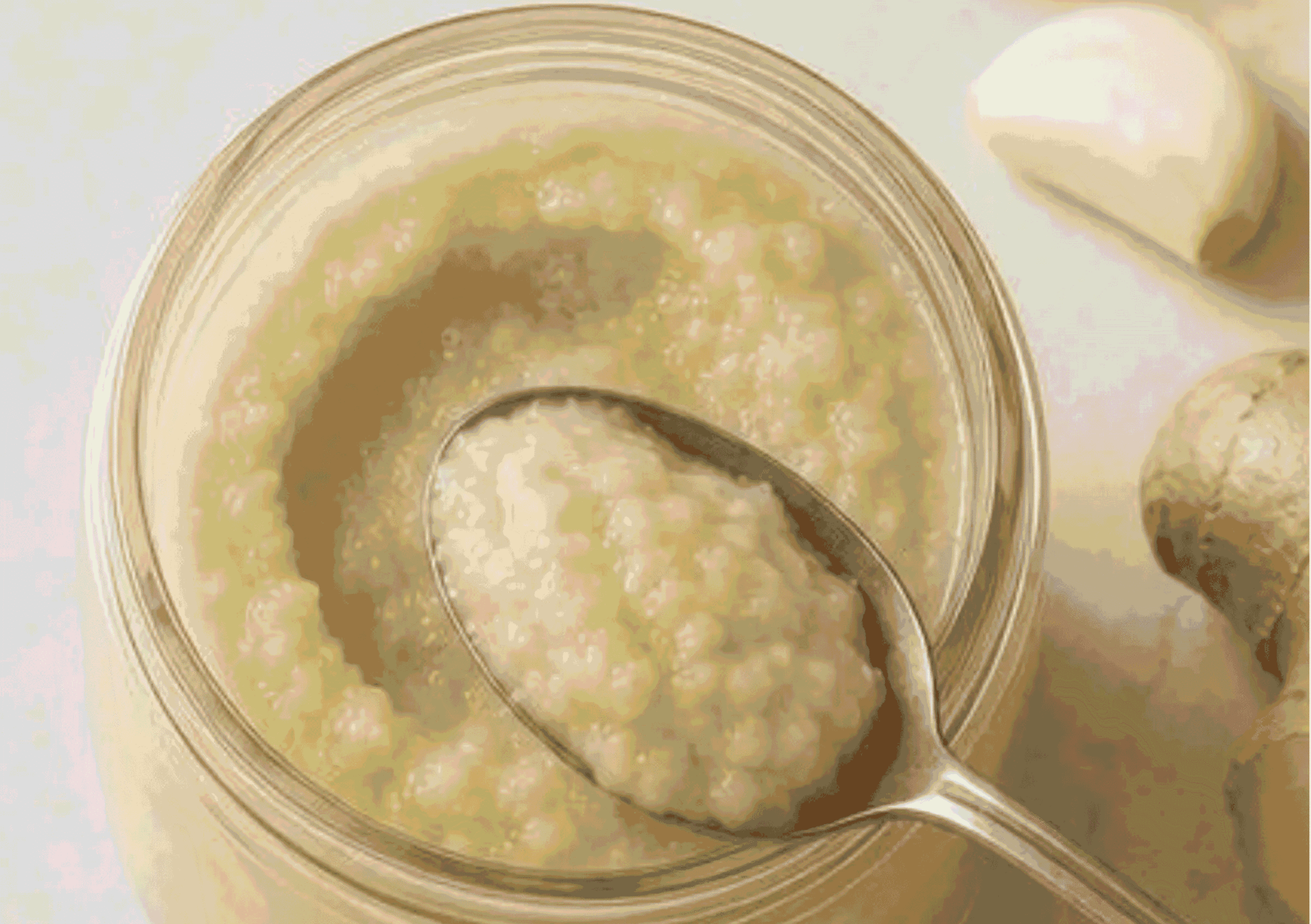
Homemade Garlic and Ginger Paste
Garlic and ginger paste is one of the most useful prepared ingredients in British curry house cooking. Equal weights of peeled garlic and fresh ginger are blended into a smooth paste, ready to fry at the beginning of curries or mix into marinades.
This recipe makes approximately 400g, or 26 tablespoons, which is enough for several batches of base sauce and finished curries. Keep a small amount in the fridge for immediate use and freeze the remainder in tablespoon sized portions.
What Is Garlic and Ginger Paste?
Garlic and ginger paste is a blend of raw garlic cloves and fresh ginger. Combining them in advance saves repeated peeling and chopping, while the fine texture allows both ingredients to spread evenly through a sauce or marinade.
In British curry house recipes, the paste is commonly fried briefly in oil or ghee before ground spices and base curry sauce are added. This removes the harsh raw edge and perfumes the cooking fat. It is also used in chicken tikka, tandoori marinades and pre-cooked meat recipes.
The paste is not a complete curry paste. It contains no chilli, ground spices, salt or vinegar, which keeps it adaptable across mild and hot dishes.
What Ratio of Garlic to Ginger Should I Use?
Use equal weights of peeled garlic and prepared ginger. Measuring by weight is more reliable than counting cloves or comparing cups because garlic cloves and pieces of ginger vary considerably in size and density.
For this batch, use 200g garlic and 200g ginger. The balanced ratio works across the Curry House Recipes collection and makes quantities easy to scale. To make half a batch, use 100g of each. To double it, use 400g of each.
Some cooks favour more garlic or more ginger for particular dishes, but those adjustments are better made in the individual recipe. A neutral 1:1 batch remains the most versatile prepared ingredient.
Do I Need to Peel the Ginger?
Peeling produces a smoother, cleaner looking paste and removes any dry or tough outer skin. This is useful for curry house sauces, where a fibrous texture can remain visible after cooking.
Young ginger with very thin skin can be scrubbed thoroughly and used without complete peeling. Older ginger usually has a tougher skin that should be removed. A teaspoon works well for scraping around the uneven surface without taking away too much flesh.
Trim any dry ends, soft patches or deeply wrinkled areas. Cut the ginger across the fibres into small pieces before blending, particularly if your food processor is not very powerful.
The garlic cloves should be peeled. Remove any cloves that are soft, mouldy or badly discoloured. A green shoot inside a sound clove is not unsafe, but it can taste stronger and slightly bitter, so remove it if convenient.
How Smooth Should the Paste Be?
For curry house cooking, aim for a thick, even paste without obvious pieces of garlic or long ginger fibres. It should fall slowly from a spoon rather than pour like a sauce.
Chopping the ginger and garlic before blending helps the blades process them evenly. Add water in small amounts, stopping to scrape down the container between additions. Too much water makes the paste difficult to fry and introduces unnecessary liquid into marinades.
A small food processor, high powered blender or spice grinder is suitable. A large blender may struggle with this quantity because the ingredients sit below the blades. In that case, make a larger batch or use a narrow blending cup.
Why Use Water Instead of Oil?
Water keeps the paste neutral and allows it to be used in any recipe. Only enough is added to help the blades move, so the paste remains concentrated.
This recipe does not use oil as a preservative. Garlic stored in oil can create a food safety risk when it is prepared or kept incorrectly. A layer of oil should not be treated as a way to make homemade paste safe for longer storage.
Keep the water based paste refrigerated for a short period and freeze anything that will not be used within three days. Freezing in small portions is safer and more practical than trying to extend the refrigerated life of a large jar.
How Much Garlic and Ginger Paste Should I Use?
Many four person curry house recipes use 20g to 40g, roughly 1½ to 3 tablespoons, depending on the dish. A single curry house portion may use approximately 10g to 20g. Always follow the amount in the individual recipe because marinades and prepared meats may require more.
One level tablespoon of this paste weighs approximately 15g, although the exact weight varies with the amount of water added. For consistent results, weigh the paste when a recipe provides a gram quantity.
Raw paste tastes sharp and assertive. When starting a curry, fry it for about 30 to 60 seconds until the harsh aroma softens. Do not allow it to turn dark brown because garlic becomes bitter when burnt.
How to Make Garlic and Ginger Paste
Peel and weigh the ingredients after trimming them, then cut the ginger and larger garlic cloves into smaller pieces. Blend with the minimum water needed to form a thick paste. Portion it immediately so the batch spends as little time as possible at room temperature. See the recipe card at the bottom for printable directions
Ingredients
- 200g peeled garlic cloves
- 200g fresh ginger, peeled and cut into 1cm pieces
- 30ml cold water, plus up to 15ml more if needed
Preparation Instructions
- Check the garlic and ginger carefully. Discard any mouldy or soft pieces, trim dry ends and remove green garlic shoots if you prefer a milder paste.
- Cut large garlic cloves in half. Slice the peeled ginger across its fibres into pieces approximately 1cm wide so the blender does not have to break down large, stringy chunks.
- Place the garlic, ginger and 30ml cold water in a small food processor, spice grinder or narrow blender cup.
- Pulse several times to break the ingredients down. Stop the machine, scrape the sides and move any larger pieces towards the blades.
- Blend continuously until a thick paste forms. Add the remaining water one teaspoon at a time only if the blades cannot circulate the mixture.
- Check the texture by rubbing a small amount between two spoons. Continue blending if you can see pieces of garlic or long ginger fibres.
- Transfer enough paste for the next three days to a clean, covered container and refrigerate immediately. Divide the remainder into 15g portions and freeze.
How to Freeze Garlic and Ginger Paste
Spoon the paste into a clean ice cube tray, using approximately 15g in each section. Freeze until solid, then transfer the portions to a labelled freezer bag or covered container. Record the name, portion size and freezing date.
Use the frozen paste within three months for the strongest aroma and best quality. Freezing softens its texture slightly, but this makes no practical difference once it is fried or stirred into a sauce.
Defrost the required portion in a covered container in the fridge. If a recipe adds the paste to a liquid sauce, a frozen portion can sometimes go directly into the pan. Do not drop a water based frozen cube into very hot oil because it may spit forcefully.
Can I Make Garlic, Ginger and Chilli Paste?
Yes, but it is better treated as a separate prepared ingredient. Adding green chillies to the whole batch limits its use in mild curries and makes the heat difficult to standardise because chillies vary.
For a dedicated chilli version, add trimmed green finger chillies to taste and record the quantity. Label the frozen portions clearly so they are not confused with the plain paste.
For the main Curry House Recipes system, keep garlic and ginger paste separate from green chilli paste. This gives each recipe more precise control over heat.
Variations and Substitutions
You can make a smaller batch using any equal weights of prepared garlic and ginger. Reduce the water proportionally, then add only what the blender needs.
A pestle and mortar produces a good paste in a small quantity, although it takes longer. Chop the ginger and garlic finely first, then pound them together until no large pieces remain.
Finely grated garlic and ginger can replace the paste in a one off recipe. Use equal weights and expect a slightly coarser texture. Jarred paste may contain salt, acid or preservatives, so its flavour and strength can differ from this fresh version.
Do not add salt to the master batch. Leaving it unseasoned gives better control when it is used in recipes that already contain seasoned base sauce, stock or marinades.
Cooking Tips
- Weigh the garlic and ginger after peeling and trimming so the ratio reflects what enters the blender.
- Cut the ginger across the fibres. Shorter fibres are easier to blend into a smooth paste.
- Start with less water. More can be added, but excess water cannot be removed without cooking the paste.
- Use a small blending container so the blades stay in contact with the ingredients.
- Scrape down the sides at least once. Pieces caught above the blades can leave the finished paste uneven.
- Fry the paste over a controlled heat. It should sizzle and lose its raw aroma without becoming dark or sticky.
- Portion the paste before freezing. Repeatedly thawing a large container is inconvenient and reduces quality.
Why Is My Paste Fibrous?
The ginger may have been mature, cut into pieces that were too large or blended for too little time. Scrape down the container, add one teaspoon of water and blend again. A narrow high powered blender usually produces a finer result than a broad food processor bowl.
If the ginger has extremely tough fibres, pressing the finished paste through a fine sieve is possible, but it creates waste. Thorough peeling, cutting across the fibres and longer blending are better first steps.
Why Has the Paste Changed Colour?
Garlic can sometimes develop a blue or green tint after it is crushed. This is caused by natural compounds reacting during preparation and does not automatically mean the paste has spoiled.
Colour alone is not a reliable safety test. Discard the paste if it develops mould, an unpleasant fermented smell, bubbling, unusual sliminess or another clear sign of spoilage. When uncertain, do not taste it to check.
How to Store Garlic and Ginger Paste
Transfer the paste to a clean, covered container and refrigerate it immediately. Use the refrigerated portion within three days. Take out each serving with a clean spoon and return the container to the fridge promptly.
Freeze everything that will not be used within that period. Tablespoon sized portions are convenient for curry recipes and reduce waste. Defrost only what you need and do not repeatedly thaw and refreeze the same paste.
The paste is used as a cooking ingredient rather than a raw table condiment. Fry it as directed in the finished recipe and ensure marinades containing it are handled according to the raw meat, fish or vegetable ingredients they contain.
Recipes That Use Garlic and Ginger Paste
The paste is required for Curry House Base Sauce, Pre-Cooked Chicken, Pre-Cooked Lamb, Chicken Tikka, Tandoori Chicken, Chicken Madras, Chicken Korma, Chicken Tikka Masala, Chicken Jalfrezi, Lamb Rogan Josh, Lamb Bhuna, Chicken Dhansak and Lamb Vindaloo.
It can also support biryani marinades, kebabs, vegetable curries and other South Asian recipes.

Homemade Garlic and Ginger Paste
Ingredients
- 200 g peeled garlic cloves
- 200 g fresh ginger peeled and cut into 1cm pieces
- 30 ml cold water plus up to 15ml more if needed
Instructions
- Inspect and trim the garlic and ginger, discarding any mouldy or soft pieces.
- Halve large garlic cloves and cut the ginger across the fibres into 1cm pieces.
- Place the garlic, ginger and 30ml water in a small food processor, grinder or narrow blender cup.
- Pulse to break everything down, then scrape the sides and move larger pieces towards the blades.
- Blend until thick and smooth, adding up to 15ml more water one teaspoon at a time only if needed.
- Check for pieces or long fibres and continue blending until evenly smooth.
- Refrigerate a three day supply in a clean container and freeze the remainder in 15g portions.




2 Comments