Curry House Chicken Tikka
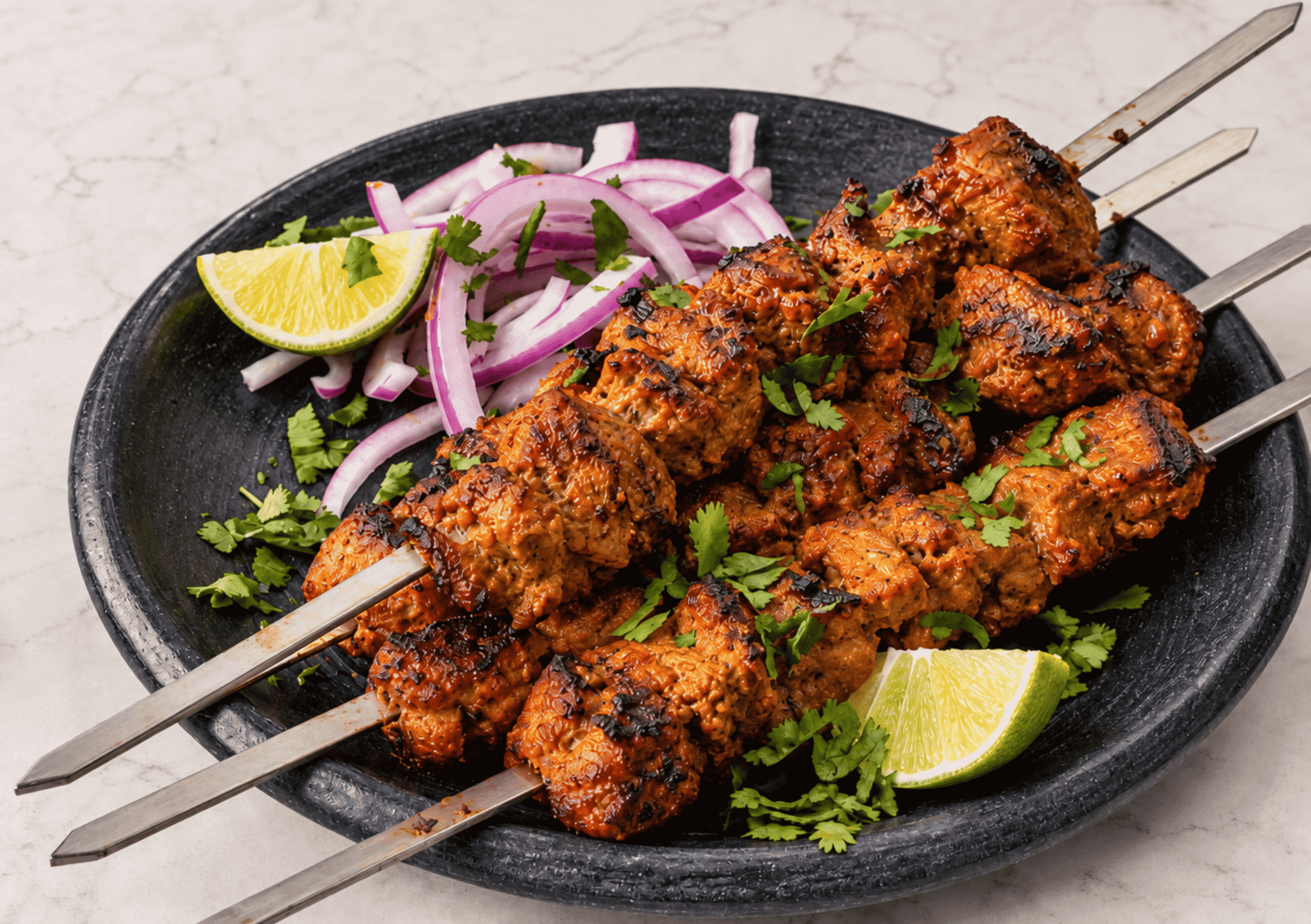
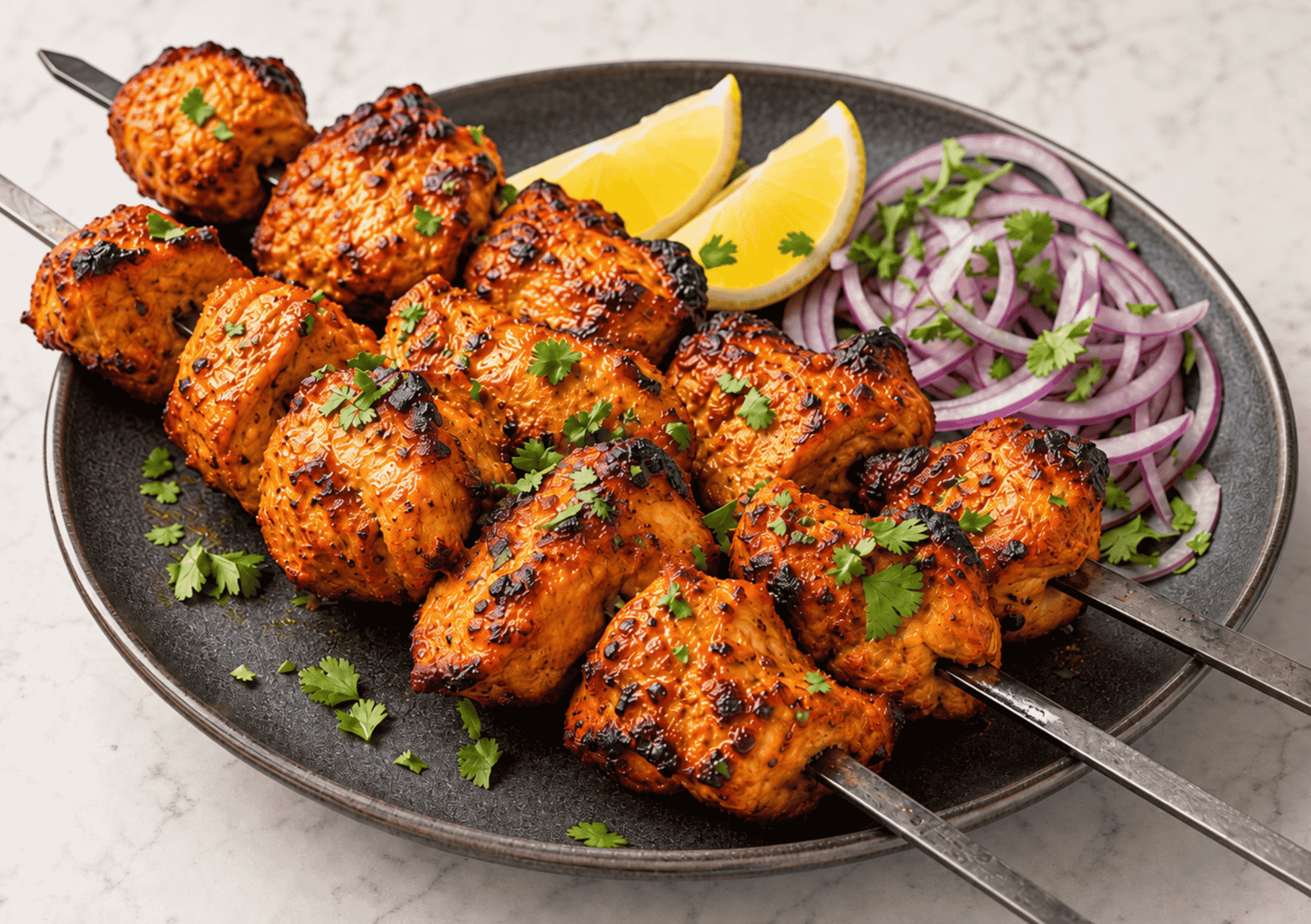
Chicken tikka is one of the most useful recipes in a curry house kitchen. Serve the hot, charred pieces with chutney and lemon, tuck them into a naan, or prepare them ahead for chicken tikka masala, jalfrezi, madras and other British Indian Restaurant curries.
This version uses boneless chicken thighs, a quick first marinade and a thicker yoghurt marinade flavoured with homemade tandoori masala. A very hot oven followed by a short blast under the grill gives the chicken browned edges and a juicy centre without a tandoor. No red food colouring is required.
What Is Chicken Tikka?
Chicken tikka is made from boneless pieces of chicken that are marinated and cooked quickly over fierce heat. The word tikka refers to pieces or chunks. This is why chicken tikka is different from the larger, often bone in portions used for tandoori chicken.
In a British curry house, chicken tikka has two roles. It can be served as a starter or main dish, and it can be used as a prepared ingredient in a curry. Cooking it separately before it reaches the sauce gives the meat smoky, browned edges that cannot be created by simmering raw chicken in gravy.
Chicken Thigh or Chicken Breast?
Boneless, skinless chicken thighs are my first choice. Their higher fat content helps them remain juicy under the intense heat needed to colour the marinade. They are also forgiving if a few pieces cook faster than the others.
Chicken breast produces the firmer, paler tikka served by many restaurants. You can substitute it in the same quantity, but cut it into pieces about 4 to 5cm across and start checking it a few minutes earlier. Lean breast meat dries out more quickly than thigh.
Whichever cut you use, keep the pieces similar in size. Even pieces cook at the same rate and sit securely on the skewers.
Why Use Two Marinades?
The first marinade contains lemon juice, salt and garlic and ginger paste. It seasons the surface of the chicken directly and needs only 20 minutes. Leaving the chicken in a concentrated acidic mixture for hours can make its exterior texture less pleasant.
The second marinade is based on thick yoghurt. It carries the tandoori masala, chilli and aromatics while forming the coating that browns around the edges. A little rapeseed oil helps the spice coating colour under high heat.
This two stage method produces better seasoning than mixing everything together at once, but it is still simple enough to prepare the day before cooking.
How Long Should Chicken Tikka Marinate?
After the initial 20 minute marinade, give the chicken at least 4 hours in the yoghurt mixture. Overnight marinating is convenient and develops a fuller flavour, but keep the total time in the second marinade to no more than 24 hours.
If time is short, 30 minutes in the yoghurt marinade will still work, although the seasoning will be lighter. Keep the chicken covered and refrigerated throughout. Do not marinate poultry at room temperature.
Does Chicken Tikka Need Red Food Colouring?
No. Kashmiri chilli and tandoori masala give the chicken a natural orange red colour, while high heat creates brown and lightly blackened spots. The result will not be the fluorescent red sometimes seen in takeaway tikka, but food colouring adds no flavour.
If you decide to use colouring for a restaurant style appearance, choose a food grade product and follow its label exactly. Mix it evenly into the yoghurt marinade rather than applying concentrated colour directly to the chicken.
How to Make Curry House Chicken Tikka
Use a large non-reactive bowl for marinating and a sturdy roasting tray fitted with a wire rack for cooking. Flat metal skewers are ideal because they hold the chicken securely and conduct heat into the centre. If you use wooden skewers, soak them in water for at least 30 minutes first. Keep the marinade thick, leave a little space between the pieces and finish the chicken under a fiercely hot grill for the characteristic charred edges. See the recipe card at the bottom for printable directions
Ingredients
Chicken and First Marinade
- 800g boneless, skinless chicken thighs, cut into roughly 4cm pieces
- 20ml lemon juice, about 1½ tablespoons
- 1 tablespoon Garlic and Ginger Paste
- ¾ teaspoon fine salt
Second Marinade
- 150g thick Greek style natural yoghurt
- 2 tablespoons Homemade Tandoori Masala, about 14g
- 1 tablespoon Garlic and Ginger Paste
- 1 teaspoon Kashmiri chilli powder, optional or to taste
- 1 teaspoon dried fenugreek leaves, crushed between the palms
- 1 tablespoon rapeseed oil
- ½ teaspoon fine salt
For Cooking and Serving
- 1 tablespoon melted ghee or rapeseed oil, for brushing
- 1 lemon, cut into wedges
- 2 tablespoons chopped fresh coriander, optional
- Chaat Masala, optional, for finishing
Cooking Instructions
- Put the chicken in a non-reactive bowl. Add the lemon juice, 1 tablespoon Garlic and Ginger Paste and ¾ teaspoon salt. Massage the mixture thoroughly into the chicken, cover and refrigerate for 20 minutes.
- Whisk the yoghurt in a separate bowl until smooth. Add the Homemade Tandoori Masala, remaining Garlic and Ginger Paste, Kashmiri chilli, crushed fenugreek, rapeseed oil and ½ teaspoon salt. Stir until evenly combined.
- Add the yoghurt marinade to the chicken and turn every piece until well coated. Cover and refrigerate for at least 4 hours or up to 24 hours.
- Heat the oven to 240°C, 220°C fan or Gas 9. Line a sturdy roasting tray with foil and place a wire rack over it. If your grill takes time to heat, prepare it for the final stage.
- Thread the chicken onto metal skewers, passing the skewer through the thickest part of each piece. Leave small gaps so hot air can circulate. Rest the skewers over the rack and let heavy excess marinade drip away. Discard the marinade left in the bowl.
- Roast for 8 minutes, turn the skewers, then roast for another 4 to 6 minutes. Brush lightly with melted ghee or oil during the final few minutes.
- Switch to the hottest grill setting. Place the chicken close to the heat and grill for 1 to 3 minutes, turning once, until the edges are lightly charred. Watch continuously because the yoghurt and spices can darken quickly.
- Check the thickest pieces are piping hot and fully cooked, with no raw centre. A probe thermometer should register at least 75°C in the centre. Rest for 3 minutes, then finish with lemon, coriander and a light dusting of Chaat Masala if liked.
How to Cook Chicken Tikka on a Barbecue
A charcoal barbecue produces the closest result to a tandoor because it combines intense heat with smoke. Prepare a hot direct heat area and a cooler area to one side. Wipe heavy clumps of marinade from the chicken before placing the skewers over the fire.
Cook for about 10 to 14 minutes, turning every 2 to 3 minutes. Move the skewers to the cooler side if the exterior colours before the centre is cooked. Brush with ghee only during the final few minutes so dripping fat does not cause unnecessary flare ups.
Cooking time varies with the heat of the fire, the thickness of the pieces and the type of skewer. Check the centre of the largest piece rather than relying on its colour alone.
Can I Make Chicken Tikka Without Skewers?
Yes. Arrange the marinated pieces in a single layer on an oiled wire rack, leaving space between them. Roast at the same temperature, turn each piece with tongs after 8 minutes and finish under the grill.
Do not tip the chicken and all its marinade into a deep roasting dish. The pieces will stew in released liquid instead of browning. The rack keeps them above the drips and exposes more of their surface to dry heat.
An air fryer can also work well, but capacities and heat settings differ. Arrange the pieces in one uncrowded layer, cook in batches and follow the appliance manufacturer’s guidance for chicken.
How Do You Get Charred Edges Without a Tandoor?
Start with thick yoghurt. A watery marinade slides off the chicken and creates steam in the tray. Greek style yoghurt works well, or you can drain ordinary natural yoghurt before measuring it.
Preheat the oven fully and give the pieces room. Crowded chicken releases moisture faster than it can evaporate, which prevents browning. Let excess marinade drip from the skewers rather than spooning the remainder over the tray.
The final grill stage supplies concentrated heat. Move the tikka close enough to the element to colour quickly, but do not walk away. A few dark spots taste good; a completely blackened spice coating will be bitter.
How Do You Keep Chicken Tikka Juicy?
Use chicken thighs, cut the pieces evenly and cook them only until safely done. The short resting time allows the heat to settle without leaving the meat sitting long enough to cool.
If you use chicken breast, make the pieces slightly larger and begin checking them early. Do not extend the cooking time simply to create more colour. Once the chicken is cooked, use a brief blast under the grill to brown the outside.
Brush with ghee near the end rather than soaking the chicken in it. A light coating adds richness and encourages browning without making the finished tikka greasy.
Why Is My Chicken Tikka Watery?
Thin yoghurt is the most common cause. The marinade should cling to a spoon rather than pour like milk. Strain runny yoghurt through a clean cloth before mixing it with the spices.
Overcrowding can also make the chicken watery. Leave small gaps between pieces and cook in batches when necessary. If liquid collects in the lined tray, the raised rack will stop the chicken from sitting in it.
Finally, do not transfer every drop of marinade to the cooking tray. The coating already clinging to the chicken is enough. Discard the mixture that remains after threading because it has been in contact with raw poultry.
How to Add Chicken Tikka to a Curry
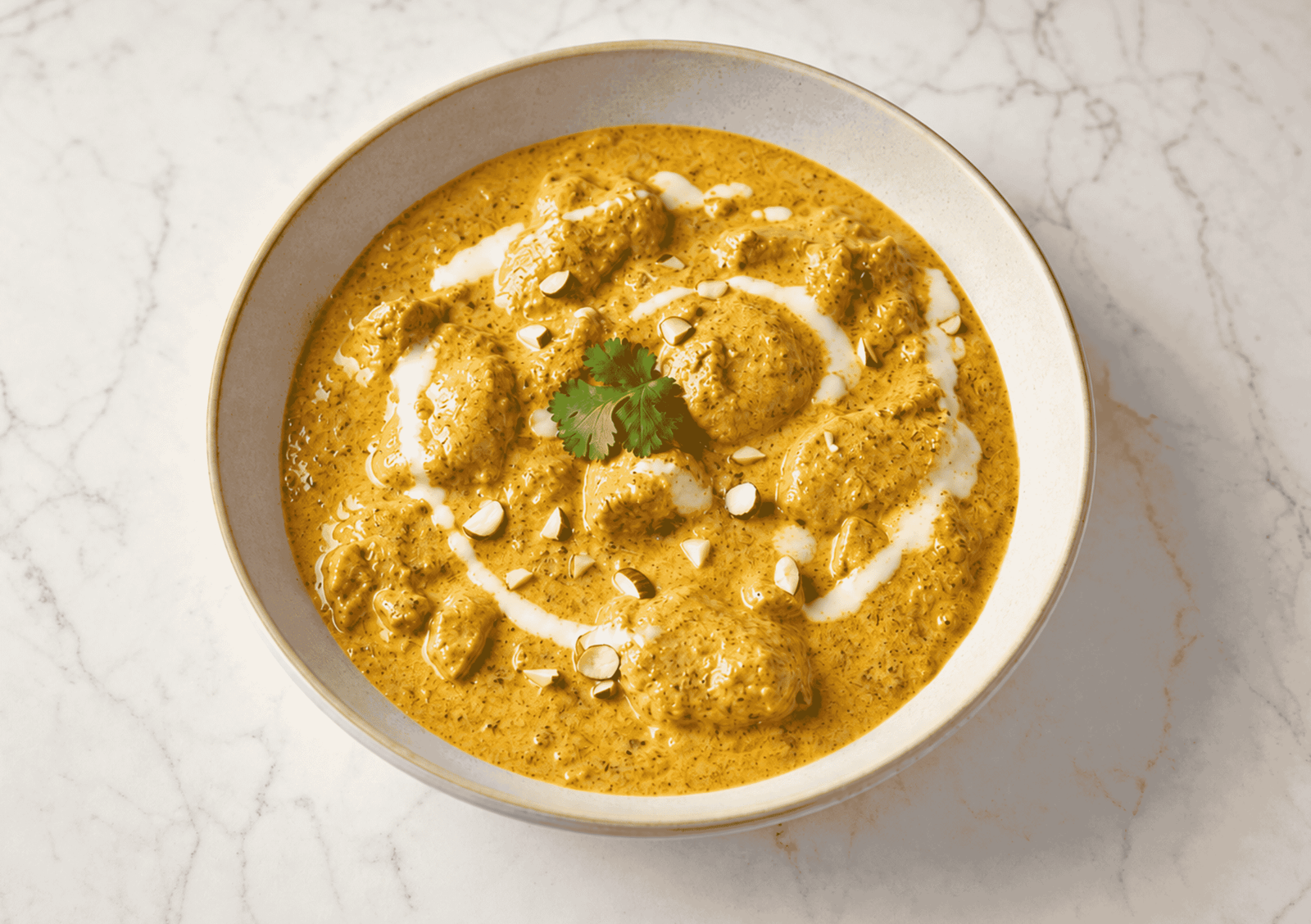
Chicken tikka is already cooked, so add it towards the end of a curry rather than simmering it for the entire sauce making process. Prepare the sauce, add 500 to 600g cooked tikka for a curry serving four, and simmer only until the chicken is thoroughly hot. This preserves its juicy texture and charred edges.
Use it in Chicken Tikka Masala, Chicken Jalfrezi, Chicken Madras, Chicken Bhuna, Chicken Pathia or Chicken Chasni. It can also replace plain pre-cooked chicken when you want a smokier result.
The exact amount should follow the individual curry recipe. Some sauces contain more vegetables or are deliberately rich, so they need less meat per serving.
Variations and Substitutions
- Chicken breast: Replace the thighs with the same weight of breast, cut into 4 to 5cm pieces. Begin checking it a few minutes earlier.
- Mild chicken tikka: Omit the extra Kashmiri chilli. The tandoori masala will still provide colour and seasoning.
- Dairy free tikka: Use a thick, unsweetened soya yoghurt. Coconut yoghurt works but adds a noticeable coconut flavour.
- No dried fenugreek: Leave it out. Ground fenugreek seed is much stronger and is not a direct substitute.
- Lime instead of lemon: Use the same quantity for a slightly sharper citrus note.
- No ghee: Brush with rapeseed oil or omit the final baste.
- Smokier oven tikka: Replace half the Kashmiri chilli with smoked paprika, keeping the amount modest so it does not dominate.
Cooking Tips
- Keep the marinade thick enough to cling to the chicken. Do not add flour to correct a runny mixture.
- Cut the meat into even pieces so everything finishes together.
- Rub the dried fenugreek between your palms to release its aroma and remove large stalks.
- Thread each piece through its thickest part. Flat metal skewers prevent the meat from spinning when turned.
- Use a clean plate and clean tongs for the cooked tikka. Never return it to equipment that held the raw chicken.
- Char the surface only after the chicken is almost cooked. This gives you colour without drying the centre.
How to Store, Freeze and Reheat Chicken Tikka
Cool leftover chicken promptly, cover and refrigerate it within two hours. Use refrigerated tikka within 48 hours. Keep it separate from uncooked meat and raw marinade.
For freezing, divide the cooled tikka into curry sized portions and remove as much air as practical from the container or freezer bag. Use within three months for the best quality. Defrost overnight in the fridge and use within 24 hours.
Reheat only once and make sure the chicken is steaming hot throughout. When using defrosted tikka in a curry, add it near the end and simmer until thoroughly heated. Prolonged reheating can make even thigh meat dry.
What to Serve with Chicken Tikka
Serve hot chicken tikka with Mint Sauce, Coriander and Mint Chutney, Cucumber Raita or Tamarind Sauce. Add sliced red onion, lemon wedges and a crisp salad for a simple starter.
For a larger meal, pair it with Pilau Rice, naan or chapati. The cooked chicken also works in wraps with shredded lettuce, onion and a spoonful of raita.

Curry House Chicken Tikka
Ingredients
Chicken and First Marinade
- – 800g boneless skinless chicken thighs, cut into roughly 4cm pieces
- – 20ml lemon juice about 1½ tablespoons
- – 1 tablespoon Garlic and Ginger Paste
- – ¾ teaspoon fine salt
Second Marinade
- – 150g thick Greek style natural yoghurt
- – 2 tablespoons Homemade Tandoori Masala about 14g
- – 1 tablespoon Garlic and Ginger Paste
- – 1 teaspoon Kashmiri chilli powder optional or to taste
- – 1 teaspoon dried fenugreek leaves crushed between the palms
- – 1 tablespoon rapeseed oil
- – ½ teaspoon fine salt
For Cooking and Serving
- – 1 tablespoon melted ghee or rapeseed oil for brushing
- – 1 lemon cut into wedges
- – 2 tablespoons chopped fresh coriander optional
- – Chaat Masala optional, for finishing
Instructions
- Mix the chicken with the lemon juice, 1 tablespoon Garlic and Ginger Paste and ¾ teaspoon salt. Cover and refrigerate for 20 minutes.
- Whisk the yoghurt with the Homemade Tandoori Masala, remaining Garlic and Ginger Paste, Kashmiri chilli, fenugreek, rapeseed oil and ½ teaspoon salt.
- Coat the chicken with the yoghurt marinade. Cover and refrigerate for at least 4 hours or up to 24 hours.
- Heat the oven to 240°C, 220°C fan or Gas 9. Place a wire rack over a foil lined roasting tray.
- Thread the chicken onto skewers with small gaps between the pieces. Rest them over the rack, allow heavy excess marinade to drip away and discard the remaining raw marinade.
- Roast for 8 minutes, turn, then roast for another 4 to 6 minutes. Brush lightly with melted ghee or oil near the end.
- Finish under the hottest grill for 1 to 3 minutes, turning once, until lightly charred. Watch continuously.
- Check the chicken is piping hot and fully cooked. The thickest piece should register at least 75°C. Rest for 3 minutes and serve with lemon, coriander and optional Chaat Masala.
Nutrition
Notes
- For a barbecue, cook over high direct heat for about 10 to 14 minutes, turning regularly and checking the centre of the largest piece.
- Chicken breast can replace thigh, but it may cook more quickly.
- Artificial red food colouring is unnecessary and contributes no flavour.
- Cooked chicken tikka can be cooled and portioned for future curry house recipes.
Frequently Asked Questions
Can I prepare chicken tikka the day before?
Yes. Add the yoghurt marinade, cover the bowl and refrigerate overnight. Cook within 24 hours of adding the second marinade.
Can I freeze chicken in the marinade?
You can freeze it soon after adding the yoghurt marinade rather than waiting until the end of the marinating time. Defrost it completely in the fridge, then cook it within 24 hours. Do not refreeze raw chicken that was previously frozen unless it has been cooked first.
Why does the marinade fall off?
The yoghurt may be too thin, the chicken may be crowded, or too much marinade may have been left on each piece. Use thick yoghurt and allow heavy excess to drip off before cooking.
Is chicken tikka very hot?
Not necessarily. Homemade tandoori masala is aromatic rather than fiercely hot. Adjust or omit the separate Kashmiri chilli to suit your preferred heat level.
Can I use shop bought tandoori masala?
Yes, but blends vary in salt, chilli and acidity. Check the label, reduce the added salt if necessary and taste a small amount of the mixed yoghurt marinade before it touches the raw chicken.