

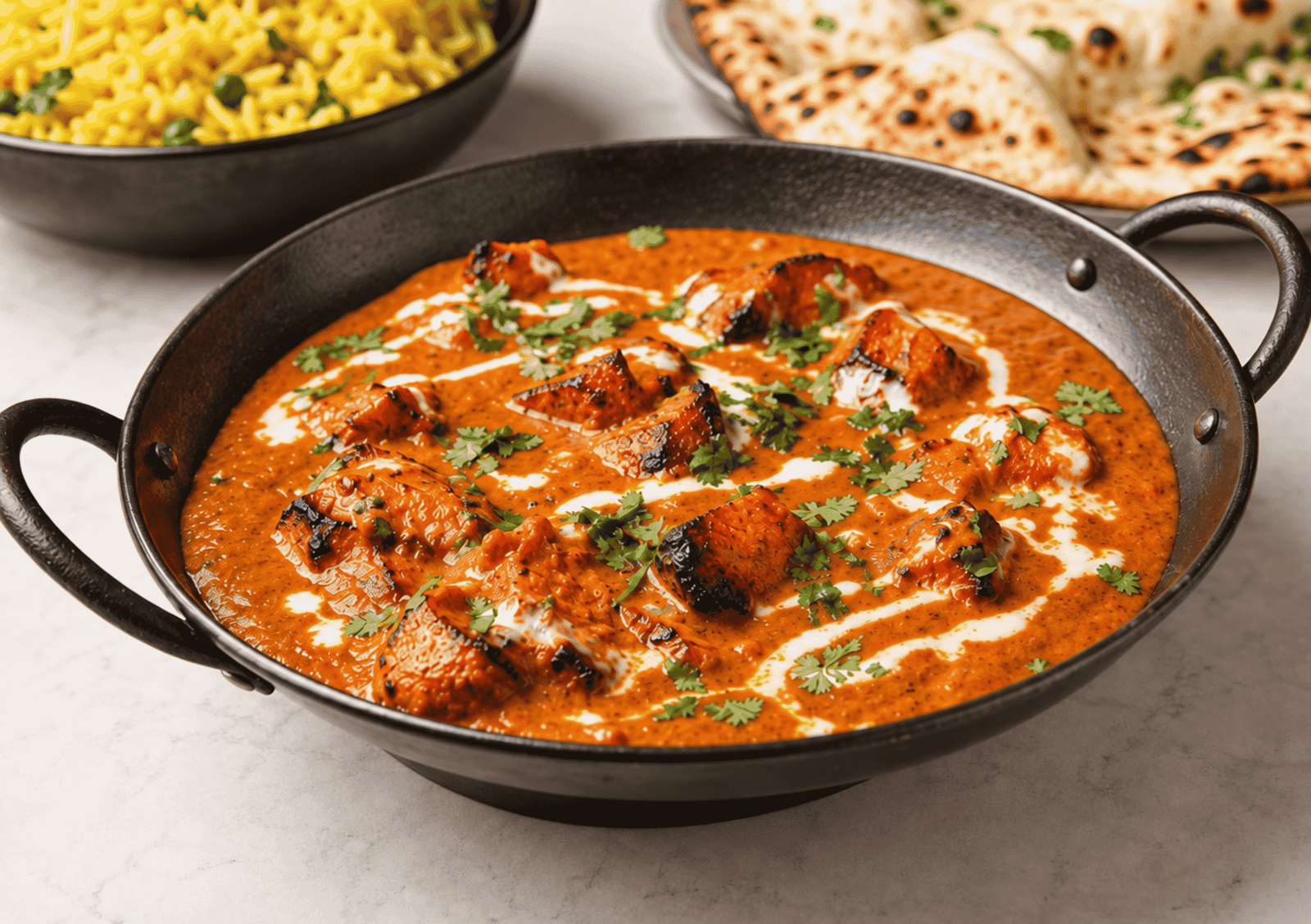
Curry House Chicken Tikka Masala
Chicken Tikka Masala is one of the gentler British curry house dishes, pairing smoky pieces of chicken tikka with a smooth tomato, almond and cream sauce. This version serves four and uses hot curry house base sauce, so the finished curry comes together in about 20 minutes once the prepared ingredients are ready.
The sauce is rich without being overwhelmingly sweet. Tomato brings acidity, ground almonds give it body, coconut adds a soft background flavour and dried fenugreek leaves provide the familiar curry house aroma. The bright red colour found in some restaurants is optional and does not affect the taste.
What is Chicken Tikka Masala?
Chicken Tikka Masala combines grilled, marinated chicken with a mild, creamy and lightly spiced sauce. It is closely associated with British Indian restaurants, although its precise origin remains disputed and several different creation stories exist.
It is not the same as butter chicken. The two dishes share tomato and dairy, but curry house Chicken Tikka Masala commonly uses prepared base gravy and may include coconut, almonds, mixed powder and tandoori masala. Recipes vary between restaurants, particularly in sweetness, colour and the amount of cream.
For this version, the sauce is cooked rapidly in a wide pan. Adding hot base sauce in stages allows it to reduce around the spices and chicken, creating a fuller flavour than simply warming everything together.
Prepared ingredients you will need
Chicken Tikka Masala is quick at the stove because two main components are prepared in advance. You will need cooked chicken tikka and curry house base sauce. Both can be made ahead and portioned, making this a practical recipe for a curry night with several dishes.
The chicken tikka supplies charred edges, yoghurt marinated flavour and tender meat. Plain cooked chicken can be used, but the curry will lose part of its smoky tandoori character.
The base sauce provides the smooth onion foundation. Use the large batch version, 20-minute base sauce, multi-cooker base sauce or instant base sauce. Whichever one you choose, warm 600ml before starting the curry so it does not cool the frying pan.
Mixed powder, garlic and ginger paste, tandoori masala and garam masala are also part of the Curry House Recipes prepared ingredient collection. Having them measured before the pan goes on the heat matters because the first stages move quickly.
What gives the sauce its flavour and texture?
Tomato purée gives the sauce its main tang and colour. Diluting it with a little water helps it disperse through the spices without catching. Use double concentrated tomato purée rather than tomato ketchup or a heavily seasoned pasta sauce.
Ground almonds thicken the gravy and soften the acidity of the tomato. Coconut milk powder supplies a controlled amount of coconut flavour without adding much liquid. Desiccated coconut is too coarse unless it is ground very finely.
Single cream rounds the sauce and creates its familiar smooth finish. Add it only after the base gravy has reduced, then keep the heat controlled. A vigorous boil after adding cream can make the sauce look greasy or split.
Sugar is included as a small, adjustable amount rather than the defining flavour. Taste before adding more. The right balance depends on the sweetness of the base sauce, tomato and coconut powder.
Is Chicken Tikka Masala spicy?
This is normally a mild curry, with warmth from mixed powder, paprika and tandoori masala rather than a strong chilli heat. Kashmiri chilli powder can be added if you want more warmth while keeping the sauce red.
When cooking for different preferences, make the main curry mild and offer finely sliced green chillies or chilli oil separately. Adding a large quantity of chilli changes the character of the sauce and can overwhelm the cream and chicken tikka.
Do I need red food colouring?
No. Paprika, tandoori masala and tomato naturally produce an orange red sauce. Some curry houses add a small amount of red food colouring to create a more vivid appearance, but it contributes no flavour.
If you choose to use it, select a food grade colouring and follow the packet directions because strengths differ considerably. Add only enough to achieve the shade you want. It is easier to deepen the colour than to correct an excessive amount.
How to add base sauce for curry house results
Use a wide aluminium, stainless steel or carbon steel pan with enough surface area for rapid evaporation. After frying the paste, spices and tomato, add roughly one third of the hot base sauce. Let it bubble until it thickens and begins to cling around the edges.
Add the remaining sauce in two stages. This keeps the pan hot and develops flavour through reduction. If the sauce is poured in all at once, it takes longer to return to a strong simmer and can taste more like a gently heated stew than a curry cooked to order.
Do not let the pan dry out while the ground almonds are present because they can catch. If the spices begin to stick before they are fragrant, add a spoonful of base sauce immediately.
How to make Chicken Tikka Masala
Prepare and measure every ingredient before heating the pan. The chicken tikka should already be cooked, and the base sauce needs to be steaming hot. Once the first ingredients reach the pan, the curry takes around 15 to 20 minutes. See the recipe card at the bottom for exact quantities and printable directions
Ingredients You Will Need
- Ghee or rapeseed oil
- Garlic and Ginger Paste
- Mixed Powder
- Tandoori Masala
- Sweet paprika
- Kashmiri chilli powder, optional
- Ground almonds
- Coconut milk powder
- Double concentrated tomato purée diluted with water
- Hot Curry House Base Sauce
- Cooked Chicken Tikka
- Caster sugar
- Food grade red colouring, optional
- Single cream
- Dried fenugreek leaves
- Garam Masala
- Lemon juice
- Fine sea salt
- Fresh coriander
Cooking Instructions
Heat the ghee or rapeseed oil in a wide frying pan over medium high heat. Add the Garlic and Ginger Paste and stir continuously until fragrant and its raw aroma has softened.
Lower the heat slightly. Add the Mixed Powder, Tandoori Masala, sweet paprika and optional Kashmiri chilli powder. Stir briefly, keeping the spices moving so they release their aroma without scorching.
Stir in the ground almonds and coconut milk powder, followed immediately by the diluted tomato purée. Cook until the mixture is smooth, evenly coloured and bubbling gently.
Add the first portion of hot Curry House Base Sauce. Bring it back to a strong simmer and let it reduce, scraping any caramelised sauce from the sides of the pan into the gravy.
Add the cooked Chicken Tikka and another portion of hot base sauce. Stir well and simmer until the chicken is hot and coated. Add the remaining base sauce gradually, stopping when the gravy has the consistency you prefer. Stir in the optional colouring at this stage if using it.
Add some of the caster sugar, then reduce the heat and pour in the single cream. Simmer gently until combined, without allowing the sauce to boil aggressively or become greasy.
Crush the dried fenugreek leaves between your fingers and add them with the Garam Masala. Taste the sauce, then adjust it gradually with more sugar, lemon juice and salt until the sweetness, acidity and seasoning are balanced.
Stir through most of the chopped coriander. Serve immediately, scattering the remaining coriander over the finished curry.
Getting the sweetness, richness and acidity right
Taste the sauce after the cream, fenugreek and garam masala have been added. If it tastes sharply tomato led, add the remaining sugar a little at a time. If it is too sweet or heavy, a squeeze of lemon juice will restore balance.
Salt should be adjusted last because the base sauce, chicken tikka and spice blends may already contain it. The completed curry should taste savoury first, with gentle sweetness rather than a dessert like finish.
If the sauce feels excessively rich, loosen it with a little hot base sauce or water rather than adding more cream. If it is thin, simmer it uncovered for another minute or two before serving.
Variations and substitutions
Paneer tikka can replace the chicken using the same sauce. Add it near the end and simmer only long enough to heat it through, as prolonged cooking can make paneer rubbery. Tandoori prawns also work, but they require very little reheating.
If coconut milk powder is unavailable, use 30ml thick coconut milk and reduce the cream by the same amount. Creamed coconut can be used sparingly, but it brings more fat and a stronger coconut taste.
Cashew powder can replace the ground almonds in the same quantity. For a nut free version, omit the almonds and use 1 tbsp extra coconut milk powder, checking that your spice blends and prepared ingredients are also free from nut cross contamination.
Rapeseed oil can replace ghee for a lighter, more neutral sauce. Ghee gives a buttery background that suits this particular curry, but it is not required for the cooking method to work.
Troubleshooting
Why has my sauce split?
The pan may have been too hot when the cream was added, or the curry may have boiled too fiercely afterwards. Lower the heat before stirring in the cream. A split sauce is still edible and can often be brought together by whisking in a splash of warm base sauce.
Why is the curry too thick?
Ground almonds and coconut powder continue to absorb moisture. Add hot base sauce or a little freshly boiled water until the gravy coats the chicken while still flowing from a spoon.
Why is the chicken dry?
Chicken tikka is already cooked before it enters the sauce. Add it once the first portion of base gravy is bubbling, then heat it only until piping hot. Small pieces of chicken breast dry more quickly than thigh meat.
Why does the curry taste bitter?
The spices or garlic and ginger paste may have scorched. Keep them moving and add the tomato mixture promptly. Fenugreek powder is not a direct substitute for dried fenugreek leaves in the finishing stage because too much can make the sauce bitter.
What to serve with Chicken Tikka Masala
Pilau rice is a natural match because it absorbs the creamy gravy without competing with it. Plain basmati rice also works well, particularly if you are serving several curries.
Choose naan for scooping up the sauce, with garlic naan for a savoury contrast or Peshwari naan if you enjoy a sweeter meal. Poppadoms, red onion chutney and coriander chutney make suitable starters or accompaniments.
How to store and reheat
Cool leftovers promptly, transfer them to a shallow covered container and refrigerate within two hours. Eat within 48 hours. Reheat only the amount required until steaming hot throughout, stirring carefully so there are no cool pockets around the chicken.
The curry can be frozen for up to three months for quality. The sauce may look slightly separated after defrosting because it contains cream. Thaw it in the fridge, reheat gently on the hob and stir thoroughly. A small splash of water or base sauce will help restore the consistency.
For the neatest make ahead result, prepare and freeze the chicken tikka and base sauce separately, then cook the finished curry and add fresh cream on the day it is served.

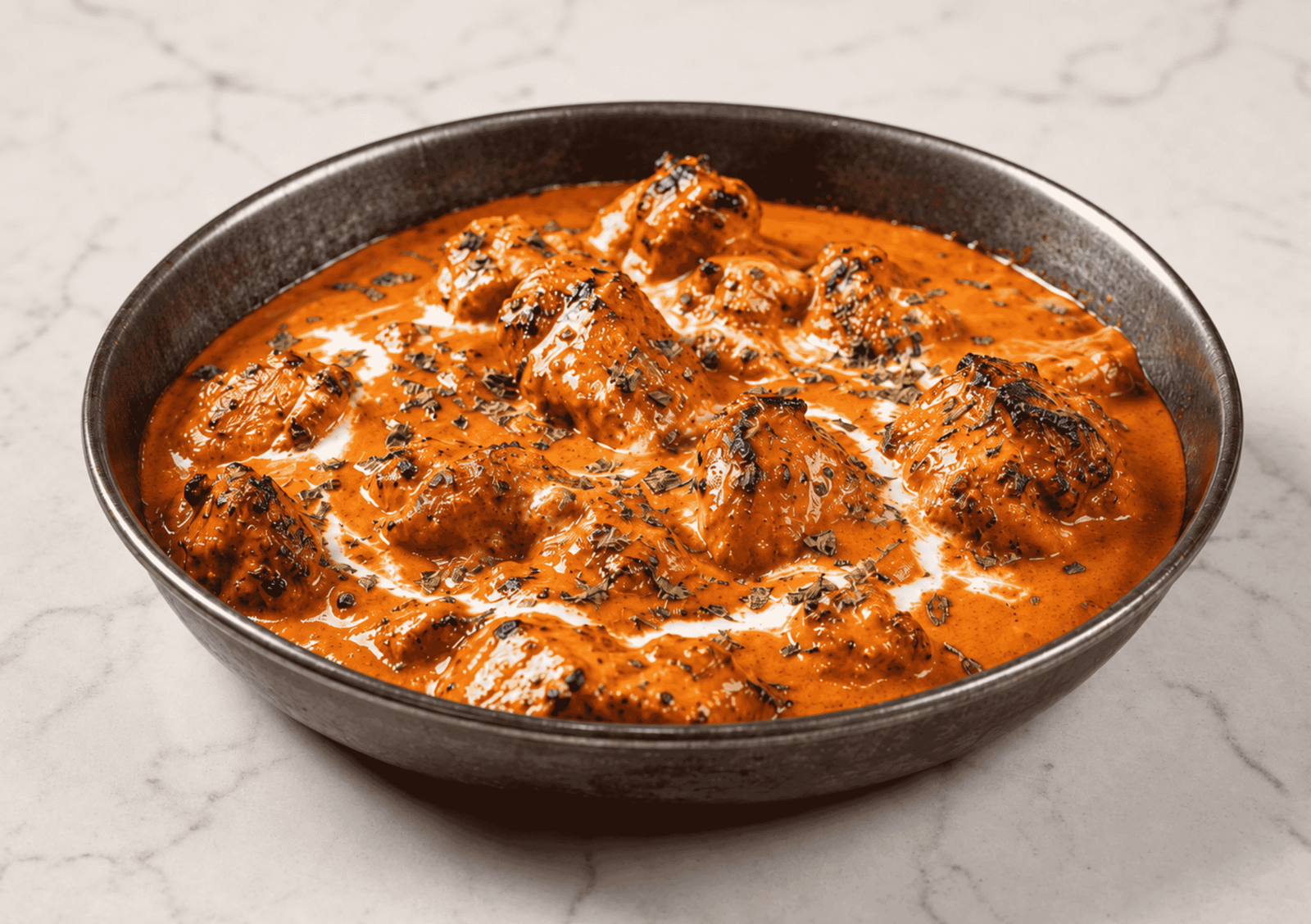
Curry House Chicken Tikka Masala
Ingredients
- 45 ml ghee or rapeseed oil
- 20 g garlic and ginger paste about 1 heaped tbsp
- 2 tsp mixed powder
- 2 tsp tandoori masala
- 1 tsp sweet paprika
- ¼ to ½ tsp Kashmiri chilli powder optional
- 25 g ground almonds
- 15 g coconut milk powder
- 80 g double concentrated tomato purée mixed with 80ml water
- 600 ml hot curry house base sauce
- 600 g cooked chicken tikka
- 10 to 20 g caster sugar to taste
- Food grade red colouring optional and used according to packet directions
- 150 ml single cream
- 1 tsp dried fenugreek leaves crushed between your fingers
- ½ tsp garam masala
- 1 to 2 tsp lemon juice to taste
- Fine sea salt to taste
- 3 tbsp finely chopped coriander
Instructions
- Heat the ghee or oil in a wide frying pan over a medium high heat. Add the garlic and ginger paste and stir for about 30 seconds, until fragrant and no longer raw smelling.
- Lower the heat slightly. Add the mixed powder, tandoori masala, paprika and optional Kashmiri chilli powder. Stir for 20 seconds, taking care not to scorch the spices.
- Stir in the ground almonds and coconut milk powder, followed immediately by the diluted tomato purée. Cook for 1 minute, stirring until the mixture is smooth and bubbling.
- Add 200ml of the hot base sauce. Return to a strong simmer and cook for 2 to 3 minutes, scraping the sauce from the sides of the pan as it reduces.
- Add the chicken tikka and 200ml more base sauce. Stir well and simmer for 3 minutes, until the chicken is hot and coated. Add the remaining base sauce and optional colouring, then reduce until the gravy reaches your preferred consistency.
- Stir in 10g sugar, then lower the heat and pour in the single cream. Simmer gently for 1 to 2 minutes without allowing the sauce to boil aggressively.
- Add the crushed fenugreek leaves and garam masala. Taste and adjust with more sugar if needed, followed by lemon juice and salt until the sauce is balanced.
- Stir through most of the chopped coriander. Serve immediately with the remaining coriander scattered over the top.



One Comment