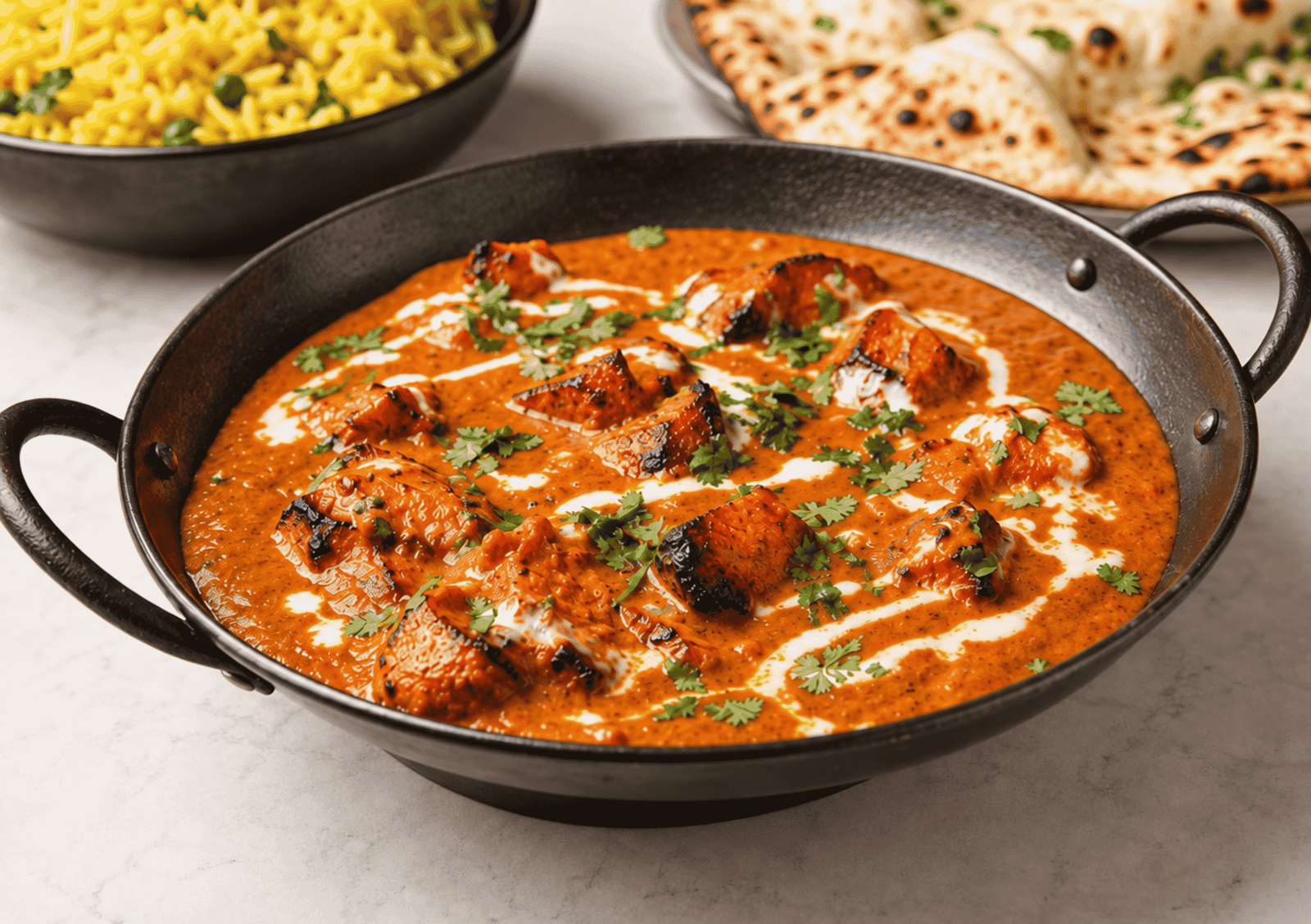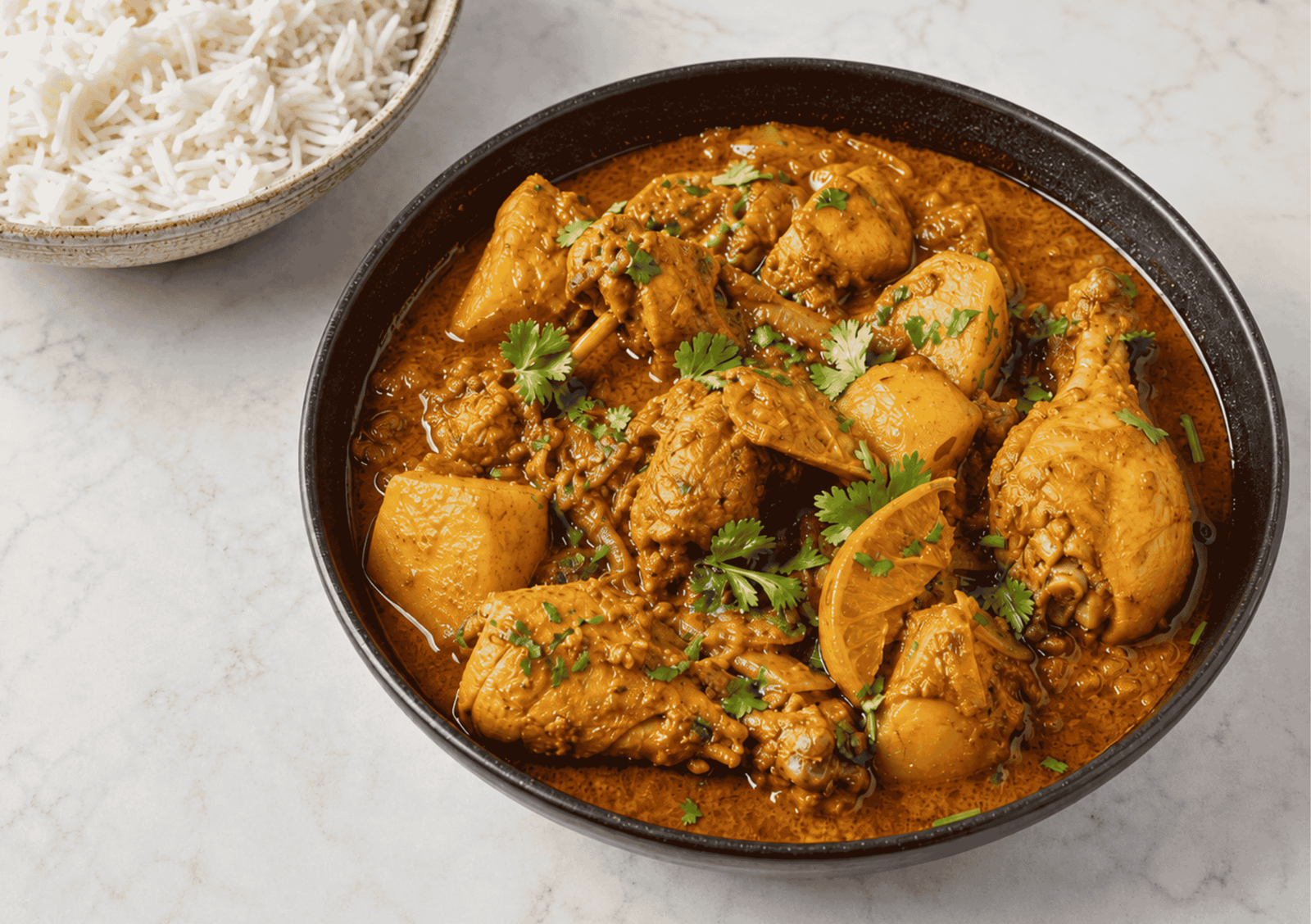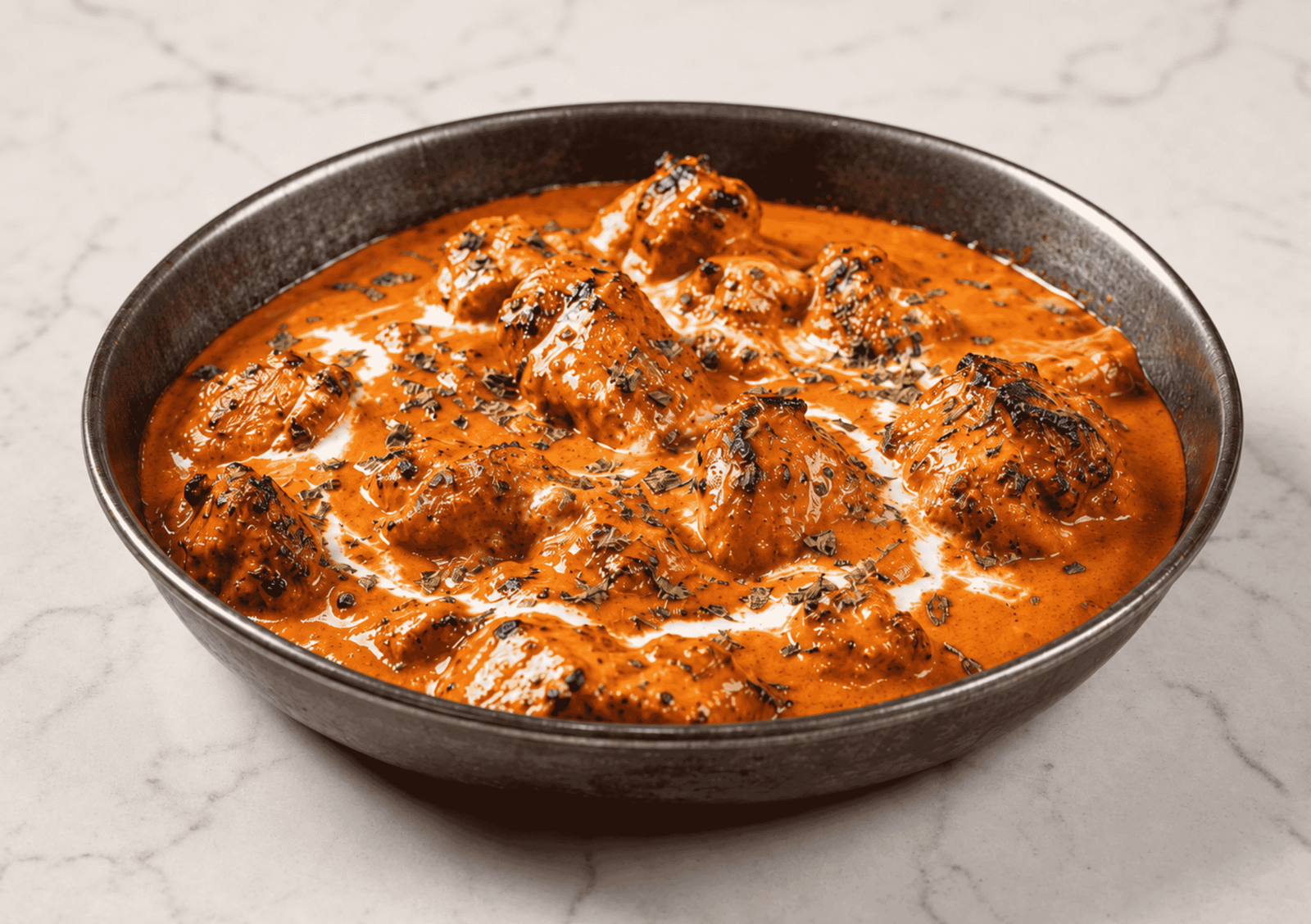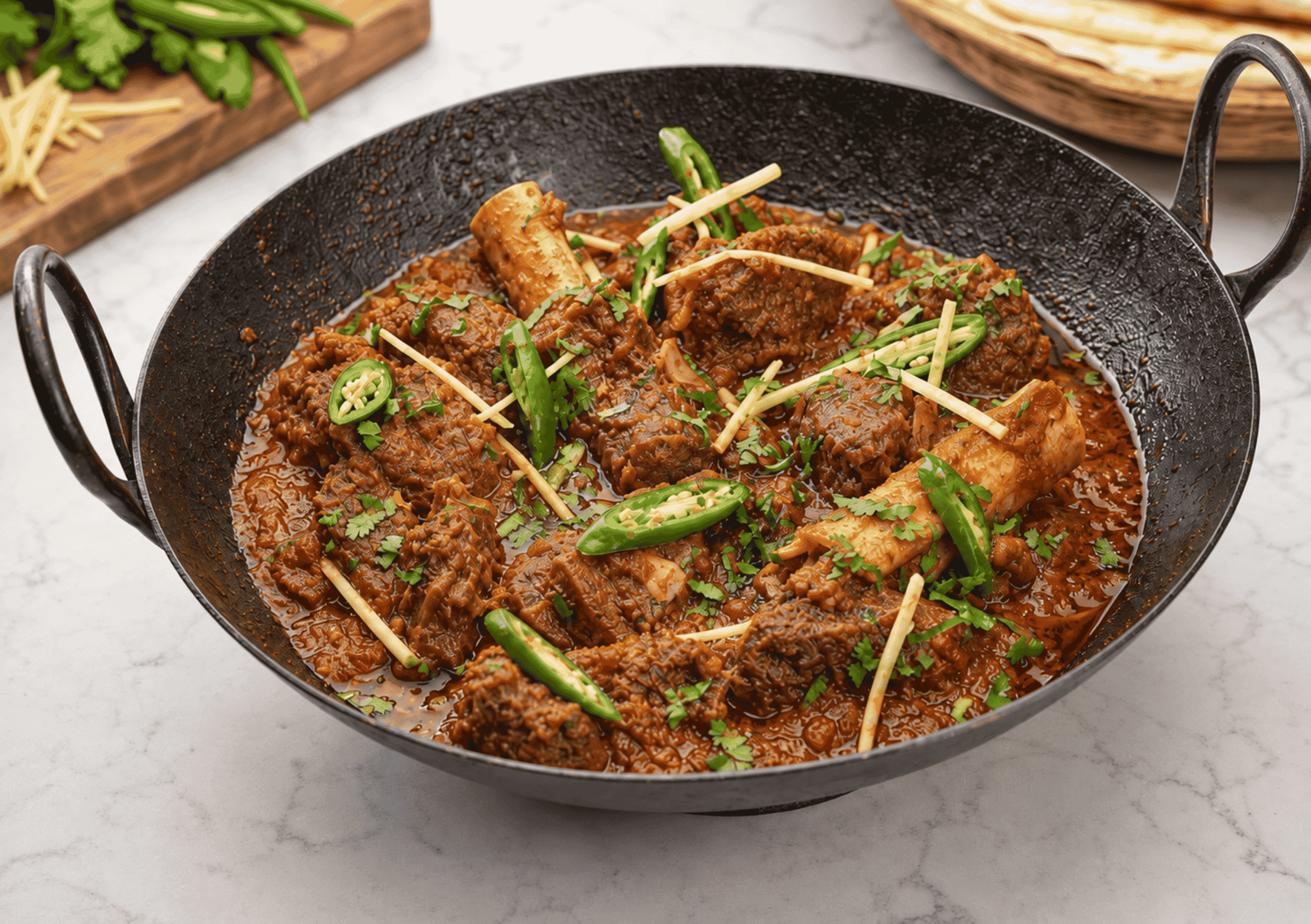
Pakistani Chicken Karahi
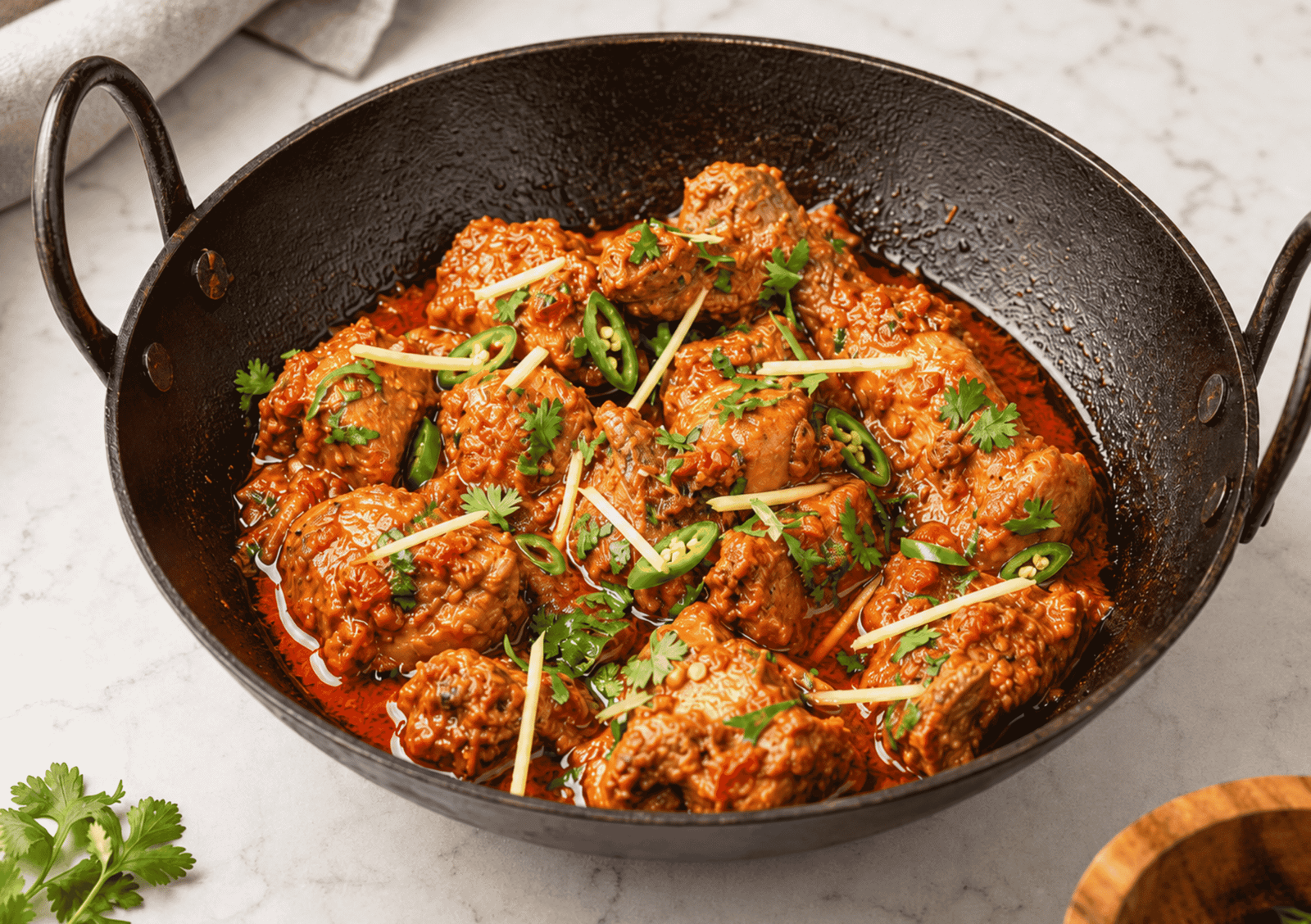
Pakistani Chicken Karahi is a lively, tomato rich chicken curry cooked from scratch in one pan. The sauce is reduced rather than loosened with stock or water, giving it a concentrated flavour and a thick masala that coats each piece of chicken.
This version serves four and stays close to the direct character of the dish. It uses bone-in chicken, ripe tomatoes, garlic, ginger, green chilli and a restrained selection of ground spices. Fresh coriander, sliced ginger and cracked black pepper are added at the end, where their flavours remain distinct.
What Is Chicken Karahi?
Chicken Karahi takes its name from the karahi, a deep, round cooking pan used across South Asia. Its broad surface and curved sides make it particularly useful for frying and reducing, which are both central to this recipe. A wok or wide, heavy frying pan is a practical alternative at home.
Pakistani versions commonly place chicken and tomato at the centre of the dish. The masala is usually thicker and more concentrated than the gravy of an everyday chicken curry. Fresh ginger, green chillies, coriander and black pepper give the finished karahi its recognisable aroma and heat.
This recipe does not use onion. Leaving it out keeps the tomato flavour clear and allows the sauce to reduce quickly. Yoghurt is added in a modest quantity for body and a gentle tang, rather than to turn the dish creamy.
What Gives Chicken Karahi Its Distinctive Flavour?
The flavour is built in stages rather than through a long list of spices.
- Bone-in chicken remains succulent during the covered cooking stage and gives the masala a fuller savoury flavour. Small pieces expose more surface to the sauce.
- Ripe plum tomatoes provide the body of the masala. They contain less excess liquid than many larger salad tomatoes, so they reduce more efficiently.
- Garlic and ginger form the aromatic base. Additional ginger is reserved for the garnish to give the finished curry a fresh, warm edge.
- Coriander and cumin add earthiness without masking the tomatoes.
- Kashmiri chilli powder brings a warm red colour and moderate heat. A little hot chilli powder can be added separately when a hotter karahi is wanted.
- Green chillies contribute a fresher heat than dried chilli alone. Slitting them gives a gentler result than finely chopping them.
- Cracked black pepper and garam masala are finishing spices. Adding them near the end preserves their aroma.
Should Chicken Karahi Contain Onions?
There is no single version of karahi followed in every home or restaurant. Some recipes include onion for sweetness and a larger quantity of masala, while many Pakistani versions rely on tomatoes, garlic and ginger without onion.
For this recipe, onion is omitted deliberately. The finished sauce is bright, concentrated and quick to reduce. If you prefer a softer, sweeter masala, cook one small finely chopped onion until lightly golden before adding the garlic and ginger. Allow a little more time for the sauce to reduce.
Why Must the Tomato Masala Be Reduced Properly?
Tomatoes release a surprising amount of water as they cook. Covering the pan initially helps them collapse and supplies enough moisture to cook the chicken, but the lid must then come off. A period of active frying and reduction concentrates the tomato, removes its raw acidity and encourages the fat to appear around the edges.
The karahi is ready when the masala is thick enough to cling to the chicken. It should not leave a pool of watery sauce beneath the meat. Use a wide pan and stir more frequently as the mixture thickens so the tomato does not catch.
Can I Make Chicken Karahi Without a Karahi Pan?
Yes. Use a wide, heavy frying pan, sauté pan or wok. A broad cooking surface allows steam to escape and makes reduction much easier. Avoid a narrow saucepan if possible, as the sauce takes longer to thicken and the chicken may become overcooked while you wait.
The pan should be large enough to hold the chicken in a fairly even layer. If the pieces are tightly crowded, they release liquid faster than it can evaporate.
How to Make Pakistani Chicken Karahi
Prepare the tomatoes, aromatics and garnishes before heating the pan. The recipe begins over a lively heat, then the chicken cooks gently under a lid before the sauce is reduced uncovered. Keep the yoghurt close to room temperature and whisk it until smooth so it combines evenly with the hot masala. See the recipe card at the bottom for printable directions and exact quantities.
Ingredients
- Rapeseed oil
- Ghee
- Skinless bone-in chicken pieces
- Fine salt
- Garlic
- Fresh ginger
- Green chillies
- Ripe plum tomatoes
- Ground coriander
- Ground cumin
- Kashmiri chilli powder
- Hot chilli powder, optional
- Full fat natural yoghurt
- Freshly cracked black pepper
- Garam masala
- Fresh coriander
- Lemon wedges, optional
Cooking Instructions
Step 1: Prepare the ingredients. Cut or ask your butcher to cut the chicken into small bone-in pieces. Finely grate the garlic and part of the ginger, slit the chillies, chop the tomatoes and prepare the coriander and ginger garnish. Whisk the yoghurt until smooth and let it lose its fridge chill.
Step 2: Sear the chicken. Heat the oil and ghee in a wide, heavy pan over medium high heat. Add the chicken and part of the salt. Fry for 6 to 8 minutes, turning the pieces regularly, until the exterior has lost its raw colour and is lightly golden in places.
Step 3: Fry the aromatics. Add the garlic, grated ginger and the first portion of green chillies. Stir fry for about 1 minute, keeping everything moving so the garlic becomes fragrant without browning deeply.
Step 4: Add the tomatoes and ground spices. Add the tomatoes, ground coriander, cumin, Kashmiri chilli powder, optional hot chilli powder and the remaining salt. Stir well, scraping any browned residue from the base of the pan into the tomatoes.
Step 5: Cover and cook the chicken. Lower the heat to medium-low and cover the pan. Cook for 18 to 22 minutes, stirring once or twice, until the tomatoes have collapsed and the chicken is cooked through. The exact time depends on the size and cut of the pieces.
Step 6: Reduce the masala. Remove the lid and raise the heat to medium high. Cook for 8 to 12 minutes, stirring and turning the chicken frequently. Press any remaining tomato pieces with the back of the spoon. Continue until the excess liquid has evaporated, the masala coats the chicken and fat begins to show around the edges.
Step 7: Add the yoghurt. Reduce the heat to medium low. Stir a spoonful of hot masala into the whisked yoghurt, then add the mixture gradually to the pan. Cook for 2 to 3 minutes, stirring continuously, until the yoghurt is fully incorporated and the masala thickens again.
Step 8: Finish and rest. Stir in the cracked black pepper and garam masala. Add the remaining green chillies, most of the ginger matchsticks and most of the coriander. Cook for 1 minute, remove from the heat and rest for 5 minutes. Garnish with the reserved ginger and coriander, then serve with lemon wedges if wanted.
How Do I Stop the Yoghurt Splitting?
Use full fat natural yoghurt and whisk it thoroughly before adding it. Yoghurt taken directly from the fridge is more likely to separate when it meets a very hot sauce, so let it stand while you prepare and cook the earlier stages.
Lower the heat before adding it. Mixing a spoonful of the hot masala into the yoghurt first also reduces the temperature difference. Add the tempered yoghurt gradually while stirring, then cook only until the masala becomes cohesive and glossy again.
If the yoghurt does separate slightly, the curry is still usable. Keep stirring over low heat and allow the masala to reduce. The appearance often improves as the moisture cooks away.
Chicken Karahi Cooking Tips
- Choose small bone-in chicken pieces. Large pieces take longer to cook and give the tomatoes more time to catch or become over reduced.
- Use ripe but firm plum tomatoes when available. Very watery tomatoes extend the reduction stage.
- Do not add water automatically. The tomatoes and chicken release enough moisture for the covered cooking stage in a well-fitting pan.
- Control the heat by watching the pan rather than relying only on the stated time. The masala needs energetic reduction, but it should not scorch.
- Add the black pepper at the end. Long cooking dulls its fresh aroma and can make it taste harsh.
- Rest the finished karahi briefly. This allows the thick masala to settle around the chicken before serving.
Variations and Substitutions
Boneless Chicken Karahi
Boneless chicken thighs can replace bone-in chicken. Cut them into large bite sized pieces and reduce the covered cooking time to approximately 10 to 12 minutes. Chicken breast can also be used, but it is less forgiving and should be cooked only until done.
A Hotter Karahi
Increase the hot chilli powder or finely chop one of the green chillies. Kashmiri chilli powder should remain in the recipe for colour and its gentler chilli character, even when additional heat is used.
Karahi Without Yoghurt
The yoghurt can be omitted. Reduce the tomatoes until the masala is thick and glossy, then finish with black pepper, garam masala and the fresh garnishes. The result will taste sharper and more tomato forward.
Tinned Tomatoes
Fresh tomatoes give the dish its characteristic bright taste, but good quality whole tinned tomatoes can be used when fresh tomatoes are pale or hard. Drain off some of the packing juice, crush the tomatoes and judge the reduction by consistency rather than time.
Troubleshooting Chicken Karahi
Why is my karahi watery?
The pan may be too narrow, the tomatoes may contain more water, or the curry may not have reduced for long enough. Remove the lid, use medium high heat and stir frequently until the masala grips the chicken. If the chicken is already tender, lift it onto a plate while you reduce the sauce, then return it to the pan for the final few minutes.
Why does the tomato masala taste sharp?
It needs further cooking. Continue frying and reducing until the raw tomato aroma softens and the fat begins to appear. A pinch of extra salt may improve the balance, but adding sugar is rarely necessary when the tomatoes are ripe.
Why is the chicken dry?
The pieces may have been too small or cooked too long during the reduction stage. Remove cooked chicken temporarily if the sauce still contains too much liquid. Boneless breast requires the shortest cooking time.
Why has the masala caught on the pan?
The heat was too high for the amount of moisture remaining. Lower the heat immediately and transfer the unburnt curry to a clean pan without scraping up any blackened residue. A tablespoon or two of hot water can loosen a masala that is merely sticking rather than burnt.
What to Serve with Chicken Karahi
Fresh naan or chapati is useful for gathering up the thick tomato masala. Plain basmati rice or pilau rice also works well, especially if you prefer a less rich accompaniment.
A cucumber raita can soften the chilli heat, while a simple onion and tomato salad adds crunch and acidity. Serve lemon wedges separately so each person can adjust the sharpness at the table.
How to Store and Reheat Chicken Karahi
Cool leftovers and refrigerate them within 2 hours. Keep the curry covered in the fridge and eat it within 48 hours, or freeze it if it will not be used in that time. Portioning before freezing makes it easier to defrost only what you need.
Defrost frozen chicken karahi thoroughly in the fridge. Reheat it once in a covered pan over medium low heat, stirring occasionally, until steaming hot throughout. Add a small splash of water only if the masala is sticking, as too much will weaken its concentrated consistency. Add fresh coriander and ginger after reheating if available.

Pakistani chicken karahi recipe
Ingredients
- 45 ml rapeseed oil
- 15 g ghee
- 750 g skinless bone-in chicken thighs and drumsticks cut into small pieces
- 1½ teaspoons fine salt divided, plus more if needed
- 20 g garlic finely grated or crushed
- 20 g fresh ginger divided
- 4 green chillies divided
- 550 g ripe plum tomatoes finely chopped
- 2 teaspoons ground coriander
- 1 teaspoon ground cumin
- 1 teaspoon Kashmiri chilli powder
- ¼ to ½ teaspoon hot chilli powder optional
- 60 g full fat natural yoghurt whisked and brought close to room temperature
- 1 teaspoon black peppercorns coarsely cracked
- ½ teaspoon garam masala
- 15 g fresh coriander roughly chopped
- Lemon wedges to serve, optional
Instructions
- Cut the chicken into small bone-in pieces. Finely grate the garlic and 10g of the ginger. Cut the remaining ginger into fine matchsticks. Slit all four chillies, keeping two for the finish.
- Heat the rapeseed oil and ghee in a wide, heavy pan over medium high heat. Add the chicken and ½ teaspoon salt. Fry for 6 to 8 minutes, turning regularly, until lightly coloured.
- Add the garlic, grated ginger and two slit chillies. Stir fry for 1 minute without allowing the garlic to burn.
- Add the tomatoes, ground coriander, cumin, Kashmiri chilli powder, optional hot chilli powder and remaining salt. Stir well.
- Reduce the heat to medium low, cover and cook for 18 to 22 minutes, stirring once or twice, until the chicken is cooked through and the tomatoes have collapsed.
- Remove the lid and raise the heat to medium high. Cook for 8 to 12 minutes, stirring frequently and breaking down the tomato, until the masala is thick and fat begins to appear at the edges.
- Reduce the heat to medium low. Mix a spoonful of hot masala into the yoghurt, then stir it gradually into the pan. Cook for 2 to 3 minutes until fully combined and thickened.
- Stir in the cracked black pepper, garam masala, remaining chillies, most of the ginger matchsticks and most of the coriander. Cook for 1 minute, then remove from the heat.
- Rest for 5 minutes. Finish with the reserved ginger and coriander and serve with lemon wedges if wanted.
Notes
- A wok, karahi or wide, heavy frying pan gives the quickest and most even reduction.
- Chicken is safely cooked when the thickest part reaches 75°C, with the probe kept away from the bone.
- Boneless chicken thigh needs less time. Begin checking it after 10 minutes of covered cooking.
- If the tomatoes release excessive liquid, remove the cooked chicken temporarily and reduce the masala before returning it to the pan.
- The optional hot chilli powder controls heat. Kashmiri chilli powder is retained mainly for colour and rounded chilli flavour.