Pakistani Mutton Karahi
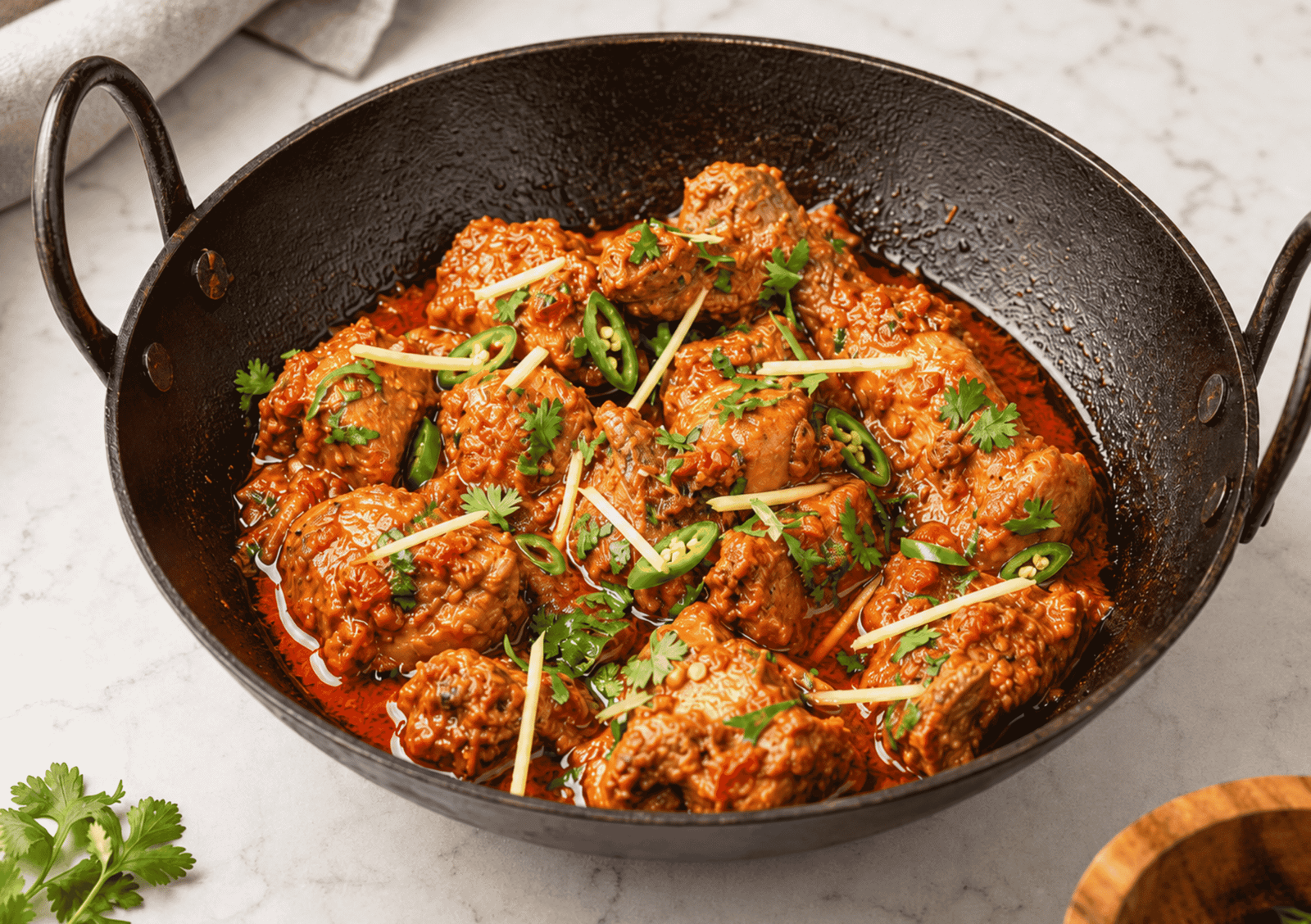
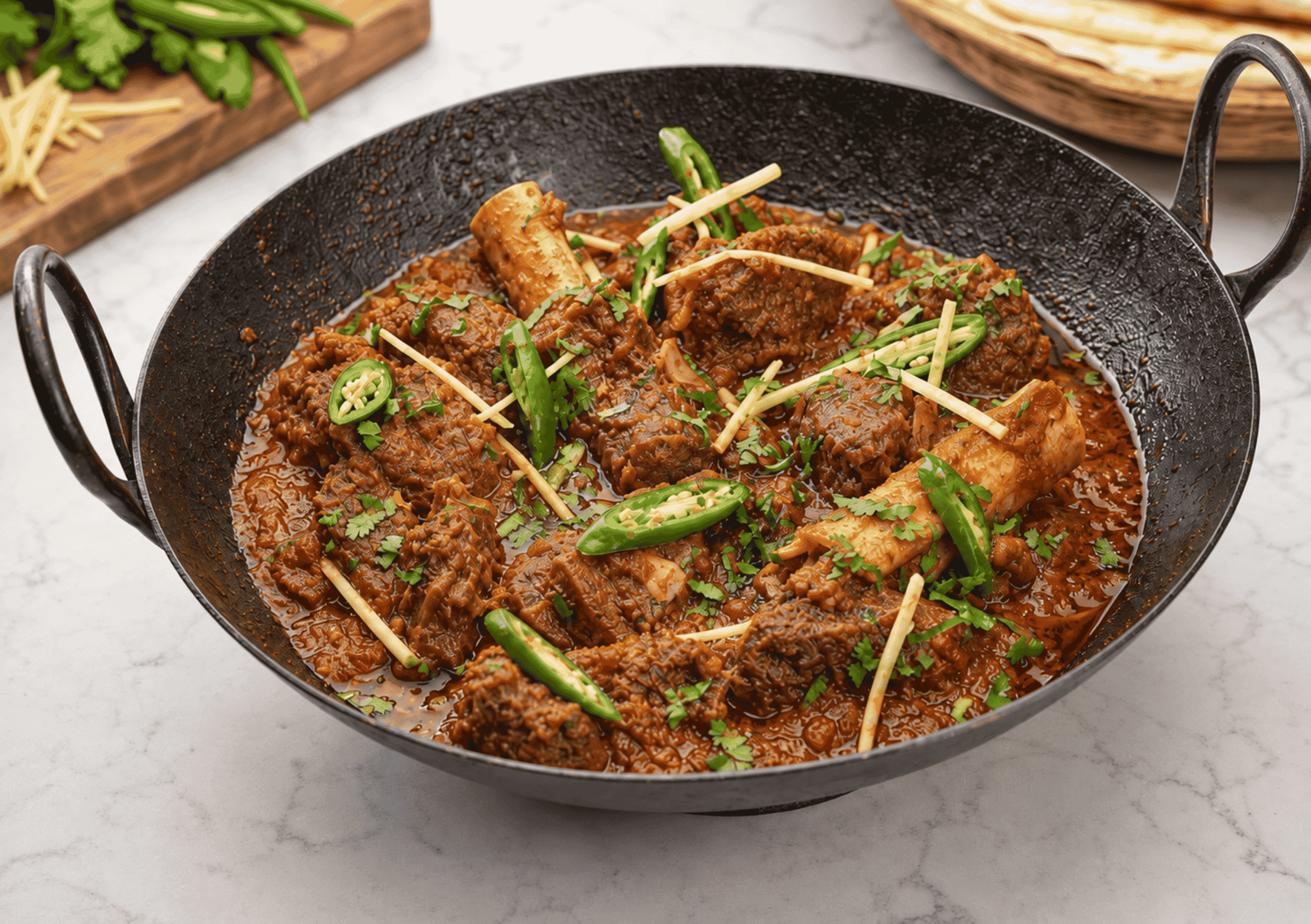
Pakistani Mutton Karahi is a rich, tomato led curry made with bone-in goat or lamb, fresh ginger, garlic, green chillies and black pepper. The meat is cooked until tender before the tomato masala is fried and reduced until it clings closely to every piece.
This from scratch recipe serves four and uses one pan. There is no base curry sauce and no onion in the masala. The finished karahi has only a modest amount of thick sauce, with fresh ginger, coriander and green chilli providing a clean, aromatic finish.
What Is Mutton Karahi?
Mutton Karahi, also called Karahi Gosht, is a Pakistani meat curry named after the deep, round karahi pan in which it is cooked. A traditional karahi provides a broad surface for frying and evaporation, but a heavy wok or wide sauté pan also works well on a domestic hob.
Unlike curries built around browned onions and a loose gravy, karahi relies heavily on fresh tomatoes, garlic, ginger and chillies. The sauce is cooked down through bhunai, a process of frying and stirring the masala until excess moisture evaporates, the flavours concentrate and the oil begins to separate.
Goat and lamb need considerably longer than chicken, so the meat is gently simmered first. Once tender, the remaining cooking liquid is reduced and the karahi is finished over a livelier heat.
Does Mutton Karahi Use Goat or Lamb?
In British butchery, mutton means meat from a mature sheep, while lamb comes from a younger animal. In Pakistani and wider South Asian food terminology, mutton often refers to goat, although lamb is also commonly used for the same dishes.
This recipe works with bone-in goat or lamb shoulder. Goat has a deeper flavour and usually needs longer cooking. Lamb is easier to find in British supermarkets and normally becomes tender more quickly. Ask a halal butcher for small karahi cut pieces if possible, as large pieces take longer and are harder to coat evenly with the finished masala.
True British mutton can also be used, but its age and cut affect the cooking time. Treat the timings as a guide and continue simmering until the meat yields when pressed with a spoon.
Why Is the Meat Cooked Before Making the Masala?
Tomatoes need active frying to become a concentrated karahi masala, while goat and mutton benefit from slower, gentler cooking. Trying to complete both processes at once can leave the meat tough or force the tomatoes to cook for so long that they catch on the pan.
Simmering the meat first gives you control over tenderness. Garlic, ginger, salt and black pepper season it as it cooks, while the bones give the small quantity of cooking liquid a savoury depth. Reducing that liquid in the same pan keeps its flavour in the final dish.
The meat should be tender enough to cut easily with a spoon but still remain attached to the bone. It will cook a little further during the tomato and bhunai stages.
Should You Remove the Tomato Skins?
Removing the skins gives the masala a smoother finish without using a blender. Halved tomatoes can be placed cut side down, covered and steamed in the pan until their skins loosen. Lift the skins away with tongs, then press the softened flesh into the meat.
This step is worthwhile for large or thick-skinned tomatoes but is not compulsory. If the skins are very fine, or you do not mind a more rustic texture, chop the tomatoes before adding them and leave the skins in place. Always remove the hard cores because they do not break down properly.
Which Pan Is Best for Mutton Karahi?
A heavy karahi, wok or wide sauté pan is ideal. The pan needs enough depth for the initial simmer but should also offer plenty of surface area once the lid comes off. This helps the cooking liquid and tomato moisture evaporate without keeping the meat over the heat for too long.
A narrow saucepan can be used, although reduction will take longer. If that is your only option, remove the tender meat temporarily while reducing excessive liquid, then return it before adding the final seasonings.
How to Make Pakistani Mutton Karahi
Have the tomatoes, chillies, spices and garnishes prepared before the meat finishes simmering. Check tenderness rather than relying entirely on the clock because goat, lamb and mature mutton soften at different rates. Once the meat is tender, the remaining stages move more quickly and require regular stirring.
See the recipe card at the bottom for printable directions and exact quantities.
Ingredients
- Bone-in goat or lamb shoulder
- Water
- Garlic
- Fresh ginger
- Fine salt
- Black pepper
- Rapeseed oil
- Green finger chillies
- Ripe plum tomatoes
- Ground coriander
- Ground cumin
- Kashmiri chilli powder
- Crushed chilli flakes
- Full fat natural yoghurt
- Salted butter
- Lemon juice
- Fresh coriander
Cooking Instructions
Step 1: Simmer the meat. Place the goat or lamb in a wide, heavy pan with water, part of the garlic, part of the ginger, salt and ground black pepper. Bring to a gentle boil, skim away any foam if necessary, then cover and simmer over low heat until the meat is nearly tender. Check occasionally and add a small amount of hot water if the pan becomes dry before the meat softens.
Step 2: Reduce the cooking liquid. Remove the lid and test the meat. It should yield under firm pressure from a wooden spoon without falling away from the bone. Raise the heat and reduce the remaining liquid until only a small amount surrounds the meat. Push the pieces to one side if this helps the liquid evaporate without overcooking them.
Step 3: Fry the meat and chillies. Add the oil and the first portion of green chillies. Fry over medium high heat for 4 to 5 minutes, turning the meat carefully, until it gains a little colour around the edges.
Step 4: Add the fresh aromatics. Stir in the remaining garlic and grated ginger. Cook for about 1 minute, keeping them moving so they lose their raw aroma without becoming dark or bitter.
Step 5: Steam the tomatoes. Add the halved tomatoes cut side down with a small splash of water. Cover the pan, lower the heat to medium and cook until the tomatoes soften and their skins loosen. Remove the skins with tongs as they become easy to lift away.
Step 6: Break down the tomatoes. Remove the lid and raise the heat to medium high. Press the tomato flesh with a wooden spoon and cook until it collapses into a thick masala. Stir around the base and sides of the pan regularly to prevent catching.
Step 7: Bhunai the masala. Add the ground coriander, cumin, Kashmiri chilli powder, crushed chilli flakes and the remaining salt. Fry for several minutes, stirring and turning the meat, until the tomatoes are fully integrated and the oil begins to show around the edge of the pan. Add a splash of hot water only if the masala is catching before the tomato has broken down.
Step 8: Add the yoghurt. Lower the heat. Mix a spoonful of hot masala into the whisked yoghurt, then add it gradually while stirring. Cook for 2 to 3 minutes until the yoghurt is incorporated and the masala becomes thick and glossy again.
Step 9: Finish the karahi. Stir in the butter, freshly cracked black pepper and lemon juice. Add most of the ginger matchsticks, finishing chillies and coriander. Cook gently for 1 minute, then taste and adjust the salt or lemon if needed.
Step 10: Rest and garnish. Remove the pan from the heat and rest the karahi for 5 minutes. Scatter over the reserved ginger and coriander before serving.
How Do You Know When Goat or Lamb Is Tender?
The meat should give under pressure from the edge of a wooden spoon and come away from the bone without being completely detached. A fork should enter the thickest pieces with little resistance. If the meat remains springy or difficult to pierce, it needs longer.
Goat frequently takes 75 to 100 minutes of gentle simmering, while small pieces of lamb shoulder may soften in 55 to 75 minutes. These are useful ranges rather than fixed rules. The animal’s age, the chosen cut and the size of the pieces all affect tenderness.
Do not begin the high heat reduction stage while the meat is still tough. The later karahi cooking is intended to concentrate the masala, not replace the slow tenderising stage.
Can I Use a Pressure Cooker?
Yes. An electric pressure cooker can shorten the first stage. Add the meat, water, first portions of garlic and ginger, salt and ground black pepper to the cooker. Cook on high pressure for approximately 20 minutes, followed by a 10-minute natural pressure release. Follow the manufacturer’s safety instructions before releasing the remaining pressure.
Check the meat after opening because particularly mature goat or mutton may need another short pressure cycle. Transfer the meat and cooking liquid to a wide pan, reduce the liquid, then continue with the frying and tomato stages. The final bhunai still needs to happen on the hob because evaporation is essential to the consistency.
Mutton Karahi Cooking Tips
- Ask for small, meaty bone-in pieces from the leg or shoulder. Avoid a bag containing mostly small bones and very little meat.
- Keep the simmer gentle. Rapid boiling can toughen the exterior before the connective tissue has softened.
- Use properly ripe tomatoes. Firm, pale tomatoes stay sharp and take longer to collapse.
- Reduce the meat cooking liquid before adding the oil. Too much liquid prevents the meat from frying and can leave the final karahi watery.
- Use freshly cracked black pepper at the end. Long cooking reduces its aroma.
- Keep the final sauce concentrated. Karahi should have enough masala to coat the meat, not a deep pool of gravy.
- Stir carefully after the meat becomes tender so the pieces remain intact.
Variations and Substitutions
Lamb Karahi
Use bone-in lamb shoulder cut into small pieces. Begin checking tenderness after about 55 minutes. Lamb contains more fat than many goat cuts, so you may wish to reduce the quantity of oil slightly if a generous amount of fat appears during simmering.
Goat Karahi
Goat gives a leaner result with a deeper savoury flavour. It generally needs the full cooking time and may require additional hot water during simmering. Do not rush this stage.
Karahi Without Yoghurt
The yoghurt can be omitted for a sharper, more tomato focused masala. Continue the bhunai until the tomatoes coat the meat and the oil separates, then finish with butter, black pepper, lemon, ginger, chillies and coriander.
A Hotter Mutton Karahi
Increase the chilli flakes or finely chop one of the green chillies. Keep the Kashmiri chilli powder because it contributes colour and a milder chilli flavour rather than intense heat alone.
Using Tinned Tomatoes
Fresh tomatoes suit the direct flavour of karahi, but drained whole tinned plum tomatoes are a reasonable fallback when fresh tomatoes are hard and flavourless. Crush them in the pan and allow extra time for their liquid to reduce. The finished flavour will be deeper and less fresh.
Troubleshooting Mutton Karahi
Why is the meat still tough?
It has not simmered for long enough. Add hot water, cover the pan and continue cooking gently until the meat yields when pressed. Salt does not prevent the meat becoming tender, so there is no need to delay seasoning.
Why is my karahi watery?
The initial cooking liquid may not have been reduced sufficiently, or the tomatoes may contain more water than expected. Remove the lid and cook over medium high heat, stirring frequently. If the meat is already very tender, lift it out while reducing the masala and return it afterwards.
Why has the tomato masala caught on the pan?
As moisture evaporates, the pan needs more frequent stirring and slightly lower heat. Add a small splash of hot water and loosen only the caramelised residue. If any part has burnt black, transfer the unburnt curry to a clean pan without scraping up the bitter residue.
Why did the yoghurt split?
Cold or low-fat yoghurt is more likely to separate. Use full fat yoghurt, whisk it smooth, let it lose its fridge chill and lower the heat before adding it. Tempering it with a spoonful of hot masala also reduces the sudden temperature change.
What to Serve with Mutton Karahi
Naan, chapati or paratha suits the thick masala particularly well. Plain basmati rice or pilau rice can also be served, although karahi is commonly enjoyed with bread so the sauce can be gathered directly from the plate.
For contrast, add cucumber raita, sliced red onion dressed with lemon, or a simple tomato and cucumber salad. Keep the accompaniments restrained because the karahi already has a concentrated tomato and chilli flavour.
How to Store and Reheat Mutton Karahi
Cool leftovers and refrigerate them within 2 hours. Store the karahi in a covered container and eat it within 48 hours, or freeze it if it will not be used within that time. Divide it into smaller portions before chilling or freezing so it cools and defrosts more evenly.
Defrost frozen karahi thoroughly in the fridge. Reheat it only once in a covered pan over medium low heat, stirring occasionally, until steaming hot throughout. A small splash of water can prevent the thick masala from catching. Fresh ginger and coriander added after reheating will restore some of the original aroma.

Pakistani Mutton Karahi
Ingredients
To Cook the Meat
- 800 g bone-in goat or lamb shoulder cut into small 3cm pieces
- 600 ml water plus more if required
- 15 g garlic finely grated or crushed
- 15 g fresh ginger finely grated
- 1 teaspoon fine salt
- ¼ teaspoon ground black pepper
For the Karahi
- 60 ml rapeseed oil
- 2 green finger chillies slit lengthways
- 15 g garlic finely grated or crushed
- 15 g fresh ginger finely grated
- 600 g ripe plum tomatoes cored and halved
- 50 ml hot water
- 1½ teaspoons ground coriander
- 1 teaspoon ground cumin
- 1 teaspoon Kashmiri chilli powder
- ½ teaspoon crushed chilli flakes or to taste
- ½ teaspoon fine salt plus more if needed
- 75 g full fat natural yoghurt whisked and brought close to room temperature
- 15 g salted butter
- 1 teaspoon black peppercorns coarsely cracked
- 2 teaspoons lemon juice plus more if needed
To Finish
- 3 small green chillies slit lengthways
- 20 g fresh ginger cut into fine matchsticks
- 20 g fresh coriander roughly chopped
Instructions
- Put the goat or lamb, 600ml water, 15g garlic, 15g grated ginger, 1 teaspoon salt and ground black pepper in a wide, heavy pan. Bring to a gentle boil, skim if needed, then cover and simmer over low heat until nearly tender. Allow approximately 75 to 100 minutes for goat or 55 to 75 minutes for lamb, checking periodically and adding hot water if necessary.
- Test the thickest pieces. They should yield under firm pressure from a wooden spoon but remain attached to the bone. Remove the lid, raise the heat and reduce the cooking liquid for 8 to 12 minutes until only a small amount remains.
- Add the rapeseed oil and two slit green chillies. Fry over medium high heat for 4 to 5 minutes, carefully turning the meat until lightly coloured around the edges.
- Add the remaining 15g garlic and 15g grated ginger. Stir fry for 1 minute without allowing them to darken.
- Add the tomato halves cut side down and pour in 50ml hot water. Cover and cook over medium heat for 8 to 10 minutes, until the tomatoes soften and their skins loosen. Remove the skins with tongs.
- Remove the lid and raise the heat to medium high. Press the tomatoes with a wooden spoon and cook for 10 to 15 minutes, stirring regularly, until they collapse into the meat.
- Add the ground coriander, cumin, Kashmiri chilli powder, crushed chilli flakes and ½ teaspoon salt. Fry for 4 to 5 minutes, stirring carefully, until the masala is thick and oil begins to appear around the edges. Add a small splash of hot water only if it catches before the tomato has broken down.
- Lower the heat. Mix a spoonful of hot masala into the whisked yoghurt, then stir it gradually into the pan. Cook for 2 to 3 minutes until incorporated and glossy.
- Stir in the butter, cracked black pepper and lemon juice. Add the three finishing chillies, three quarters of the ginger matchsticks and three quarters of the coriander. Cook gently for 1 minute, then check the seasoning.
- Remove from the heat and rest for 5 minutes. Garnish with the remaining ginger and coriander before serving.
Notes
- The stated cooking time allows for goat. Lamb shoulder may be ready sooner.
- Meat from an older animal may require additional simmering and water. Tenderness is a more reliable guide than a fixed time.
- A karahi, heavy wok or wide sauté pan gives the most efficient reduction.
- The yoghurt is optional. Omitting it gives the tomato masala a sharper finish.
- If using an electric pressure cooker for the first stage, cook on high pressure for approximately 20 minutes and allow a 10-minute natural release. Check tenderness before transferring everything to a wide pan.
- Keep the finished curry fairly dry. Its masala should coat the meat rather than run across the plate.