Tandoori Lamb Tikka
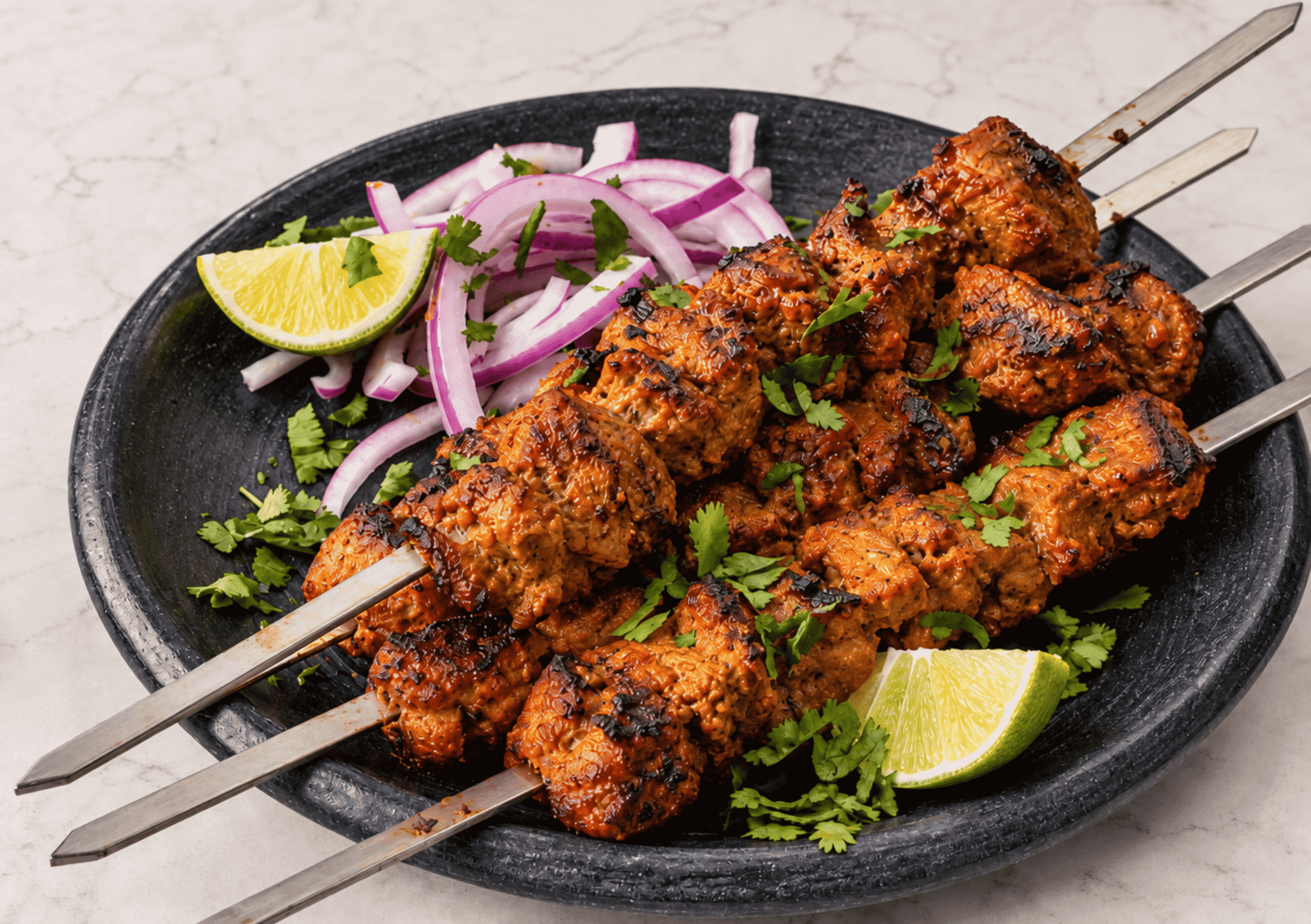
Tandoori lamb tikka consists of boneless lamb pieces marinated with lime, garlic, ginger, yoghurt and spices, then cooked over fierce heat until browned and lightly charred. Serve it from the skewers with chutney and salad, wrap it in naan, or use it as the prepared meat in a curry house sauce.
This version uses lamb leg because it cooks quickly and stays tender when cut into even pieces. Homemade Tandoori Masala provides the main seasoning, while mustard, mint and green chilli give the marinade a character suited specifically to lamb.
What Is Tandoori Lamb Tikka?
The word tikka refers to pieces or chunks. For lamb tikka, boneless meat is cut into bite sized pieces, marinated and cooked quickly over intense heat. The yoghurt coating browns around the edges while the centre remains moist.
A traditional tandoor produces strong radiant heat and a distinctive charred surface. At home, a hot charcoal barbecue gives the closest effect. A fully preheated oven followed by a short spell beneath the grill is the most accessible alternative.
Lamb tikka can be served as a starter or main dish, but it is also useful as a curry house prepared ingredient. Adding cooked tikka towards the end of a sauce introduces roasted spice flavour and charred edges that plain pre-cooked lamb does not provide.
Which Cut of Lamb Is Best for Tikka?
Boneless lamb leg is the most dependable cut for this recipe. It is tender enough for quick grilling, contains less connective tissue than braising cuts and is easy to divide into even pieces.
Lamb shoulder has more internal fat and a richer flavour, but its connective tissue usually benefits from slower cooking. A particularly tender piece can work, although the result is less predictable. Lamb neck and stewing lamb are better used for Curry House Pre-Cooked Lamb or Beef.
Trim away silverskin and thick exterior fat, but leave fine seams of internal fat because they help the lamb remain moist. Cut the meat into pieces roughly 4cm across so they have time to colour without drying out.
Why Use Two Marinades?
The first marinade places lime juice, salt, Garlic and Ginger Paste and optional green chilli directly against the meat. It begins seasoning the lamb before the thicker yoghurt coating is added.
Keep this stage to 20 minutes. A concentrated acidic mixture does not tenderise a tough cut all the way through, and leaving it for several hours can make the surface texture soft while the interior remains unchanged.
The second marinade contains thick yoghurt, Homemade Tandoori Masala, mustard, mint and oil. It clings to the lamb, carries the seasoning and creates the coating that browns under intense heat. Add it directly to the first marinade without rinsing or draining the meat.
How Long Should Lamb Tikka Marinate?
After adding the yoghurt mixture, refrigerate the lamb for at least 4 hours. An overnight rest gives the aromatics and spices more time to season the 4cm pieces.
Keep the total time in the yoghurt marinade to no more than 24 hours. This recipe already contains lime and salt, so extending it for several days is unnecessary and may affect the exterior texture.
If time is limited, 1 hour in the second marinade will still produce good flavour, although the seasoning will not penetrate as evenly. Keep the bowl covered and refrigerated throughout.
What Do Mustard and Mint Add?
English mustard gives the yoghurt coating a gentle sharpness that suits lamb. The measured teaspoon should support the spices rather than make the tikka taste like mustard. Do not replace it with the same amount of mustard powder, which is more concentrated.
Fresh mint brings a clean herbal note that balances the richness of the meat. Chop it finely so it spreads through the yoghurt and does not form large leaves that burn beneath the grill.
Food grade mustard oil provides a more pronounced savoury heat. Only use a product whose label confirms it is suitable for cooking. Rapeseed oil is a neutral and widely available alternative.
Does Lamb Tikka Need Red Food Colouring?
No. Homemade Tandoori Masala and Kashmiri chilli give the marinade a natural warm red orange colour, while high heat creates dark caramelised patches around the edges.
Some restaurant tikka is made with food colouring for a brighter appearance, but it adds no flavour. If you choose to use it, follow the product label and mix a small measured quantity evenly into the yoghurt marinade.
Do not judge doneness by colour alone. The yoghurt and spices can darken before the centre of a thick piece is fully cooked.
How to Make Tandoori Lamb Tikka
Use flat metal skewers if possible because they hold the lamb securely and make turning easier. Set the skewers over a wire rack so hot air can reach the meat and excess marinade can drip away. If using wooden skewers, soak them in water for at least 30 minutes before threading the lamb.
See the recipe card at the bottom for printable directions
Ingredients
Lamb and First Marinade
- 800g boneless lamb leg, trimmed and cut into roughly 4cm pieces
- 20ml fresh lime juice, about 1½ tablespoons
- 2 tablespoons Garlic and Ginger Paste
- 1 teaspoon green chilli paste, optional
- ¾ teaspoon fine salt
Second Marinade
- 150g thick Greek style natural yoghurt
- 2 tablespoons Homemade Tandoori Masala, about 14g
- 1 teaspoon Kashmiri chilli powder, optional or to taste
- 1 teaspoon English mustard
- 1 tablespoon finely chopped fresh mint
- 1 tablespoon food grade mustard oil or rapeseed oil
- ½ teaspoon fine salt
For Cooking and Serving
- 1 tablespoon melted ghee or rapeseed oil, for brushing
- 1 lime, cut into wedges
- 2 tablespoons chopped fresh coriander, optional
- Sliced red onion, optional
- Chaat Masala, optional, for finishing
Cooking Instructions
- Put the lamb in a non-reactive bowl. Add the lime juice, Garlic and Ginger Paste, optional green chilli paste and ¾ teaspoon salt. Massage the mixture into every piece, cover and refrigerate for 20 minutes.
- Whisk the yoghurt in a separate bowl until smooth. Add the Homemade Tandoori Masala, Kashmiri chilli, English mustard, mint, mustard oil or rapeseed oil and ½ teaspoon salt. Stir until evenly combined.
- Add the second marinade to the lamb and turn until every piece is thoroughly coated. Cover and refrigerate for at least 4 hours or up to 24 hours.
- Heat the oven to 240°C, 220°C fan or Gas 9. Line a sturdy roasting tray with foil and place a wire rack over it. Prepare the grill for the final charring stage if it takes time to heat.
- Thread the lamb onto metal skewers through the thickest part of each piece, leaving small gaps for air circulation. Rest the skewers across the rack and allow heavy excess marinade to drip away. Discard the marinade left in the bowl.
- Roast for 7 minutes, turn the skewers and roast for another 4 to 6 minutes. Brush the lamb lightly with melted ghee or oil during the final few minutes.
- Switch to the hottest grill setting. Place the skewers close to the heat and grill for 1 to 3 minutes, turning once, until the coating has browned and the edges are lightly charred. Watch continuously because the yoghurt and spices can burn quickly.
- Check the centre of the thickest piece. For cooked through curry house tikka, it should reach 75°C for 30 seconds, or an equivalent safe time and temperature combination. Rest for 3 minutes, then serve with lime, coriander, onion and optional Chaat Masala.
How to Cook Lamb Tikka on a Barbecue
Prepare a hot charcoal or gas barbecue with a cooler section to one side. Clean and lightly oil the cooking grate before adding the skewers. Charcoal gives the lamb a stronger live fire aroma, while gas provides easier temperature control.
Cook over direct heat for approximately 8 to 12 minutes, turning every 2 minutes. Move the skewers to the cooler side if dripping fat causes persistent flames or the coating darkens before the centre is ready.
Brush with ghee during the final few minutes rather than at the start. Check the largest piece, then rest the cooked lamb for 3 minutes before serving.
Can I Make Lamb Tikka Without Skewers?
Yes. Arrange the pieces on a lightly oiled wire rack set over a foil lined roasting tray, leaving space between them. Turn each piece with tongs after about 7 minutes and finish beneath the grill.
Do not pour the remaining marinade into a deep roasting dish. The released liquid traps steam around the meat and prevents the coating from browning properly.
For an air fryer, cook the lamb in a single uncrowded layer and follow the appliance manufacturer’s guidance for lamb pieces. Work in batches and check the centre of the thickest piece rather than relying only on the timer.
How Do You Keep Lamb Tikka Tender?
Begin with lamb leg rather than a stewing cut. Marinade adds seasoning and affects the surface, but it cannot turn connective tissue rich neck or mature shoulder into tender quick grilled meat.
Cut the pieces evenly and use intense heat. A low oven prolongs cooking and dries the lamb before the coating develops colour. Preheat the oven, grill or barbecue completely before the meat is added.
Remove heavy excess marinade because a very thick layer insulates the lamb and delays browning. Cook only until the centre is safely done, then use the short grill stage for colour rather than extending the main cooking time.
Why Is My Lamb Tikka Chewy?
The cut may be too tough for quick cooking. Lamb neck, stewing lamb and many shoulder pieces need slow, moist heat regardless of how long they are marinated.
Chewiness can also result from small pieces being cooked for too long. Keep the cubes close to 4cm and begin checking at the early end of the cooking range.
If cooked tikka is unexpectedly firm, slice it thinly across the grain for wraps or simmer it gently in a curry sauce. The latter changes the charred surface slightly but can improve the texture.
Why Is the Marinade Sliding off the Lamb?
The yoghurt may be too thin or the lamb may have been wet before marinating. Use thick Greek style yoghurt and pat the trimmed meat dry before adding the first marinade.
Do not add extra lime juice without adjusting the rest of the mixture. Excess liquid thins the yoghurt and collects in the roasting tray.
Allow heavy clumps to drip away before cooking. The lamb needs a thin, even coating rather than a heavy layer. Do not add flour to thicken a watery marinade because it can produce a pasty surface.
How to Use Lamb Tikka in a Curry
Lamb tikka is already cooked, so add it towards the end of the curry. Prepare and reduce the sauce first, then add approximately 450 to 500g cooked tikka for a four serving curry and simmer only until the meat is steaming hot.
Use it in Lamb Tikka Masala, Lamb Jalfrezi, Lamb Madras, Lamb Bhuna, Lamb Pathia or Lamb Chilli Garlic. The charred yoghurt coating gives these sauces a more roasted character than plain pre-cooked lamb.
For curries that need very soft meat and long simmering, use Curry House Pre-Cooked Lamb or Beef instead. That preparation is better suited to shoulder, neck and other braising cuts.
Variations and Substitutions
- Tender lamb shoulder: It can be used, but the result may be firmer than lamb leg. Avoid pieces containing thick connective tissue.
- Mild lamb tikka: Omit the green chilli paste and additional Kashmiri chilli. The Tandoori Masala still provides warmth and colour.
- No mustard oil: Use rapeseed oil. The flavour will be milder but the marinade will still brown properly.
- No English mustard: Omit it rather than substituting an equal quantity of dry mustard powder.
- Dairy free marinade: Use thick unsweetened soya yoghurt. Coconut yoghurt adds a noticeable coconut flavour.
- Lemon instead of lime: Use the same measured quantity for a slightly softer citrus note.
- No fresh mint: Use 1 teaspoon finely crushed dried mint. Do not substitute sweetened bottled mint jelly.
- No ghee: Brush the lamb with rapeseed oil or omit the final baste.
Cooking Tips
- Cut against obvious long muscle fibres when preparing the lamb leg.
- Keep the pieces similar in size so they cook at the same rate.
- Thread each cube through its thickest section and leave small gaps between pieces.
- Preheat the cooking equipment completely before adding the lamb.
- Use a wire rack so the meat sits above released liquid.
- Baste near the end, when dripping fat is less likely to cause barbecue flare ups.
- Use clean utensils and a clean plate for the cooked lamb. Discard marinade that has touched raw meat.
- Rest the tikka briefly, but serve it while the edges are still hot and freshly charred.
How to Store, Freeze and Reheat Lamb Tikka
Cool cooked lamb promptly and place it in the fridge or freezer within 2 hours. Keep refrigerated tikka for up to 2 days in a covered container.
Freeze in portions suitable for one curry, removing as much air as practical. For the best texture and flavour, use frozen lamb tikka within 3 months. Defrost overnight in the fridge and use within 24 hours.
Reheat cooked lamb only once and make sure it is steaming hot throughout. When adding it to a curry, simmer it in the sauce during the final few minutes. Avoid prolonged boiling, which can make the meat firm and soften the charred coating.
What to Serve with Tandoori Lamb Tikka
Serve the skewers with Coriander and Mint Chutney, Indian Mint Sauce, Cucumber Raita or Tamarind Sauce. Add lime wedges, sliced red onion and a crisp salad for a starter or light meal.
For a larger meal, pair the tikka with naan, chapati or Pilau Rice. It also works well in a wrap with shredded lettuce, onion and a spoonful of raita.

Tandoori Lamb Tikka
Ingredients
Lamb and First Marinade
- 800 g boneless lamb leg trimmed and cut into roughly 4cm pieces
- 20 ml fresh lime juice about 1½ tablespoons
- 2 tablespoons Garlic and Ginger Paste
- 1 teaspoon green chilli paste optional
- ¾ teaspoon fine salt
Second Marinade
- 150 g thick Greek-style natural yoghurt
- 2 tablespoons Homemade Tandoori Masala about 14g
- 1 teaspoon Kashmiri chilli powder optional or to taste
- 1 teaspoon English mustard
- 1 tablespoon finely chopped fresh mint
- 1 tablespoon food-grade mustard oil or rapeseed oil
- ½ teaspoon fine salt
For Cooking and Serving
- 1 tablespoon melted ghee or rapeseed oil for brushing
- 1 lime cut into wedges
- 2 tablespoons chopped fresh coriander optional
- Sliced red onion optional
- Chaat Masala optional, for finishing
Instructions
- Put the lamb in a non-reactive bowl. Add the lime juice, Garlic and Ginger Paste, optional green chilli paste and ¾ teaspoon salt. Massage the mixture into every piece, cover and refrigerate for 20 minutes.
- Whisk the yoghurt in a separate bowl until smooth. Add the Homemade Tandoori Masala, Kashmiri chilli, English mustard, mint, mustard oil or rapeseed oil and ½ teaspoon salt. Stir until evenly combined.
- Add the second marinade to the lamb and turn until every piece is thoroughly coated. Cover and refrigerate for at least 4 hours or up to 24 hours.
- Heat the oven to 240°C, 220°C fan or Gas 9. Line a sturdy roasting tray with foil and place a wire rack over it. Prepare the grill for the final charring stage if it takes time to heat.
- Thread the lamb onto metal skewers through the thickest part of each piece, leaving small gaps for air circulation. Rest the skewers across the rack and allow heavy excess marinade to drip away. Discard the marinade left in the bowl.
- Roast for 7 minutes, turn the skewers and roast for another 4 to 6 minutes. Brush the lamb lightly with melted ghee or oil during the final few minutes.
- Switch to the hottest grill setting. Place the skewers close to the heat and grill for 1 to 3 minutes, turning once, until the coating has browned and the edges are lightly charred. Watch continuously because the yoghurt and spices can burn quickly.
- Check the centre of the thickest piece. For cooked-through curry-house tikka, it should reach 75°C for 30 seconds, or an equivalent safe time and temperature combination. Rest for 3 minutes, then serve with lime, coriander, onion and optional Chaat Masala.
Notes
Nutrition
Frequently Asked Questions
Can I prepare lamb tikka the day before?
Yes. Add the yoghurt marinade, cover the bowl and refrigerate overnight. Cook the lamb within 24 hours of adding the second marinade.
Do I discard the first marinade?
No. Add the yoghurt mixture directly to the lamb after the first 20 minute stage. The measured lime, garlic, ginger and chilli become part of the complete marinade.
Can I freeze lamb in the marinade?
Freeze it soon after adding the yoghurt mixture rather than after a full day of marinating. Defrost completely in the fridge and cook within 24 hours. Do not refreeze previously frozen raw lamb unless it has been cooked first.
Is lamb tikka very spicy?
Not necessarily. The green chilli paste and extra Kashmiri chilli are adjustable. Omit both for a mild version while retaining the aromatic Tandoori Masala.
Can I use shop bought tandoori masala?
Yes, but blends differ in salt, chilli and acidity. Check the label and reduce the added salt if the commercial mixture already contains a substantial amount.