Pakistani Chicken Biryani
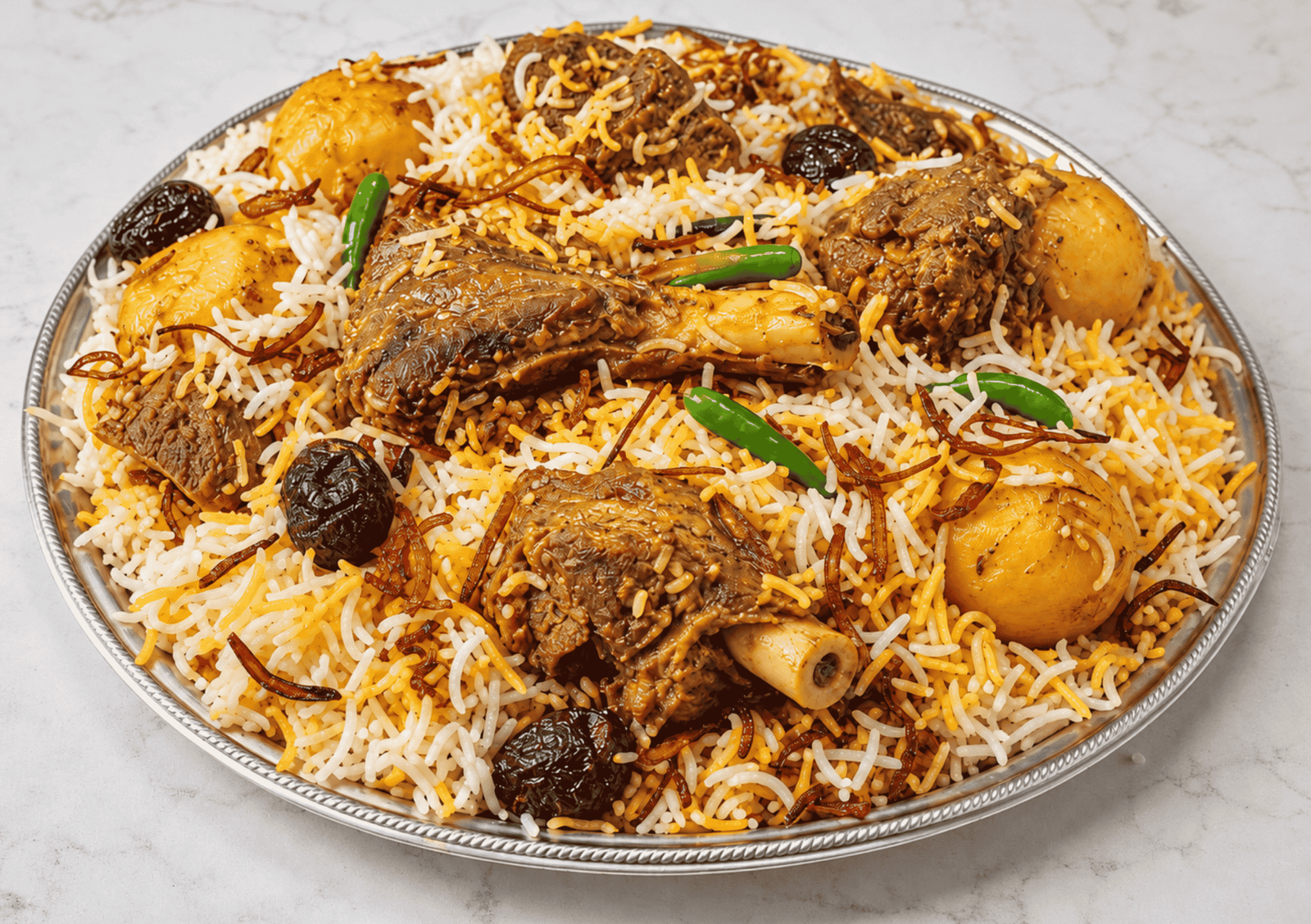
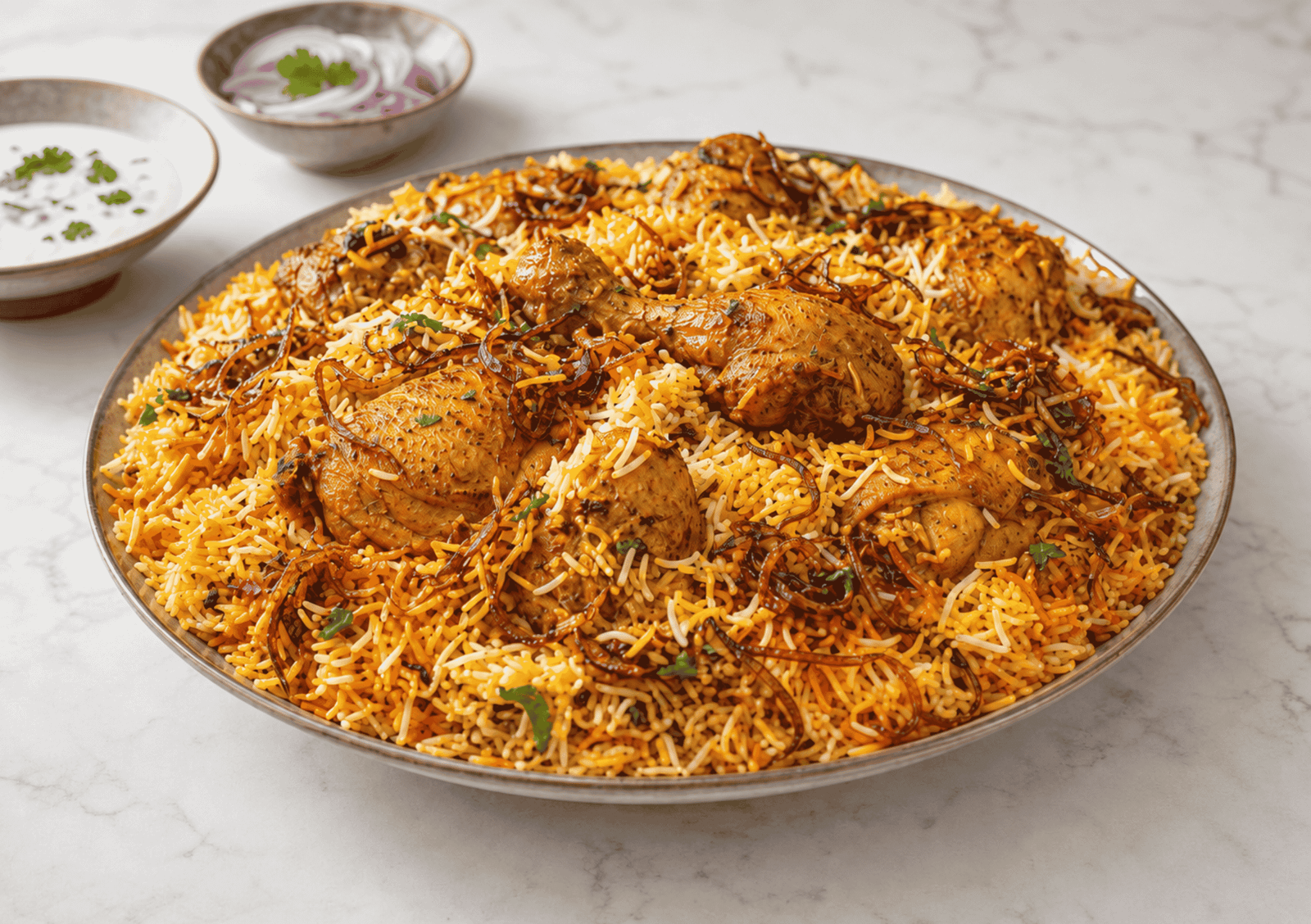
Pakistani Chicken Biryani brings together spiced chicken, aromatic basmati rice, fried onions, herbs and whole spices in one layered dish. The chicken masala is cooked until concentrated, while the rice is only partly cooked before everything is sealed and steamed together.
This version is designed for four generous servings and uses bone-in chicken for fuller flavour. Dried plums provide the sweet and sour note found in many Pakistani biryanis, while saffron milk adds colour without relying on food colouring.
What Is Pakistani Chicken Biryani?
Chicken Biryani is a layered rice dish in which seasoned chicken and partially cooked rice finish together under trapped steam. This final stage is known as dum and allows the aromas from the chicken masala, whole spices and herbs to move through the rice.
Pakistani biryani is often robustly seasoned, with noticeable chilli, tangy yoghurt, fried onions and whole spices. Recipes vary between regions and households, so ingredients such as potatoes, dried plums, saffron, kewra water and tomatoes may be included in different combinations.
Biryani has a complex history shaped by several culinary traditions across South Asia. Persian influence is frequently discussed, but simple stories that attribute the dish to one court, ruler or moment are difficult to prove. Its many regional forms developed over a long period rather than from one fixed recipe.
What Makes Biryani Different from Chicken Pulao?
Chicken Biryani is usually assembled in layers. The chicken masala and rice are prepared separately, combined while the rice is still undercooked, then finished through dum cooking.
Chicken pulao is generally cooked by allowing the rice to absorb a seasoned stock. The flavour is spread more evenly through every grain, while biryani normally contains deliberate variation between white, golden and masala-stained rice.
The distinction can become less clear between regional recipes, but the layering and dum stages are central to this version.
Which Rice Is Best for Chicken Biryani?
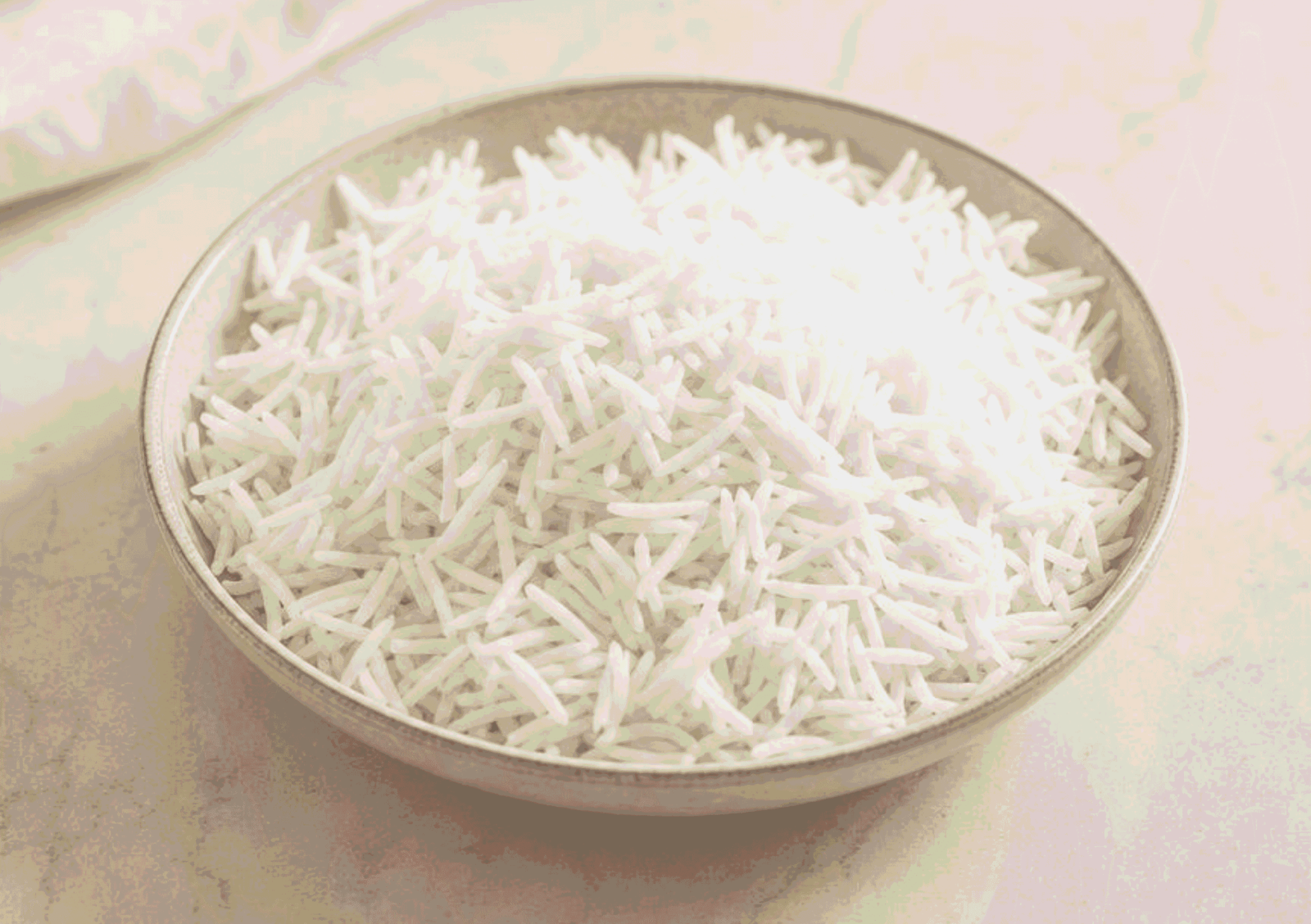
Long grain basmati rice is the most reliable choice. The grains lengthen well, remain separate and tolerate the second stage of cooking better than softer, newly harvested rice.
Sella basmati is another practical option, particularly if you are still learning when to drain the rice. It remains firmer during boiling and dum, although its texture and aroma differ from traditional white basmati.
Wash the rice until the water is much clearer, then soak it before boiling. Washing removes loose surface starch, while soaking helps the grains cook more evenly and lengthen without requiring an extended boil.
How Cooked Should the Rice Be Before Layering?
The rice should be partly cooked and still firm in the centre. A grain should bend when pressed but retain a small opaque core. Fully cooked rice is likely to break or become soft during dum.
Cooking time varies with the rice brand, age and soaking period, so use the texture rather than the clock alone. Drain it immediately once it reaches the correct stage because rice continues to soften while sitting in hot water.
Why Must the Chicken Masala Be Reduced?
The chicken needs enough masala to season the rice, but it must not be watery. Excess liquid rises as steam during dum and can leave the lower rice soft while the upper layer remains unevenly cooked.
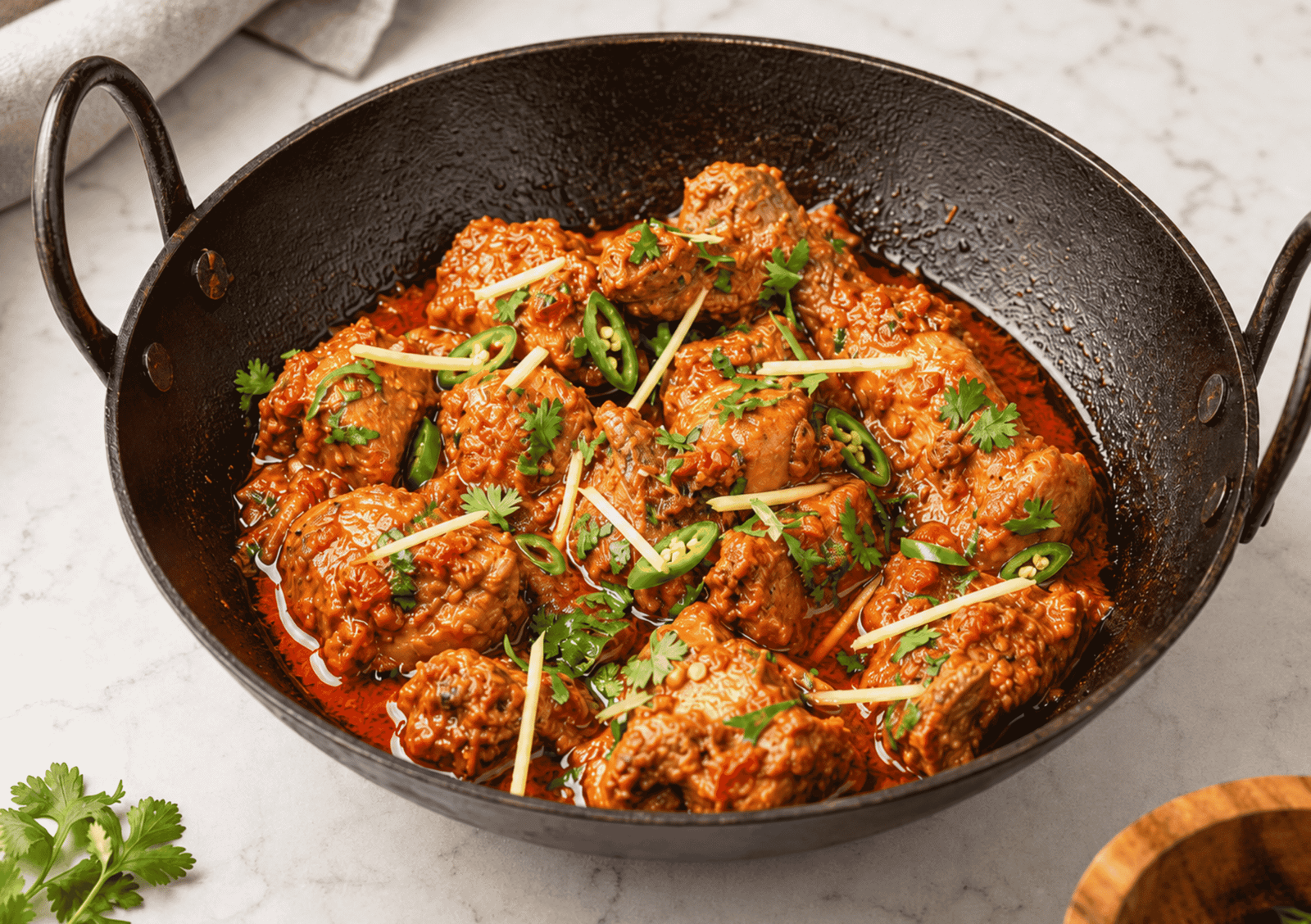
After the chicken is tender, cook the masala uncovered until it becomes thick and the oil begins to show around the edges. The sauce should cling to the chicken rather than run freely across the bottom of the pot.
What Does Dum Cooking Do?
Dum is the final sealed steaming stage. The pot is covered tightly so moisture released by the chicken masala and rice remains inside. Gentle heat finishes the rice and carries the aromas from the spices, herbs and saffron through the layers.
A heavy based pot reduces the risk of burning. If your pot is thin, place it over a flat griddle or heat diffuser during dum. Rest the biryani after turning off the heat so the steam settles and the grains become easier to serve intact.
How to Make Pakistani Chicken Biryani
Marinate the chicken first, then wash and soak the rice while preparing the onion and tomato masala. Cook the chicken until tender and reduce its sauce before boiling the rice. Layer everything in a heavy pot, seal it tightly and finish over low heat. See the recipe card at the bottom for printable directions and exact quantities.
Ingredients
- Bone-in, skinless chicken thighs and drumsticks
- Full fat Greek yoghurt
- Garlic and Ginger Paste
- Lemon juice
- Ground coriander
- Ground cumin
- Kashmiri chilli powder
- Ground turmeric
- Garam Masala
- Fine salt
- Long grain basmati rice
- Rapeseed oil
- Ghee
- Onions
- Bay leaf
- Cinnamon
- Black cardamom
- Green cardamom
- Cloves
- Cumin seeds
- Black peppercorns
- Tomatoes
- Fresh green chillies
- Dried plums
- Fresh mint
- Fresh coriander
- Saffron
- Whole milk
- Kewra water, optional
Cooking Instructions
Step 1: Marinate the chicken. Mix the yoghurt, Garlic and Ginger Paste, lemon juice, ground spices and salt. Coat the chicken thoroughly, cover and refrigerate for at least one hour or overnight.
Step 2: Wash and soak the rice. Rinse the basmati gently in several changes of water until the water is much clearer. Cover with fresh water and soak while the chicken masala is prepared.
Step 3: Fry the onions. Heat the rapeseed oil and ghee in a heavy pan. Cook the sliced onions over a medium heat until evenly deep golden, stirring frequently near the end. Remove a portion for layering and leave the remainder in the pan.
Step 4: Build the chicken masala. Add the whole spices to the onions and cook briefly until fragrant. Add the marinated chicken and fry until its surface changes colour. Stir in the tomatoes, green chillies, dried plums and a small amount of water.
Step 5: Cook and reduce the chicken. Cover and simmer gently until the chicken is cooked through and tender. Remove the lid and cook over a higher heat until the masala thickens and the oil begins to separate around the edges.
Step 6: Parboil the rice. Bring a large pan of generously salted water to a rolling boil. Add lemon juice and the drained rice. Boil until the grains are partly cooked but still firm in the centre, then drain immediately.
Step 7: Layer the biryani. Place half the rice in a heavy based pot, followed by the chicken and all its thick masala. Scatter over some of the reserved onions, mint and coriander, then cover with the remaining rice.
Step 8: Add the finishing ingredients. Spoon the saffron milk over the rice in separate areas rather than mixing it throughout. Add the remaining fried onions, herbs, ghee and optional kewra water.
Step 9: Cook on dum. Cover the pot tightly. Heat briefly over medium heat until steam develops, then reduce to the lowest heat and cook gently. Use a griddle underneath if the base of the pot is thin.
Step 10: Rest and serve. Turn off the heat and leave the pot covered before opening it. Lift the biryani from the side with a broad spoon, reaching through the layers without vigorously stirring the rice.
How to Tell When the Biryani Is Ready
The rice at the top should be fully tender, long and separate. Steam should be visible when the lid is lifted, and there should be no pool of liquid at the bottom of the pot.
If the upper rice remains firm, sprinkle over a small amount of hot water, reseal the pot and continue on the lowest heat for a few more minutes. If the rice is already soft, remove the pot from the heat and let it rest uncovered briefly so excess steam can escape.
Should Pakistani Chicken Biryani Include Potatoes?
Potatoes are common in some Pakistani biryani styles and absent from others. They are a valid variation rather than a requirement for every Chicken Biryani.
To include them, use peeled potato pieces that have been parboiled or lightly fried. Layer them with the chicken so they finish cooking during dum without drawing too much moisture from the masala.
Variations and Substitutions
- Use boneless chicken thighs for easier serving, but reduce the covered cooking time because small boneless pieces cook faster.
- Replace dried plums with unsweetened prunes, or omit them if you do not want a sweet and sour note.
- Use Sella basmati in place of white basmati for firmer grains. Follow the packet guidance for soaking and begin checking the rice later during boiling.
- Replace saffron milk with plain warm milk and a very small pinch of turmeric. This gives colour but not saffron’s aroma.
- Omit kewra water if unavailable. Do not replace it with a large quantity of rose water because the floral flavour can dominate.
- Add parboiled potatoes with the chicken during layering for a potato biryani variation.
- Use a commercial biryani masala if preferred, reducing the additional chilli, salt and Garam Masala according to the packet ingredients.
Cooking Tips
- Slice the onions evenly so they colour at the same rate. Some burned pieces can make the whole masala bitter.
- Use a wide pan for the chicken masala so excess moisture can evaporate efficiently.
- The chicken masala should taste slightly stronger than a normal curry because the unseasoned centre of the rice will soften its intensity.
- Salt the rice water properly. Only a portion remains on the drained grains, so timid seasoning can leave the biryani flat.
- Do not boil the rice until completely tender. It needs enough structure to withstand layering and dum.
- Drain the rice promptly and avoid leaving it in the colander for a long time before layering.
- Seal the pot well with foil beneath the lid if the lid does not fit tightly.
- Avoid stirring after dum. Lift portions through the layers with a broad spoon instead.
Why Is My Biryani Rice Mushy?
Mushy biryani usually results from rice that was overcooked before layering, chicken masala containing too much liquid, or excessive water being added before dum.
Drain the rice while it still has a firm centre and reduce the chicken masala until thick. If the rice has already gone too far during boiling, spread it carefully on a large tray for a few minutes to release steam, then shorten the dum time.
Why Is the Rice Still Hard After Dum?
Rice can remain hard if it was drained too early, the pot was not sealed properly or there was insufficient moisture in the chicken masala. Sprinkle a small amount of hot water around the surface, cover tightly and return the pot to the lowest heat.
Do not pour water into one spot because it can make part of the biryani soggy. Distribute it lightly across the top so the steam develops evenly.
What to Serve with Chicken Biryani
Chicken Biryani is substantial enough to serve as the main dish. Cucumber Raita, Indian Mint Sauce or Coriander and Mint Chutney can cool the spices without competing with the rice.
A simple salad of cucumber, tomato and red onion adds freshness. Poppadoms and Red Onion Chutney can be served before the biryani, but additional rice or bread is not normally necessary.
How to Store and Reheat
Rice needs prompt cooling. Transfer leftover biryani to shallow containers, cool it as quickly as possible and refrigerate it without leaving it standing at room temperature. Eat or freeze refrigerated rice dishes within one day.
Reheat only the portion you intend to serve and reheat it once. Add a small splash of water, cover and heat until the chicken and rice are steaming hot throughout. Stir carefully during reheating so there are no cold areas.
To freeze, divide the cooled biryani into meal sized portions. Defrost it in the refrigerator, then reheat until steaming hot throughout. The rice may be slightly softer after freezing.

Pakistani Chicken Biryani
Ingredients
For the Chicken Marinade
- 650 g bone-in skinless chicken thighs and drumsticks
- 150 g full fat Greek yoghurt
- 25 g Garlic and Ginger Paste
- 15 ml lemon juice
- 2 teaspoons ground coriander
- 1 teaspoon ground cumin
- 1 teaspoon Kashmiri chilli powder
- 1/4 teaspoon ground turmeric
- 1 teaspoon Garam Masala
- 1 1/4 teaspoons fine salt
For the Chicken Masala
- 60 ml rapeseed oil
- 25 g ghee plus 10g for finishing
- 300 g onions thinly sliced
- 1 bay leaf
- 1 x 5cm cinnamon stick
- 1 black cardamom pod
- 4 green cardamom pods lightly cracked
- 5 cloves
- 1 teaspoon cumin seeds
- 8 black peppercorns
- 150 g tomatoes finely chopped
- 2 fresh green chillies slit lengthways
- 4 dried plums stones removed if necessary
- 100 ml hot water
For the Rice
- 350 g long grain basmati rice
- 2.5 litres water
- 20 g fine salt
- 15 ml lemon juice
For Layering and Dum
- 3 tablespoons chopped fresh mint
- 3 tablespoons chopped fresh coriander
- Reserved fried onions from the chicken masala
- A generous pinch of saffron threads
- 30 ml warm whole milk
- 10 g ghee melted
- 1/2 teaspoon kewra water optional
Instructions
- Combine the chicken with the yoghurt, Garlic and Ginger Paste, lemon juice, ground coriander, cumin, Kashmiri chilli powder, turmeric, Garam Masala and salt. Cover and refrigerate for at least 1 hour or overnight.
- Rinse the basmati gently until the water is much clearer. Cover with fresh water and soak for 30 minutes, then drain.
- Heat the rapeseed oil and 25g ghee in a wide, heavy pan over a medium heat. Add the onions and cook for 15 to 18 minutes, stirring regularly, until deep golden. Remove approximately one third and drain it on a plate for layering.
- Add the bay leaf, cinnamon, black cardamom, green cardamom, cloves, cumin seeds and peppercorns to the onions remaining in the pan. Cook for 30 seconds, then add the marinated chicken. Fry for 4 minutes, turning the pieces so their surfaces change colour.
- Add the tomatoes, green chillies, dried plums and 100ml hot water. Cover and simmer over a low heat for 25 minutes, turning the chicken halfway through. Remove the lid and cook over a medium high heat for 5 to 8 minutes, until the chicken is cooked through and the masala is thick with oil showing around the edges.
- While the chicken cooks, bring 2.5 litres water to a rolling boil in a large saucepan. Add the salt, lemon juice and drained rice. Return to the boil and cook for 4 to 6 minutes, until the grains are partly cooked with a firm centre. Drain immediately.
- Place half the drained rice in a clean heavy based pot. Add all the chicken and thick masala, then scatter over half the mint, coriander and reserved onions. Cover with the remaining rice.
- Soak the saffron in the warm milk for 5 minutes. Spoon it over the rice, then add the remaining mint, coriander and onions. Drizzle over the melted ghee and optional kewra water.
- Cover the pot tightly with foil and its lid. Heat over a medium setting for 5 minutes, then reduce to the lowest heat and cook for 20 minutes. Place a flat griddle beneath the pot if its base is thin.
- Turn off the heat and leave the biryani covered for 10 minutes. Remove the lid and serve by lifting gently through the layers with a broad spoon.
Notes
- The total time includes one hour of marinating. The chicken can instead be marinated overnight.
- Begin checking the rice after four minutes because cooking time varies between brands and batches.
- The rice should still have a firm centre when drained because it finishes cooking during dum.
- Reduce the chicken masala thoroughly before layering. Excess liquid can make the lower rice soft.
- Whole spices are not intended to be eaten. Remove them from individual portions when serving.
- For potatoes, parboil 250g peeled potato pieces and layer them with the chicken.
- If using a commercial biryani masala, adjust the chilli and salt according to the packet because blends vary considerably.