Homemade Tandoori Masala Paste
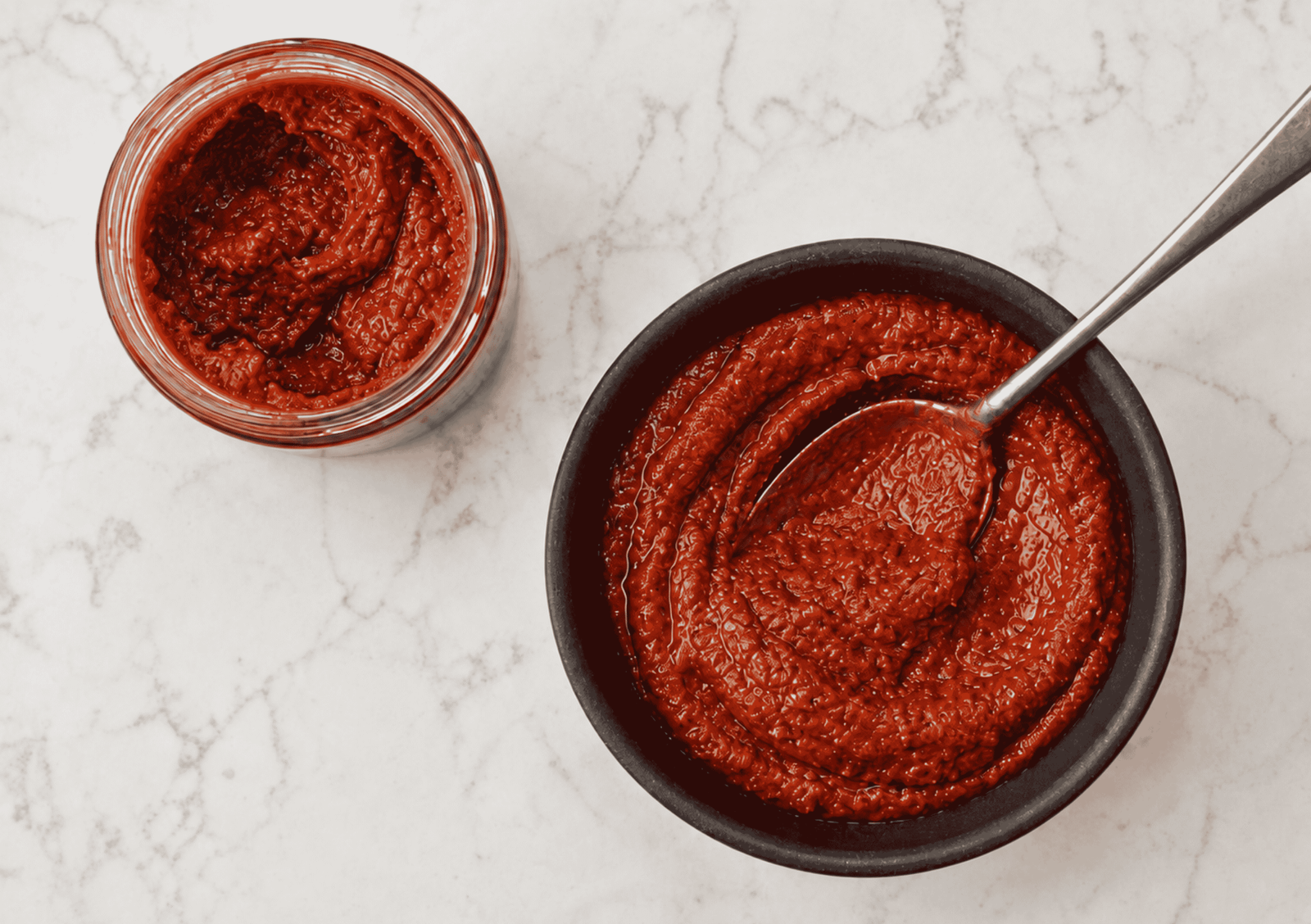
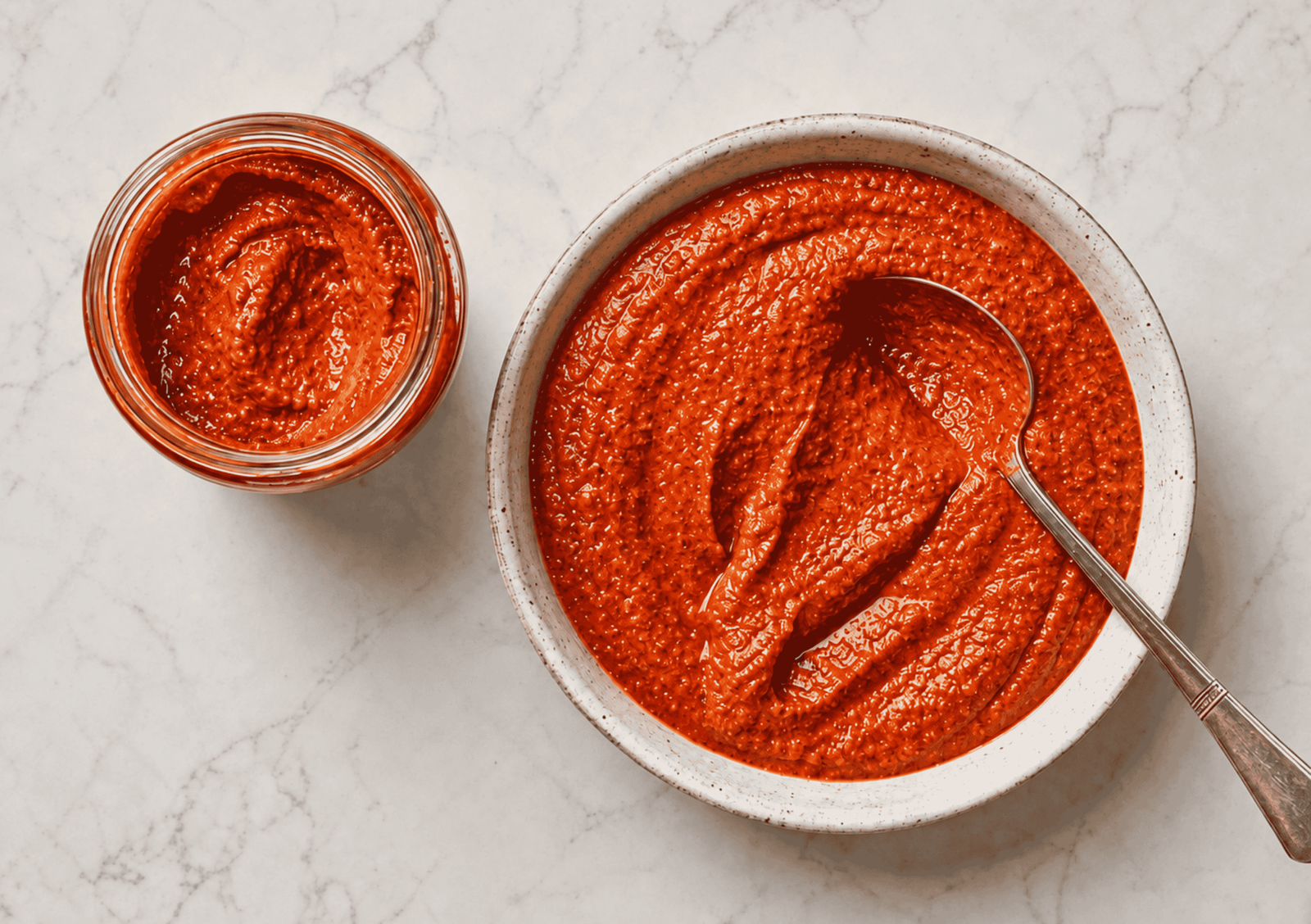
Tandoori masala paste is a concentrated mixture of Tandoori Masala powder, water, oil and tamarind. Cooking these ingredients together creates a smooth paste that is easy to measure into yoghurt marinades, curry sauces and grilled dishes.
This is not a complete marinade on its own. It supplies spices, colour, oil and acidity, while yoghurt, salt, Garlic and Ginger Paste and other fresh ingredients can be added according to the food you are preparing.
The recipe makes approximately 220g, divided into seven 30g portions. One portion seasons about 500g chicken, lamb, fish, paneer or vegetables when combined with the appropriate marinade ingredients.
What Is Tandoori Masala Paste?
Tandoori masala paste is a wet form of Tandoori Masala spice blend. The powder is hydrated with water, combined with oil and heated briefly until it forms a cohesive, concentrated paste.
Tamarind gives this version a gentle sour edge. That acidity works with the warm spices and can be supplemented with lemon juice when the paste is turned into a complete marinade.
The paste makes portioning convenient and helps the spices disperse evenly through yoghurt or sauce. It should still be treated as a prepared ingredient, not as a finished condiment or a preservation method for indefinite storage.
How Is It Different from Tandoori Masala Powder?
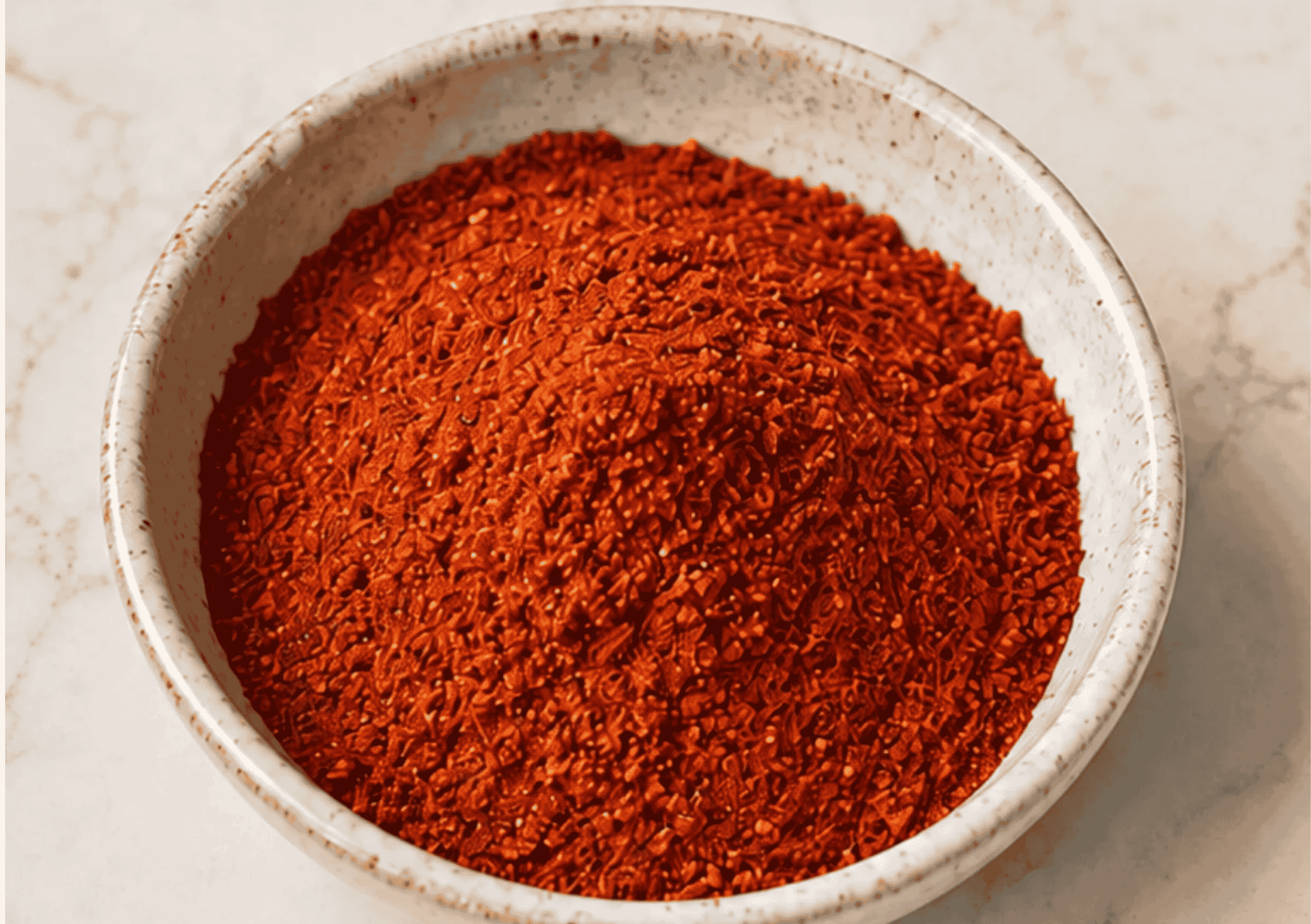
Tandoori Masala powder is dry, free flowing and suitable for long cupboard storage when protected from heat and moisture. It can be measured directly into marinades and curries.
The paste contains oil and water, giving it a concentrated spoonable texture. It blends into yoghurt without leaving dry pockets and can be fried briefly in a pan without first mixing the spices with another liquid.
The flavour foundation is the same, but the storage requirements are not. The dry powder belongs in a cool cupboard, while homemade paste containing water must be refrigerated or frozen.
Is This a Complete Tandoori Marinade?
No. A complete marinade needs to suit the ingredient being cooked. Chicken may benefit from yoghurt, garlic, ginger and lemon, while fish usually needs less acid and a shorter marinating time.
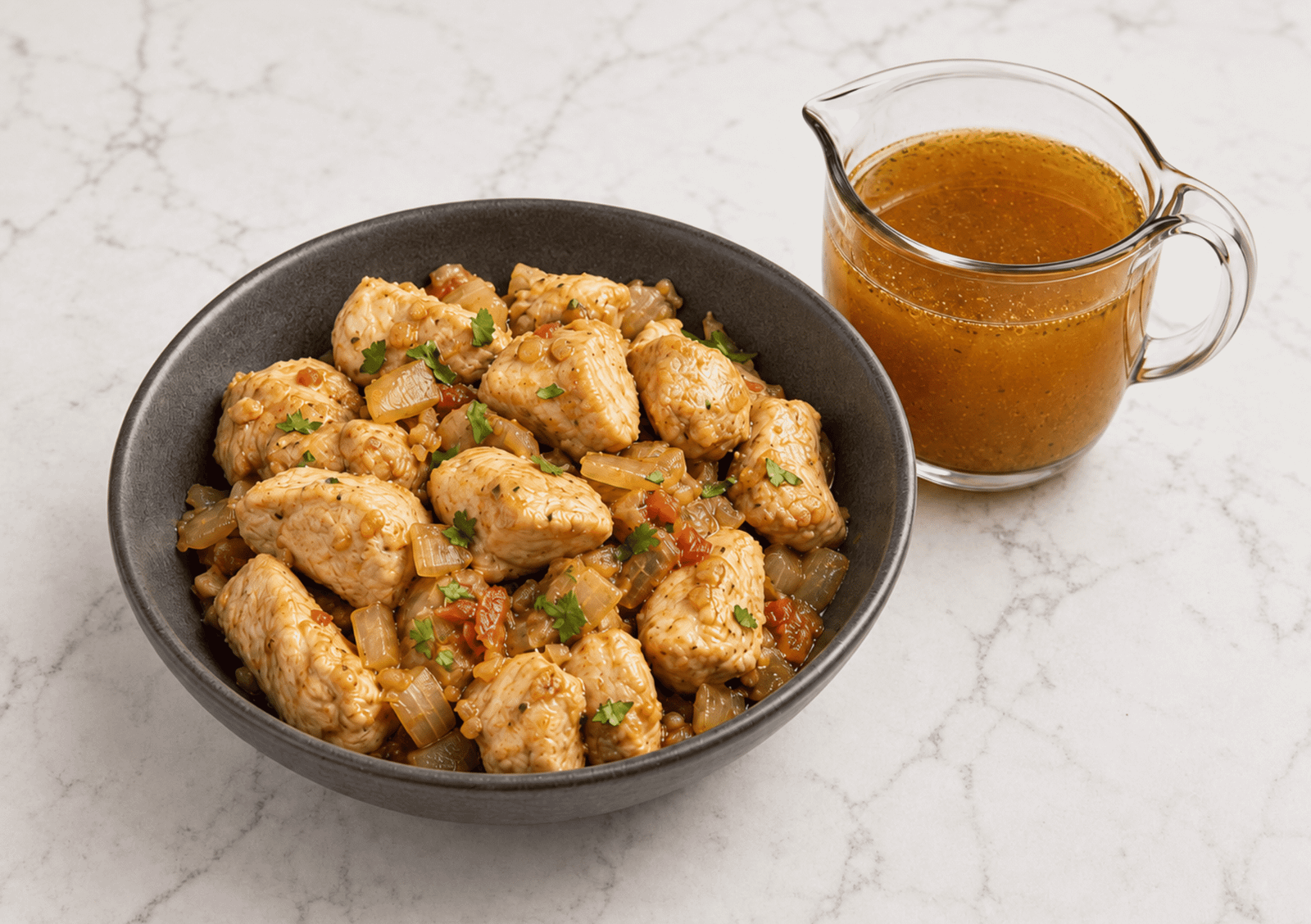
The paste is the concentrated spice component. For 500g chicken, combine one 30g portion with 150g thick yoghurt, 1 tablespoon Curry House Garlic and Ginger Paste, 1 tablespoon lemon juice and salt to taste.
Keeping salt out of the master paste gives you control. Paneer, vegetables, seafood and different cuts of meat do not all need the same seasoning or marinating time.
Why Cook the Paste?
Heating hydrates the ground spices and combines the water and oil into a more even mixture. It also removes some of the raw edge from turmeric, chilli and other powdered ingredients.
The cooking stage is brief because the Tandoori Masala has already been toasted and ground. Prolonged frying can darken the colour, flatten the brighter spices and make chilli or garlic taste bitter.
Stir continuously and stop once small bubbles appear across the surface and the paste looks smooth. The mixture may separate slightly while stored, which is normal and can be corrected by stirring.
What Does Tamarind Add?
Tamarind concentrate brings a dark, fruity sourness that complements tandoori spices. It is optional because many marinades also include lemon or lime juice.
Products vary greatly in strength. This recipe uses 2 teaspoons of a smooth concentrate, not a block of compressed tamarind pulp. If your product is labelled extra strong, begin with 1 teaspoon.
Stir tamarind in after the pan comes off the heat. This preserves its brighter acidity and lets you taste the paste before adding more.
How to Make Homemade Tandoori Masala Paste
Use a small, heavy based saucepan and keep the heat moderate. Whisk the masala with water before heating so it hydrates evenly, then add the oil gradually while stirring. The mixture thickens quickly, so have the tamarind and storage container ready before placing the pan on the hob. See the recipe card at the bottom for exact quantities and printable directions
Ingredients You Will Need
- Homemade Tandoori Masala powder
- Water
- Rapeseed oil or another neutral oil
- Tamarind concentrate, optional
Cooking Instructions
Place the Tandoori Masala powder in a small, heavy based saucepan. Add the water gradually, whisking after each addition until the mixture is smooth and no dry pockets remain.
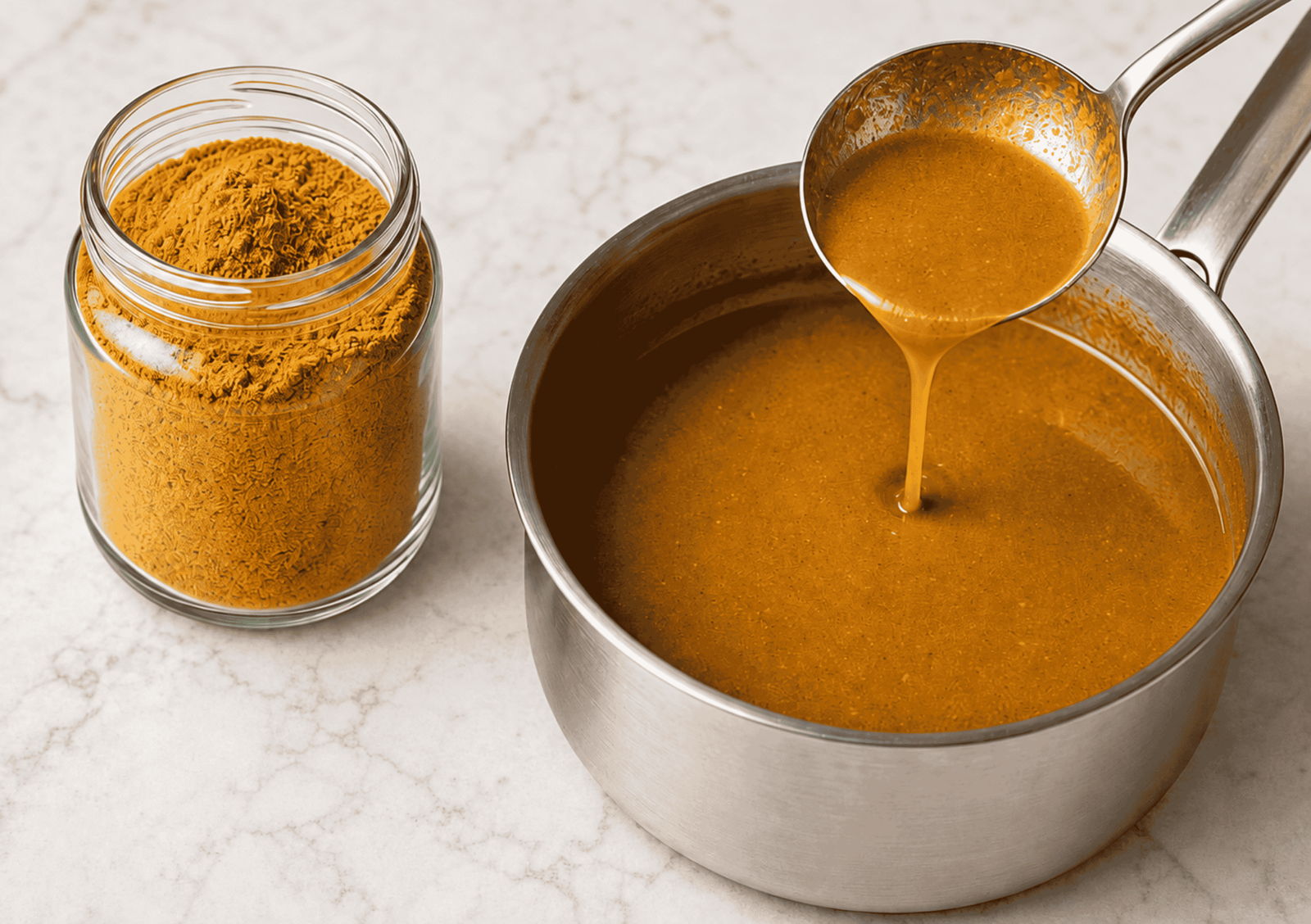
Set the pan over low to medium low heat. Stir continuously as the spices warm and the mixture begins to thicken, making sure nothing catches around the edges or on the base.
Pour in the oil in a slow stream while continuing to stir. Keep mixing until the oil is distributed throughout and the paste looks smooth rather than greasy or separated.
Cook the paste briefly, stirring and scraping the base of the pan. Remove it from the heat once small bubbles appear across the surface and the mixture is thick but still easy to spoon.
Stir in the optional tamarind concentrate. If the paste is too stiff, loosen it with a little hot water at a time, stirring thoroughly before deciding whether it needs more.
Scrape the paste into a clean, shallow container and allow the steam to escape as it cools. Do not seal the container while the paste is still hot.
Once cool, stir the paste and divide it into measured portions using the quantities in the recipe card. Refrigerate the portions needed promptly and freeze the remainder for longer storage.
What Consistency Should the Paste Have?
The warm paste should fall slowly from a spoon and spread without crumbling. It will thicken further as it cools because the ground spices continue absorbing water.
If it becomes too thick in the pan, add hot water by the teaspoon. Avoid pouring in a large amount, as a loose paste is harder to measure and may thin a yoghurt marinade.
If it is too runny, cook for another 30 to 60 seconds over low heat. Do not add raw spice powder at the end unless you are prepared to cook the mixture again.
How Much Tandoori Paste Should I Use?
Use 30g paste for every 500g chicken, lamb, fish, paneer or vegetables. This is a starting quantity for a full marinade, not a rigid limit, because the strength of homemade and commercial Tandoori Masala varies.
For a curry serving four, begin with 1 tablespoon paste. Stir it in during the final few minutes, taste and add more only if the sauce needs a clearer tandoori character.
For an individual wrap, sandwich filling or portion of roasted vegetables, 1 to 2 teaspoons is usually enough when mixed with yoghurt or oil.
How to Make a Chicken Tikka Marinade
For 500g boneless chicken, combine 30g Tandoori Masala Paste with 150g full fat Greek yoghurt, 1 tablespoon Curry House Garlic and Ginger Paste, 1 tablespoon lemon juice and ¾ teaspoon fine salt.
Coat the chicken thoroughly, cover and marinate in the fridge. Chicken breast needs less time than thigh because its texture can become soft on the outside if held in an acidic marinade for too long.
Discard marinade that has touched raw chicken. Do not use it as a sauce unless it is cooked thoroughly as part of the dish.
Can I Use It Without Yoghurt?
Yes. Combine 30g paste with 1 tablespoon lemon juice and 1 tablespoon oil for 500g food, then add Garlic and Ginger Paste and salt according to the recipe.
An oil based coating works particularly well with paneer, cauliflower, mushrooms and peppers. It also suits people avoiding dairy, provided the Tandoori Masala itself contains no unsuitable ingredients.
Without yoghurt, spices sit more directly on the surface and can scorch under intense heat. Remove heavy excess marinade and watch the food closely while grilling.
How Long Should Food Marinate?
Chicken thigh can marinate in the fridge for 4 to 24 hours, while chicken breast usually needs 2 to 8 hours. Very long acidic marinating can soften the surface rather than making the centre more tender.
Lamb pieces can take 4 to 12 hours. Fish and prawns need much less, usually 20 to 30 minutes, because lemon and tamarind affect their delicate texture quickly.
Paneer and firm vegetables can be marinated for 30 minutes to 4 hours. Always refrigerate marinating food and follow the full cooking guidance in the finished recipe.
Which Recipes Use Tandoori Masala Paste?
Use the paste for Chicken Tikka, Tandoori Chicken, Tandoori Lamb Tikka, Tandoori Prawns, Fish Tikka, Paneer Tikka and roasted tandoori vegetables.
A spoonful can also finish Chicken Tikka Masala, Balti, butter chicken or a tomato based curry. Add it gradually because it can change both the colour and acidity of the sauce.
For snacks, mix a small amount with yoghurt as a coating for tandoori wings, cauliflower or potatoes. Curry House Pre-Cooked Potatoes should be drained before coating so the paste adheres.
Why Has the Paste Separated?
Oil may rise to the top as the paste cools, particularly if the spice powder is coarse. This does not automatically mean the batch has spoiled.
Stir the paste thoroughly before measuring. A teaspoon of hot water can help bring a very stiff refrigerated portion back together when it is being used immediately.
Separation accompanied by mould, fizzing, an unusual fermented smell or a swollen container is different. Discard the paste rather than tasting it.
Why Does My Tandoori Paste Taste Bitter?
The pan was probably too hot or the paste cooked for too long. Ground chilli, turmeric and garlic can catch on the base before the oil visibly smokes.
Use low to medium low heat and scrape the pan continuously. A heavy based saucepan spreads the heat more evenly than a thin pan.
Very concentrated tamarind can also taste harsh. Add it gradually and judge the paste after it has been mixed into yoghurt or sauce, where the flavour will be less intense.
Why Is the Paste Not Bright Red?
Natural Tandoori Masala varies from orange brown to brick red depending on its chilli, paprika and turmeric content. A homemade paste does not need a vivid scarlet colour to taste correct.
Kashmiri chilli and mild paprika can strengthen the red tone without adding excessive heat. Add them to the dry Tandoori Masala recipe so they are evenly incorporated.
Restaurant and commercial products may use food colouring. It is optional and has no flavour benefit, so this master paste relies on the spices for colour.
Can I Use Shop Bought Tandoori Masala?
Yes. Weigh 75g rather than relying entirely on spoon volume, as commercial blends have different densities and grinds.
Read the label before adding salt to a future marinade. Some products already contain a substantial amount, while this paste recipe adds none.
Commercial blends also vary in chilli and acidity. Begin with less tamarind if the ingredient list already includes amchoor, citric acid or another souring agent.
Variations and Substitutions
- No tamarind: Omit it and add lemon or lime juice to the final marinade instead.
- Thicker paste: Reduce the initial water to 60ml, adding more only if the spices remain dry.
- Milder paste: Use a mild Homemade Tandoori Masala and adjust chilli in the finished recipe.
- Extra red colour: Add 1 teaspoon Kashmiri chilli powder or mild paprika with the dry masala before adding water.
- Mustard oil: Replace up to half the rapeseed oil with food grade mustard oil for a sharper flavour.
- No added oil: For immediate use only, hydrate the powder with water. It will be less smooth and more likely to catch during cooking.
- Lemon instead of tamarind: Add lemon juice to the finished marinade rather than heating it in the master paste.
- Smaller batch: Halve every ingredient and portion the finished paste into 15g tablespoons.
Cooking Tips
Whisk in the water before heating. Adding water to hot spice powder creates lumps and can cause the mixture to spit.
Use a silicone spatula or small whisk that reaches the corners of the saucepan. Paste left on the base can scorch and flavour the whole batch.
Do not add fresh garlic, ginger, chilli or herbs to the master paste. Those ingredients shorten its practical storage life and are better added to each marinade.
Label frozen portions with the weight and date. A 30g cube is enough for a 500g marinade, making future preparation straightforward.
How to Store and Freeze Tandoori Masala Paste
This homemade paste contains water and has not been commercially sterilised or tested for shelf stability. Do not store it in a cupboard, even when the surface is covered with oil.
Transfer the cooled paste to a clean airtight container and refrigerate within two hours. Use refrigerated paste within 48 hours.
For batch storage, divide it into seven 30g portions in a silicone ice cube tray or small containers. Freeze until solid, transfer to a labelled freezer container and use within three months for best flavour.
Defrost only the amount needed overnight in the fridge and use within 24 hours. Do not refreeze a thawed portion, and always use a clean dry spoon when handling the paste.

Homemade Tandoori Masala Paste
Ingredients
- 75 g Homemade Tandoori Masala powder about 8 level tablespoons
- 75 ml water plus 1 to 2 tablespoons if needed
- 60 ml rapeseed oil or other neutral oil
- 2 teaspoons tamarind concentrate optional
Instructions
- Put the Tandoori Masala in a small heavy based saucepan. Gradually whisk in 75ml water until smooth.
- Warm over low to medium low heat for 30 seconds, stirring continuously.
- Pour in the oil slowly while stirring. Cook for 1 to 2 minutes until the mixture bubbles gently and forms a thick, smooth paste.
- Remove from the heat and stir in the optional tamarind. Add hot water by the teaspoon if the paste is too stiff.
- Transfer to a clean shallow container and cool promptly. Once cool, stir and divide into seven 30g portions.
- Refrigerate portions needed within 48 hours and freeze the remainder.