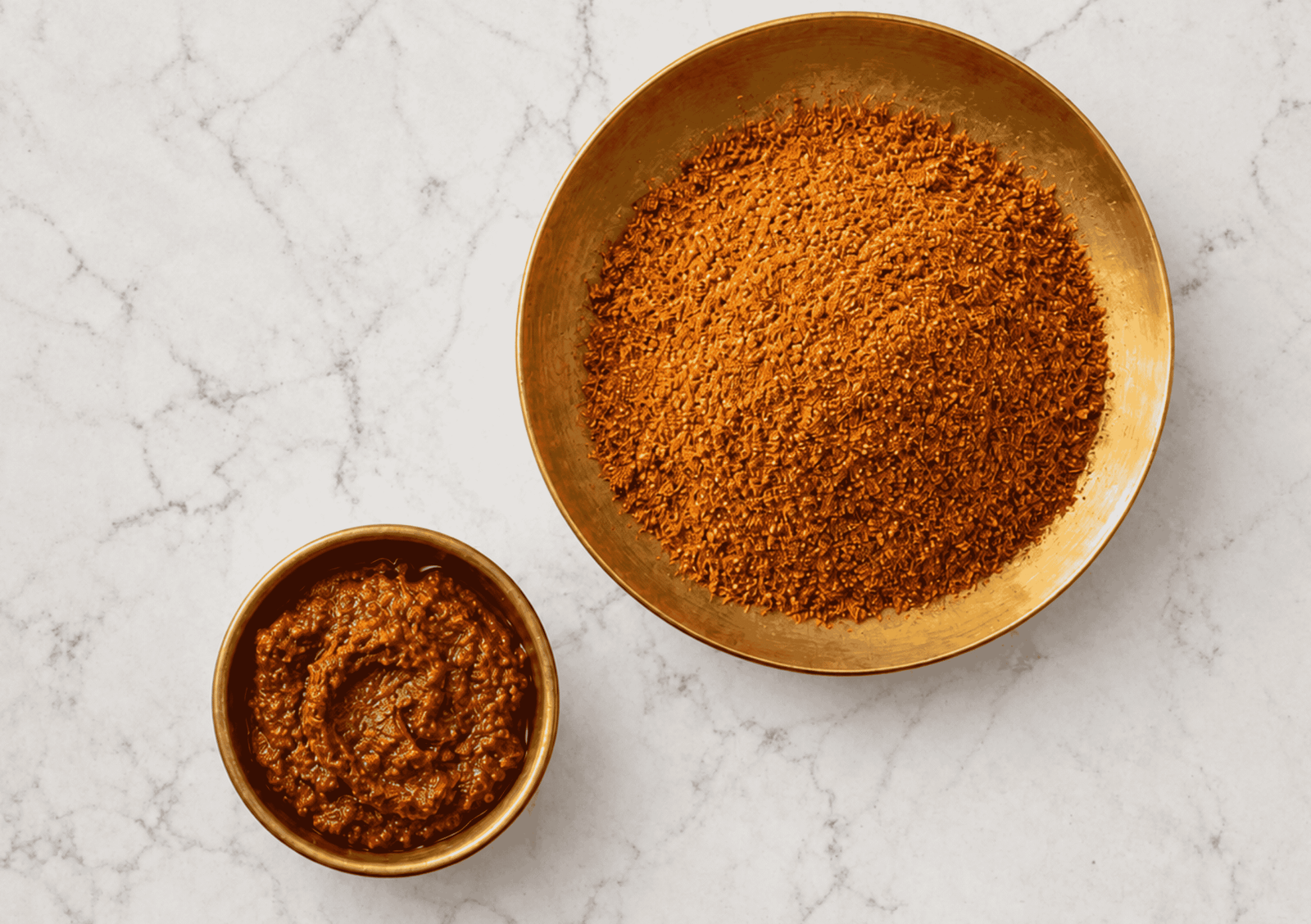
Homemade Balti Masala
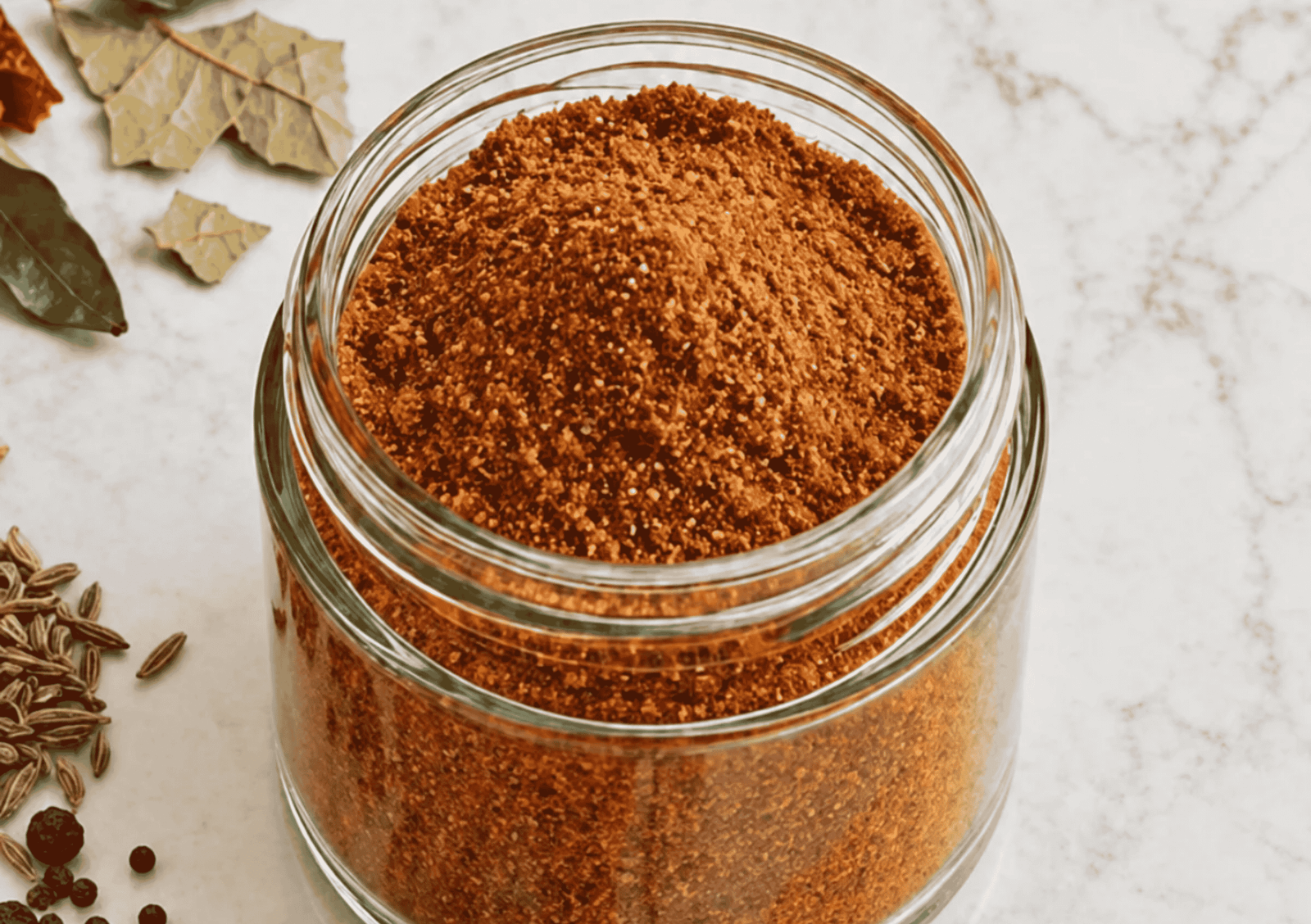
Balti masala is a robust curry spice blend that can be used dry or mixed with oil and vinegar to make a quick paste. It combines toasted seeds and warm whole spices with turmeric, chilli, dried herbs, garlic and ginger, giving Balti dishes a deeper and more complex seasoning than a basic curry powder.
The dry blend is the useful master preparation. Keep it in an airtight jar, then mix only the quantity you need into a paste for curries, marinades or grilled vegetables. This protects the remaining spices from moisture and makes the batch easier to portion.
This recipe produces approximately 150g, enough for five four person curries when using 30g per dish. The heat is moderate, allowing fresh chillies or extra chilli powder to be added to individual recipes.
What Is Balti Masala?
Balti masala is a spice mixture used to season Balti style curries. There is no single formula followed by every restaurant or household, and the name can refer to a dry powder or a paste made from that powder.
This version contains coriander, cumin, fennel, mustard, fenugreek, black pepper, cardamom, cloves and cassia. Curry leaves, Indian bay, dried fenugreek and mint add layered herbal notes, while turmeric, chilli, garlic, ginger and amchoor complete the blend.
It is designed as a flexible prepared ingredient rather than a complete curry. The final dish still needs aromatics, meat or vegetables, liquid and salt.
Is Balti Masala a Powder or a Paste?
It can be either. The spices are roasted, cooled and ground as a dry masala first. That powder has the longest useful storage life and can be measured directly into curries or yoghurt marinades.
For a Balti masala paste, combine a portion of powder with neutral oil and vinegar shortly before cooking. Oil helps carry the aromatic compounds, while vinegar adds acidity and turns the blend into a spoonable consistency.
Store the main batch dry rather than mixing all 150g with liquid. A wet paste takes up more fridge space, has a shorter life and locks the entire batch into one acidity level.
What Does Balti Masala Taste Like?
The blend is earthy and aromatic, with coriander and cumin at the centre. Fennel brings mild sweetness, mustard and fenugreek add savoury bitterness, and black pepper, chilli and ginger provide warmth.
Curry leaves, dried fenugreek and mint make the aroma more layered than a straightforward curry powder. Black cardamom contributes a subtle smoky note, so only the seeds from two pods are used.
Amchoor supplies gentle dry acidity. When the powder becomes a paste, vinegar sharpens that sour edge further, which suits the bright tomato and pepper flavours common in Balti curries.
How Is It Different from Curry House Mixed Powder?
Curry House Mixed Powder is a streamlined blend intended for a broad range of British restaurant style sauces. Balti masala contains more whole spices and dried herbs, giving it a more assertive and specific character.
Mixed powder works well when the sauce, aromatics and protein provide most of the identity. Balti masala can play a larger role, especially when it is made into a paste and fried with onions, peppers or tomatoes.
The two are not always interchangeable spoon for spoon. This Balti blend is more concentrated and textured, so begin with the quantities stated in the recipe you are following.
Which Ingredients Define This Blend?
- Coriander and cumin seeds form the earthy, citrusy foundation and provide most of the blend’s body.
- Fennel seeds introduce mild sweetness, which helps soften the sharper mustard, fenugreek and chilli notes.
- Black mustard and fenugreek seeds contribute savoury bitterness and the deeper character associated with cooked curry spices. Both need careful measuring because too much can dominate.
- Black peppercorns and Kashmiri chilli powder provide two types of warmth. Pepper is dry and lingering, while Kashmiri chilli brings a rounder chilli flavour and rust red colour.
- Black cardamom, cloves and cassia bark add concentrated warmth and a faint smoky note. They should support the blend rather than make it taste like garam masala.
- Curry leaves, Indian bay, dried fenugreek and mint create its layered herbal aroma. Only fully dried leaves belong in a stored powder.
- Turmeric supplies earthiness and colour, while garlic and ginger powders make the blend more useful as a ready-to-mix curry paste.
- Amchoor powder adds gentle fruity acidity. Vinegar strengthens that sourness when a portion of the dry blend is turned into paste.
Why Toast the Whole Spices?
Gentle dry heat releases aromatic oils from seeds, peppercorns, cardamom, cloves and cassia. It removes their raw edge and makes the spices easier to grind into a fragrant powder.
The aim is warmth and aroma, not dark colour. Mustard and fenugreek become bitter when scorched, while cumin can change from nutty to burnt very quickly.
Powdered turmeric, chilli, garlic, ginger and amchoor are not toasted in the pan. Their fine particles heat too quickly and are more likely to catch before the larger seeds are ready.
How to Make Homemade Balti Masala
Use a heavy, dry frying pan and keep a cool plate beside the hob before you begin. Toast the whole spices gently, remove them from the hot pan as soon as they become fragrant and let them cool completely before grinding. Store the finished masala as a dry powder and mix only the portion you need with oil and vinegar when a recipe calls for Balti masala paste. See the recipe card at the bottom for exact quantities and printable directions
Ingredients You Will Need
For the dry Balti masala
- Coriander seeds
- Cumin seeds
- Fennel seeds
- Black mustard seeds
- Fenugreek seeds
- Black peppercorns
- Black cardamom seeds
- Cloves
- Cassia bark
- Dried curry leaves
- Indian bay leaves
- Dried fenugreek leaves
- Dried mint
- Ground turmeric
- Garlic powder
- Ground ginger
- Kashmiri chilli powder
- Amchoor powder
- Fine sea salt, optional
To turn the dry masala into a paste
- Dry Balti masala
- Rapeseed oil or another neutral oil
- White wine vinegar or distilled malt vinegar
- Water, only if needed
Cooking Instructions
Place the coriander, cumin, fennel, mustard and fenugreek seeds in a dry, heavy based frying pan over low to medium low heat. Toast them gently, shaking or stirring the pan continuously so the smaller seeds do not catch.
Add the black peppercorns, black cardamom seeds, cloves and broken cassia bark. Continue toasting until the spices smell aromatic but have not darkened heavily or begun to smoke.
Add the dried curry leaves and torn Indian bay leaves near the end. Warm them only until they feel dry and crisp, then immediately tip everything onto the cool plate. Do not leave the spices in the hot pan after switching off the heat because they will continue cooking.
Leave the toasted mixture until completely cool. Crumble in the dried fenugreek leaves and dried mint, which do not need direct heat from the pan.
Grind the mixture in batches using a clean, dry spice grinder. Allow the fine dust to settle before opening the lid, then sieve the powder and return any hard or fibrous pieces to the grinder.
Whisk in the turmeric, garlic powder, ground ginger, Kashmiri chilli powder, amchoor and optional salt. Continue mixing until the colour is even and no streaks of individual powders remain.
Transfer the dry Balti masala to a clean, dry airtight jar. Label it with the name and date, and keep it in a cool, dark cupboard away from steam.
To make Balti masala paste, combine the required portion of dry masala with the oil and vinegar. Stir thoroughly and add a little water only if necessary, stopping when the mixture becomes thick, smooth and easy to spoon into a pan.
How Fine Should the Masala Be?
Grind the blend fine enough that no sharp cassia fragments or hard cardamom pieces remain. A smooth powder disperses evenly in oil, yoghurt and curry sauce.
An electric spice grinder is the easiest option because the batch contains fibrous leaves and bark as well as seeds. Work in small batches and pulse rather than running the motor continuously, which can heat the powder.
Sieve the ground mixture before adding the powdered ingredients. Return anything coarse to the grinder instead of forcing hard fragments through the sieve.
How Much Balti Masala Should I Use?
For a curry serving four, begin with 30g dry masala, approximately 4 level tablespoons. Mix it into the paste described above or add it dry in stages while frying the aromatics.
For an individual curry serving one, use 2 to 2½ teaspoons, about 8 to 10g. Strong chilli, heavily seasoned meat or a concentrated base sauce may require slightly less.
For a marinade, use 20g masala with 250g thick yoghurt and 1 tablespoon lemon juice for every 500g meat, fish, paneer or vegetables. Add salt separately according to the ingredient being marinated.
When Should I Add Balti Masala Paste?
Fry the paste after the onions have softened and before adding the main liquid. Cook it over medium heat for 1 to 2 minutes, stirring continuously, until aromatic and the oil begins to show at the edges.
Do not place the paste in a dry smoking hot pan. Garlic powder, turmeric and chilli can catch, while vinegar can spit as its water meets hot oil.
A small finishing spoonful can be added near the end for a brighter spice aroma, but the main portion should cook earlier so the ground spices lose their raw taste.
How to Use It in a Four Person Balti Curry
Soften one sliced onion and one sliced pepper in 2 tablespoons oil. Add the prepared 75g Balti masala paste and fry for 1 to 2 minutes.
Stir in 500g pre-cooked chicken, lamb, paneer or vegetables, followed by 500 to 600ml British Curry House Base Sauce. Simmer until the sauce coats the main ingredient, adding more sauce or stock if it becomes too thick.
Finish with chopped tomato, fresh coriander and salt to taste. This is a framework rather than a separate complete recipe, so future Balti articles should specify exact ingredients and timing for their chosen protein.
Can I Use Balti Masala Without Base Sauce?
Yes. Fry onion, pepper and fresh tomato until soft, then cook the masala paste for 1 to 2 minutes. Add stock or water and simmer until the sauce reaches the required consistency.
Raw meat needs enough liquid and time to cook safely, while seafood and pre-cooked ingredients require much less. Keep the pan covered during longer cooking, then remove the lid to reduce the sauce.
The flavour will be more rustic and less like a fast British curry house sauce, but the spice blend remains suitable.
Can I Use It as a Marinade?
Balti masala works with chicken, lamb, prawns, fish, paneer, cauliflower, mushrooms and peppers. Combine it with thick yoghurt for a coating that clings during grilling or roasting.
Use 20g masala, 250g yoghurt and 1 tablespoon lemon juice for 500g of the main ingredient. Reduce the yoghurt to 150g for vegetables that release water, such as mushrooms.
Marinating time depends on the food. Chicken and lamb can be chilled in the marinade for several hours, while fish and prawns need a much shorter rest because acid affects their texture.
Why Does My Masala Taste Bitter?
Scorched mustard, fenugreek or cumin is the most likely cause. Keep the pan below high heat, stir continuously and remove everything as soon as the aroma becomes pronounced.
Fenugreek is naturally bitter, so measure it carefully. Dried fenugreek leaves and seeds both appear in this blend, but they contribute different aromas and should not be increased casually.
If the bitterness is slight, extra coriander and cumin can dilute it. A heavily burnt batch cannot be repaired reliably and will make every curry taste scorched.
Why Is My Balti Masala Paste Too Thick or Thin?
Different spice powders absorb oil and vinegar at different rates. A thick paste should hold on a spoon but spread easily across the pan.
If it is crumbly, add water 1 teaspoon at a time. Extra oil also loosens it, but adding too much can make the finished curry greasy.
If the paste is runny, stir in another teaspoon of dry masala and leave it for 2 minutes to hydrate. Do not add flour or cornflour because they can catch during frying and alter the sauce texture.
Can I Make the Blend Hotter or Milder?
For a milder master blend, reduce the Kashmiri chilli powder to 2 teaspoons. The black pepper and ginger still supply warmth without making every future curry hot.
For more heat, add hot chilli powder to the individual paste rather than the storage jar. This keeps the main batch flexible for diners with different tolerances.
Fresh green chilli can be fried with the onions in a Balti curry. It gives a brighter heat than dried powder and can be adjusted dish by dish.
Variations and Substitutions
- Green cardamom: Replace the seeds from 2 black pods with the seeds from 6 green pods for a sweeter, less smoky aroma.
- No amchoor: Omit it and add another teaspoon of vinegar when making the paste. The acidity will be sharper and less fruity.
- No dried curry leaves: Omit them rather than substituting fresh leaves in the stored powder. Fresh leaves contain moisture and require separate frying.
- No mustard seeds: Use 1 teaspoon mustard powder, added with the other ground ingredients. Do not toast the powder.
- Hot chilli powder: Replace some or all of the Kashmiri chilli powder, but begin with half the quantity if the product is very hot.
- No garlic powder: Leave it out and fry 1 tablespoon Curry House Garlic and Ginger Paste before adding each four person portion of Balti paste.
- Citric acid: A very small amount can replace amchoor, but it is intensely sharp. Amchoor and vinegar are easier to balance in a home kitchen.
- Oil-free dry use: Add the powder directly to a wet marinade or sauce, but cook it thoroughly to remove the raw ground spice flavour.
Tips for Reliable Balti Masala
Measure potent ingredients such as fenugreek, cloves, black cardamom and chilli carefully. Increasing them by sight can obscure the coriander and cumin foundation.
Cool every toasted ingredient before grinding. Warm spice releases condensation when sealed, which encourages clumping and dulls the stored powder.
Keep the jar away from the hob. Heat and steam enter containers easily during cooking, even when the cupboard itself seems dry.
Make the wet paste shortly before use. Mixing only one portion preserves the flexibility and storage life of the dry master blend.
How to Store Balti Masala
Keep the dry powder in a clean airtight jar in a cool, dark cupboard. Use a dry spoon and close the lid promptly after measuring.
For the clearest aroma, use the blend within three months. It may remain usable for longer when kept dry, but the curry leaves, mint and ground spices gradually lose strength.
Refrigerate freshly mixed Balti masala paste in a covered container and use within 48 hours. Because the paste contains vinegar and oil but is not commercially preserved, it should not be stored at room temperature.
The dry powder can be frozen in a well sealed container, although cupboard storage is simpler. Avoid repeatedly opening a cold container because condensation can enter the blend.

Homemade Balti Masala
Ingredients
Dry Balti masala
- 4 tablespoons coriander seeds about 24g
- 3 tablespoons cumin seeds about 24g
- 1 tablespoon fennel seeds about 7g
- 2 teaspoons black mustard seeds about 6g
- 1 teaspoon fenugreek seeds about 4g
- 2 teaspoons black peppercorns about 5g
- Seeds from 2 black cardamom pods
- 6 cloves
- 1 x 7.5cm piece cassia bark broken up
- 15 dried curry leaves
- 2 Indian bay leaves torn
- 2 tablespoons dried fenugreek leaves
- 1 tablespoon dried mint
- 2 tablespoons ground turmeric about 16g
- 2 tablespoons garlic powder about 18g
- 1 tablespoon ground ginger about 7g
- 1 tablespoon Kashmiri chilli powder about 8g
- 2 teaspoons amchoor powder about 6g
- 1 teaspoon fine sea salt optional
One four-person paste portion
- 30 g dry Balti masala about 4 level tablespoons
- 2 tablespoons rapeseed oil or other neutral oil
- 1 tablespoon white wine vinegar or distilled malt vinegar
- 1 to 2 teaspoons water only if needed
Instructions
- Toast the coriander, cumin, fennel, mustard and fenugreek seeds in a dry heavy pan over low to medium-low heat for 2 minutes.
- Add the peppercorns, cardamom seeds, cloves and cassia. Toast for 1 to 2 minutes until aromatic but not smoking.
- Add the curry leaves and Indian bay for 30 seconds, then transfer everything immediately to a cool plate. Leave for 15 minutes.
- Add the dried fenugreek and mint, then grind the mixture finely in batches. Sieve and regrind any coarse pieces.
- Whisk in the turmeric, garlic powder, ginger, chilli powder, amchoor and optional salt. Transfer to a clean, dry airtight jar.
- For one paste portion, mix 30g dry masala with the oil and vinegar. Add water by the teaspoon only if needed to form a thick, spoonable paste.