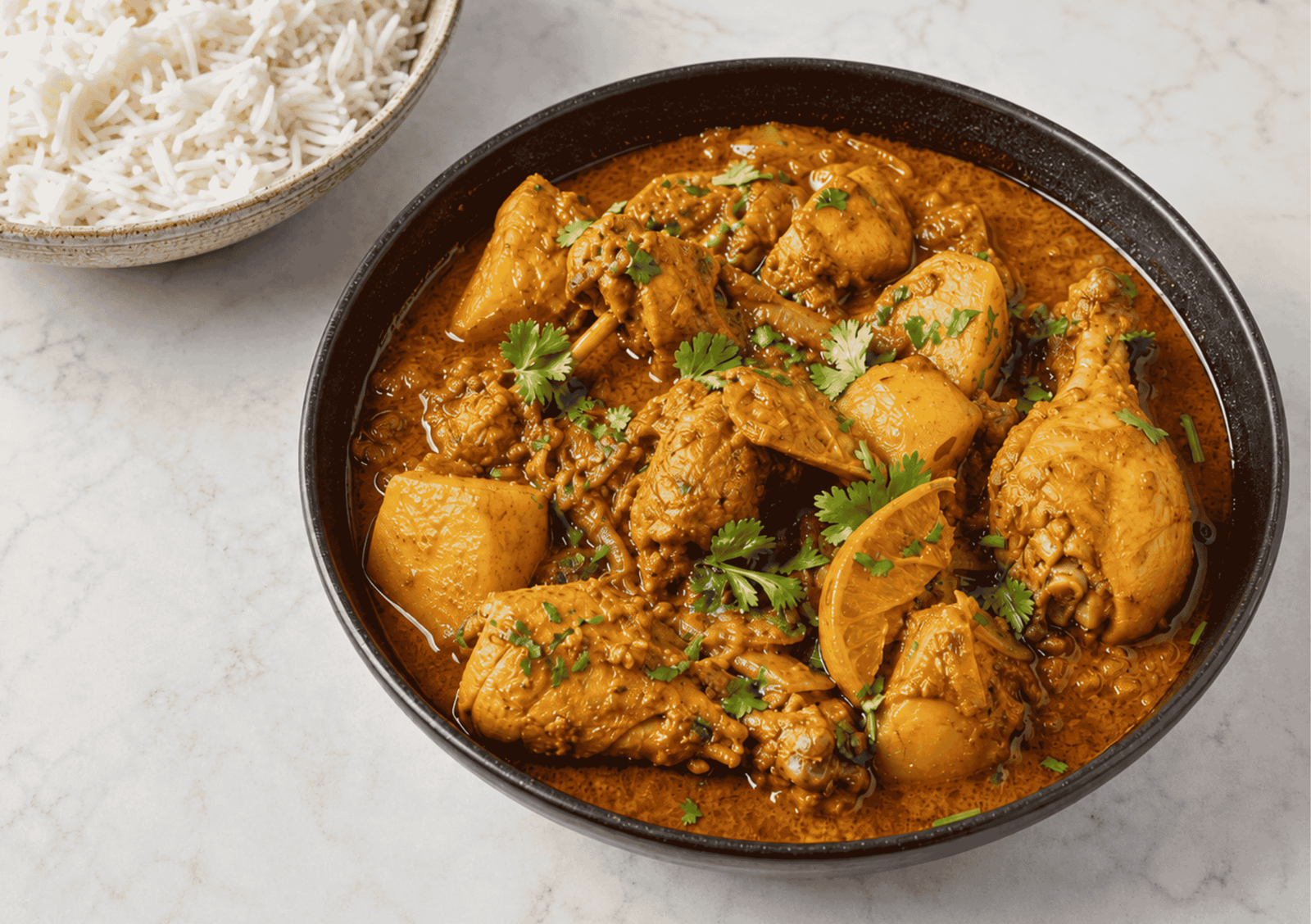
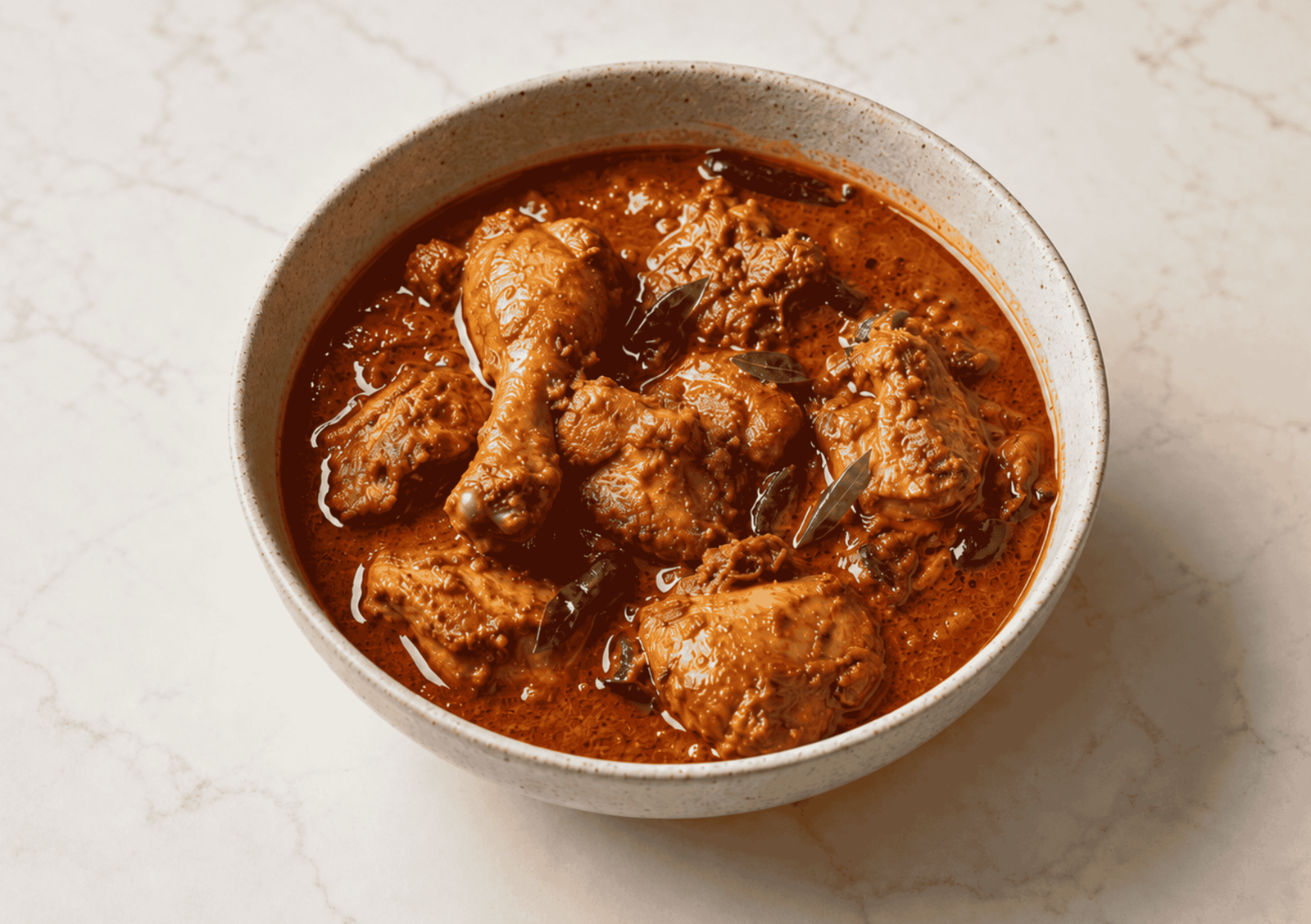
Sri Lankan Chicken Curry (Kukul Mas Curry)
Sri Lankan chicken curry, known as kukul mas curry, is built around roasted curry powder, curry leaves, cinnamon and coconut milk. The sauce is deeply spiced rather than heavily creamy, with green chilli, vinegar, pandan and lemongrass adding the sharp, aromatic character associated with Sri Lankan cooking.
This version serves four and uses bone-in chicken because the meat stays tender while the sauce develops. The coconut milk is added in two stages, producing enough gravy for rice without muting the roasted spices.
What Is Kukul Mas Curry?
Kukul mas means chicken meat in Sinhala, and kukul mas curry is a widely cooked Sri Lankan chicken curry. Recipes vary between households and regions. Some are dark, hot and almost dry, while others contain coconut milk and a more generous gravy.
This recipe follows the coconut milk style. Chicken is first seasoned with roasted curry powder, chilli, turmeric and vinegar, then cooked with onions, curry leaves and whole spices. Coconut milk softens the chilli heat but the finished curry should still taste savoury and warmly spiced rather than sweet.
Why Use Sri Lankan Roasted Curry Powder?
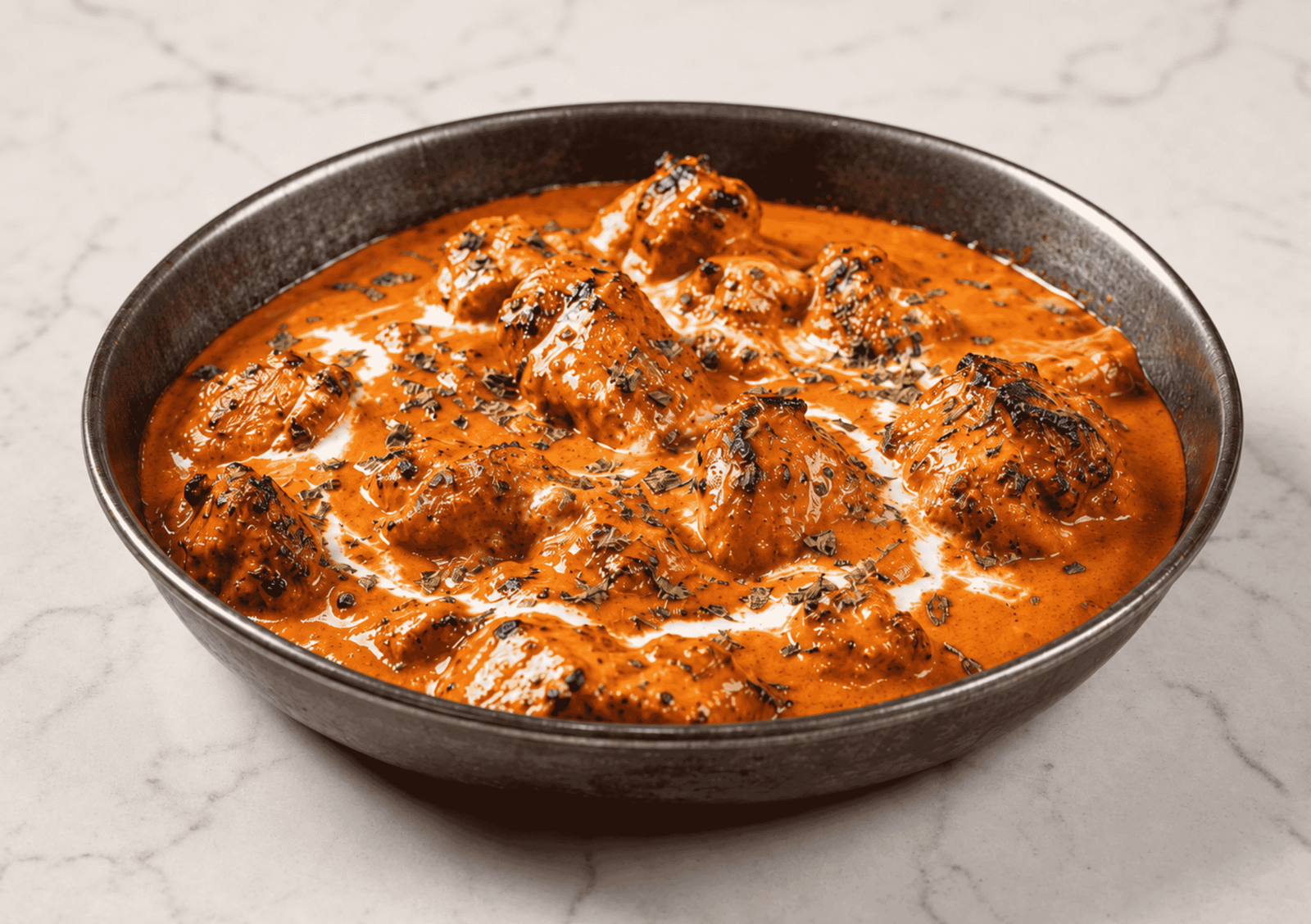
Sri Lankan roasted curry powder gives the dish its most recognisable flavour. The spices are toasted until considerably darker than those used in many unroasted curry powders, creating a deeper, nuttier aroma and the rich brown colour of the gravy.
Blends vary, but coriander, cumin and fennel commonly form the base, supported by ingredients such as black pepper, fenugreek, mustard seed, cardamom, cloves, cinnamon and curry leaves. Use a blend labelled Sri Lankan roasted curry powder rather than a general curry powder if possible.
Part of the curry powder seasons the chicken, another portion cooks into the onion base and a final teaspoon is added near the end. This last addition restores some of the spice aroma that softens during simmering.
Which Aromatics Define the Curry?
Fresh or frozen curry leaves provide a savoury citrus aroma that dried leaves rarely match. Pandan, also called rampe, gives the gravy a warm, rounded fragrance, while bruised lemongrass brings a clean citrus note. Pandan and lemongrass can be omitted when unavailable, but curry leaves and roasted curry powder are worth seeking out.
Ceylon cinnamon has a lighter, more delicate flavour than cassia. Either will work, but use a smaller piece of cassia because it is stronger. Fenugreek seeds contribute a pleasant bitterness when lightly toasted, although they become harsh if allowed to burn.
Is Sri Lankan Chicken Curry Always Made with Coconut Milk?
No. A drier, hotter chicken curry can be made without coconut milk and is often described as a mirisata preparation. In that version, water is used to cook the chicken and the sauce is reduced until the oil and masala cling closely to the meat.
The coconut milk in this recipe creates a fuller gravy and balances the roasted spices. It should support rather than dominate the dish, which is why the chicken is browned with the masala before the coconut milk is added.
How to Make Sri Lankan Chicken Curry
Marinate the chicken before preparing the onion base. Measure the roasted curry powder into its three separate portions so the allocation remains clear during cooking. A wide, heavy based casserole or saucepan with a lid gives the chicken enough room to brown before it simmers. See the recipe card at the bottom for the precise quantities and printable directions
Ingredients
- Bone-in, skinless chicken thighs and drumsticks
- Sri Lankan roasted curry powder
- Sri Lankan chilli powder or cayenne pepper
- Ground turmeric
- Ground black pepper
- Fine salt
- Coconut vinegar or white vinegar
- Coconut oil or a neutral cooking oil
- Black mustard seeds
- Fenugreek seeds
- Ceylon cinnamon or cassia bark
- Green cardamom
- Cloves
- Red onion
- Green finger chillies
- Garlic and Ginger Paste
- Fresh or frozen curry leaves
- Pandan leaf, optional
- Lemongrass, optional
- Tomatoes
- Hot water
- Full fat coconut milk
Cooking Instructions
Step 1: Marinate the chicken. Place the chicken in a non-reactive bowl with the first portion of roasted curry powder, Sri Lankan chilli powder or cayenne pepper, turmeric, black pepper, salt and vinegar. Turn the pieces until evenly coated, cover and leave for 30 minutes in the refrigerator.
Step 2: Temper the whole spices. Heat the oil in a wide, heavy based pan over a medium heat. Add the mustard seeds, fenugreek seeds, cinnamon, cardamom and cloves. Cook for about 30 seconds, just until the mustard seeds begin to pop and the spices become aromatic. Do not let the fenugreek darken excessively.
Step 3: Build the aromatic base. Add the sliced red onion and cook for 8 to 10 minutes, stirring regularly, until soft and golden at the edges. Add the green chillies, Garlic and Ginger Paste, curry leaves, pandan and bruised lemongrass. Cook for 1 minute, then add the second portion of roasted curry powder with a measured splash of hot water. Stir for another minute to form a thick masala.
Step 4: Brown the chicken. Add the chicken and every drop of its marinade. Raise the heat to medium high and cook for 7 to 8 minutes, turning the pieces regularly. The exterior should lose its raw colour and the spice mixture should cling to the chicken.
Step 5: Cook the tomatoes. Add the chopped tomatoes and cook over a medium heat for 5 minutes. Press them with the spoon as they soften so they blend into the masala rather than remaining as large pieces.
Step 6: Simmer the curry. Add the first measured portion of coconut milk and the remaining hot water. Stir well, bring the sauce to a gentle simmer, then cover and cook over a low heat for 25 minutes. Turn the chicken once or twice so the pieces cook evenly.
Step 7: Finish the coconut gravy. Pour in the remaining coconut milk and simmer uncovered for 8 to 10 minutes. Keep the heat low enough for a gentle bubble and reduce the sauce until it coats a spoon while remaining pourable. Check that the chicken is thoroughly cooked, with no pink meat and a temperature of at least 75°C in the thickest part away from the bone.
Step 8: Season and rest. Stir in the final portion of roasted curry powder and taste the gravy. Add a little more salt only if required. Remove the pan from the heat, cover and rest for 10 minutes. Discard the lemongrass, pandan and large whole spices when convenient before serving.
How Spicy Is Sri Lankan Chicken Curry?
This version is medium to hot, depending on the strength of the chilli powder. Sri Lankan chilli powder is pure ground chilli and can be considerably hotter than Kashmiri chilli powder. Cayenne pepper is the closest widely available alternative, while the fresh green chillies add a sharper heat.
For a mild curry, reduce the Sri Lankan chilli powder or cayenne pepper to half a teaspoon and use one deseeded green chilli. Kashmiri chilli powder can be used as a milder, non-traditional substitute when reducing the heat matters more than retaining the customary chilli flavour. Do not reduce the roasted curry powder, as it provides spice depth rather than simply chilli heat.
Why Has the Coconut Milk Separated?
A little oil separating around the surface is normal and shows that the sauce has reduced. The gravy does not need to remain completely emulsified. Vigorous boiling, however, can make the coconut milk look grainy and may cause the sauce to reduce before the chicken becomes tender.
Keep the pan at a gentle simmer after adding coconut milk. If the sauce reduces too quickly, add a small amount of hot water and continue cooking over a lower heat.
Can You Use Boneless Chicken?
Boneless chicken thighs can replace the bone-in pieces. Use 700g and reduce the covered simmer in Step 6 to approximately 15 minutes, then continue with the coconut milk finish until the chicken is thoroughly cooked.
Chicken breast is less forgiving because it dries out more easily. If using it, cut the meat into large pieces and begin checking it after 10 minutes of covered simmering.
Variations and Substitutions
For a coconut free curry, omit the coconut milk and add 250ml additional hot water in Step 6. Simmer uncovered for longer at the end so the masala reduces and coats the chicken. The result will be hotter, darker and less mellow.
Use neutral oil when coconut oil is unavailable. Fresh and frozen curry leaves can be used in the same quantity. Dried curry leaves provide less aroma, so use them only when fresh or frozen leaves cannot be found.
White vinegar is a practical substitute for coconut vinegar. Lime juice can provide acidity, but add it after cooking because prolonged simmering changes its fresh flavour. Standard curry powder can produce a pleasant chicken curry, but it will not create the same roasted Sri Lankan profile.
Cooking Tips
- Separate the curry powder into three measured portions before cooking so none is accidentally omitted.
- Keep the fenugreek seeds moving in the hot oil. Burnt fenugreek makes the entire sauce unpleasantly bitter.
- Do not crowd a very small saucepan. The chicken needs contact with the hot masala during the browning stage.
- Use full fat coconut milk. Reduced fat versions produce a thinner gravy and can taste less balanced against the roasted spices.
- Bruise the lemongrass with the flat side of a knife so it releases its aroma but remains easy to remove.
- Rest the curry before serving. The sauce thickens slightly and settles around the chicken.
What to Serve with Sri Lankan Chicken Curry
Steamed basmati rice is a practical accompaniment, although other long grain rice can also be used. For a broader Sri Lankan meal, serve the curry with parippu, a vegetable curry, coconut sambol and poppadoms.
Coconut roti, string hoppers or plain roti can be served instead of rice. Choose one or two mild side dishes because the chicken curry already provides the main roasted spice flavour.
How to Store and Reheat
Cool leftover curry promptly and refrigerate it in a covered container within two hours. Eat it within 48 hours or freeze individual portions once cold.
Defrost frozen curry in the refrigerator. Reheat it only once in a saucepan over a low to medium heat, stirring regularly until the chicken and gravy are steaming hot throughout. Add a splash of water if the coconut gravy has thickened in storage.
Sri Lankan Chicken Curry (Kukul Mas Curry)
Ingredients
- 900 g bone-in skinless chicken thighs and drumsticks
- 3 tablespoons Sri Lankan roasted curry powder divided into 2 tablespoons for the marinade, 2 teaspoons for the pan and 1 teaspoon for finishing
- 1 teaspoon Sri Lankan chilli powder or cayenne pepper
- ½ teaspoon ground turmeric
- ½ teaspoon ground black pepper
- 1½ teaspoons fine salt
- 15 ml coconut vinegar or white vinegar
- 30 ml coconut oil rapeseed oil or sunflower oil
- ½ teaspoon black mustard seeds
- ¼ teaspoon fenugreek seeds
- 5 cm Ceylon cinnamon stick or 3cm cassia bark
- 4 green cardamom pods lightly crushed
- 4 cloves
- 250 g red onion thinly sliced
- 2 green finger chillies slit lengthways
- 30 g Garlic and Ginger Paste
- 15 fresh or frozen curry leaves
- 10 cm pandan leaf folded or tied if flexible, optional
- 1 lemongrass stalk outer layer removed and lightly bruised, optional
- 200 g ripe tomatoes finely chopped
- 180 ml freshly boiled water divided into 30ml for the spices and 150ml for simmering
- 400 ml full fat coconut milk divided into 250ml for simmering and 150ml for finishing
Instructions
- Coat the chicken with 2 tablespoons roasted curry powder, Sri Lankan chilli powder or cayenne pepper, turmeric, black pepper, salt and vinegar. Cover and marinate in the refrigerator for 30 minutes.
- Heat the oil in a wide, heavy based pan over a medium heat. Add the mustard seeds, fenugreek, cinnamon, cardamom and cloves. Cook for about 30 seconds, until aromatic and the mustard seeds begin to pop.
- Add the onion and cook for 8 to 10 minutes, until soft and golden at the edges. Add the green chillies, Garlic and Ginger Paste, curry leaves, optional pandan and optional lemongrass. Cook for 1 minute, then stir in 2 teaspoons roasted curry powder and the measured 30ml hot water for another minute.
- Add the chicken with its marinade. Cook over medium high heat for 7 to 8 minutes, turning regularly, until the exterior loses its raw colour and the masala clings to the pieces.
- Add the tomatoes and cook over a medium heat for 5 minutes, pressing them with the spoon until they soften into the masala.
- Add the measured 250ml coconut milk and 150ml hot water. Bring to a gentle simmer, cover and cook over a low heat for 25 minutes, turning the chicken once or twice.
- Add the measured 150ml coconut milk and simmer uncovered for 8 to 10 minutes, until the gravy remains pourable but coats a spoon. Confirm the chicken is thoroughly cooked to at least 75°C in the thickest part away from the bone.
- Stir in the final 1 teaspoon roasted curry powder and adjust the salt if necessary. Remove from the heat, cover and rest for 10 minutes. Remove the lemongrass, pandan and large whole spices when convenient before serving.
Notes
- The 40 minutes of additional time includes 30 minutes of marinating and 10 minutes of resting.
- Use 700g boneless chicken thighs and reduce the covered simmer in Step 6 to approximately 15 minutes.
- For a milder curry, use ½ teaspoon Sri Lankan chilli powder or cayenne pepper and one deseeded green chilli. Alternatively, use 1 teaspoon Kashmiri chilli powder as a milder, non-traditional substitute.
- To make a coconut free version, omit the coconut milk, add 250ml additional hot water in Step 6 and reduce the sauce uncovered to your preferred consistency.
- If using cassia instead of Ceylon cinnamon, use the shorter quantity given because its flavour is stronger.
- Remove the cardamom pods, cloves, cinnamon, pandan and lemongrass when convenient. Curry leaves are edible, although they can be left at the side of the plate if preferred.