Sri Lankan Red Lentil Dal (Parippu Curry)
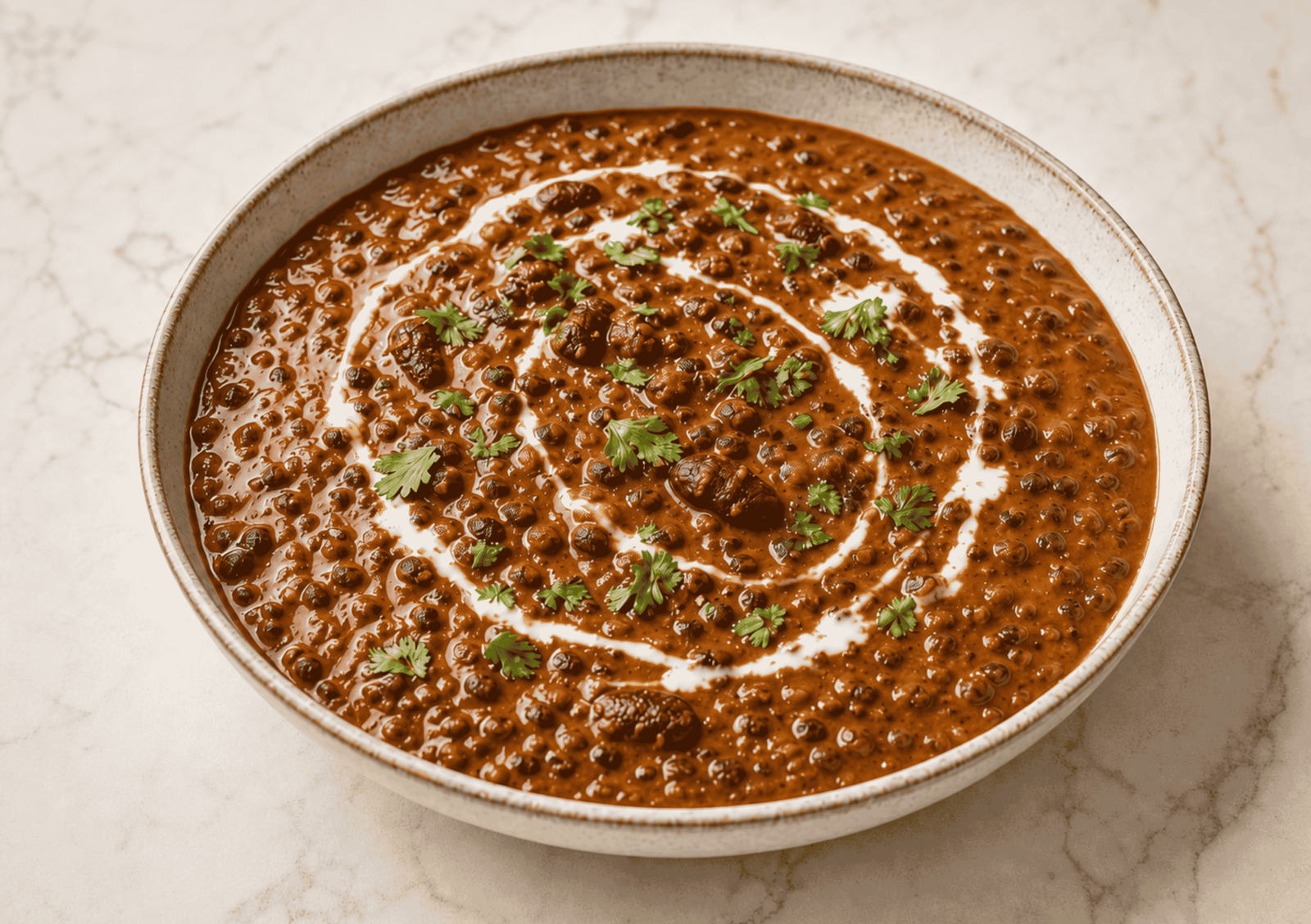
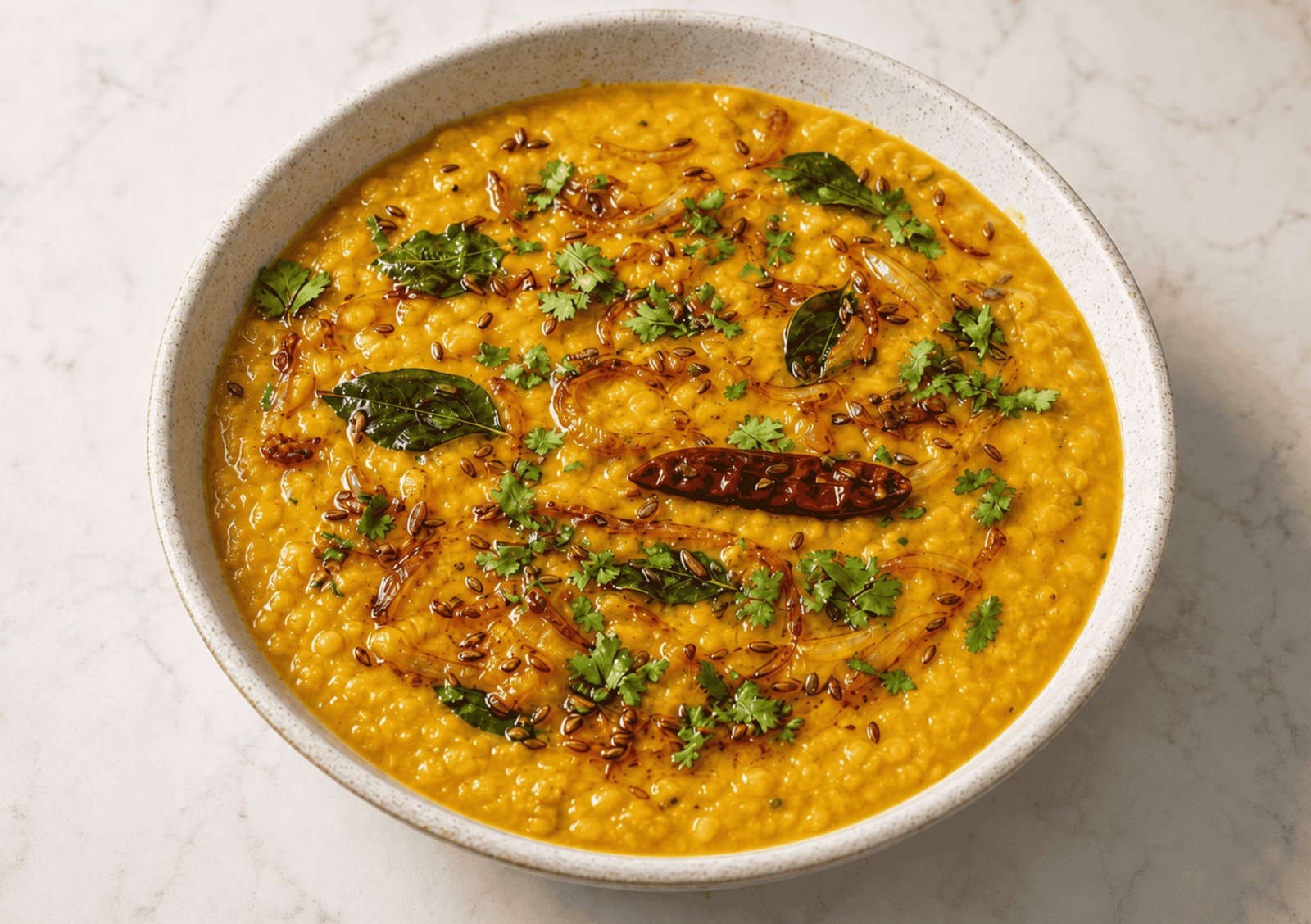
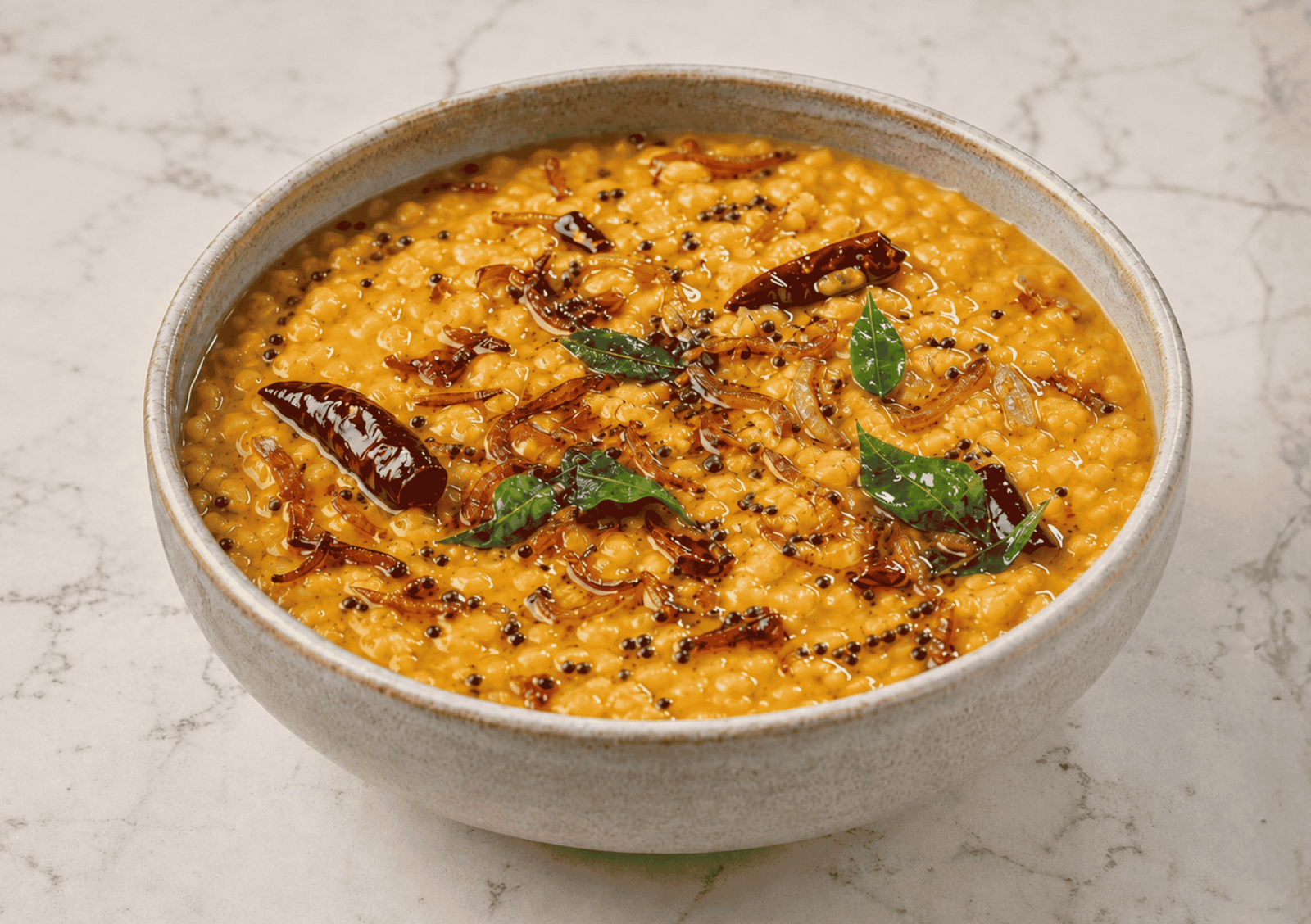
Sri Lankan red lentil dal is a mild, creamy curry made with red split lentils, coconut milk, curry leaves and warming spices. A final tempering of onion, mustard seeds, cumin, dried chilli and curry leaves adds a fragrant savoury finish without making the dish excessively hot.
In Sri Lanka, this everyday lentil curry is commonly called parippu curry. It is simple enough for a weekday meal and works especially well as part of a larger rice and curry spread. The lentils do not need soaking, and the whole dish can be ready in about 45 minutes.
What Is Sri Lankan Red Lentil Dal?
Sri Lankan red lentil dal is a coconut milk lentil curry usually prepared with red split lentils, also sold as masoor dal. The lentils cook until soft and creamy, while turmeric, chilli, onion, garlic and curry leaves provide the savoury base.
The finished dal is mild enough to balance a hotter curry. Coconut milk rounds out the spices and gives the sauce a smooth texture, while the tempering contributes aroma and a little texture at the end.
There are many household variations. Some are very mild, some contain more chilli, and the tempering may be kept simple or include sliced onion. This version uses a generous tempering because it gives the dal a distinct finish while keeping the main curry gentle.
What Gives This Dal Its Sri Lankan Character?
Coconut milk and curry leaves are central to the flavour of this version. The coconut milk softens the earthy lentils and chilli, while fresh or frozen curry leaves add their distinctive citrusy, savoury aroma.
The tempering is also important. Mustard seeds and cumin seeds are heated in oil until fragrant, then combined with red onion, dried chilli and curry leaves. Adding this hot mixture to the cooked lentils gives the curry a fresher, more aromatic finish than simmering every ingredient together from the beginning.
Which Lentils Should I Use?
Use red split lentils, which may also be labelled masoor dal. They cook quickly and naturally break down into a creamy curry without blending.
Whole red lentils, brown lentils and green lentils need different cooking times and quantities of water, so they are not direct substitutes in this recipe. Yellow split lentils can be used, but they usually take longer to soften and will produce a slightly different flavour and texture.
Do Red Lentils Need Soaking?
No. Red split lentils are small and cook quickly, so soaking is unnecessary. Rinse them several times in cold water until the water becomes much less cloudy. This removes loose surface starch and any fine dust, helping the dal cook into a creamy rather than gluey consistency.
How Thick Should Sri Lankan Dal Be?
The dal should be creamy and spoonable, with enough movement to spread gently across a plate of rice. It should not be stiff, but it does not need to be as thin as soup.
Red lentils continue to absorb liquid as they stand. Keep the curry slightly looser than your preferred serving consistency, especially if it will sit for a few minutes before the meal. Stir in a splash of hot water during reheating if it has thickened.
How to Make Sri Lankan Red Lentil Dal
Prepare all the aromatics before you start, as the tempering cooks quickly once the mustard seeds begin to pop. Cook the lentils first, enrich them with coconut milk, then make the tempering in a separate small frying pan and stir most of it through the curry. See the recipe card at the bottom for exact quantities and printable directions
Ingredients
For the lentils:
- Red split lentils
- Water
- Onion
- Tomato
- Garlic
- Fresh ginger
- Green finger chilli
- Curry leaves
- Ground turmeric
- Ground cumin
- Ground coriander
- Hot chilli powder
- Fine salt
- Full fat coconut milk
For the tempering:
- Coconut oil or neutral cooking oil
- Red onion
- Black mustard seeds
- Cumin seeds
- Dried red chilli
- Curry leaves
Cooking Instructions
Step 1: Rinse the lentils. Put the red split lentils in a bowl and rinse them in several changes of cold water until the water is much less cloudy. Drain thoroughly.
Step 2: Simmer the lentil base. Add the drained lentils to a medium saucepan with the measured water, onion, tomato, garlic, ginger, green chilli, curry leaves, turmeric, ground cumin, ground coriander and hot chilli powder. Bring to the boil, skim off any foam, then reduce the heat and simmer partially covered for 15 to 18 minutes. Stir every few minutes, particularly towards the end, until the lentils are tender and beginning to break down.
Step 3: Add the coconut milk. Stir in the coconut milk and salt. Simmer gently, uncovered, for 5 to 7 minutes, stirring regularly. The dal should be creamy and spoonable. Add a little of the extra hot water if it becomes too thick.
Step 4: Make the tempering. Heat the oil in a small frying pan over a medium heat. Add the sliced red onion and cook for 4 to 5 minutes until softened and lightly golden. Add the mustard seeds and cumin seeds, then cook until the mustard seeds begin to pop. Immediately add the dried chilli and curry leaves and cook for a further 20 to 30 seconds. Take the pan off the heat before the spices darken.
Step 5: Finish the dal. Stir about three quarters of the hot tempering into the lentils. Taste and adjust the salt, then transfer the dal to a serving bowl. Spoon the reserved tempering over the top and serve hot.
How Do I Stop the Tempering from Turning Bitter?
Use medium heat and have the dried chilli and curry leaves ready before the seeds go into the pan. Mustard seeds should pop, but they should not remain over the heat long enough to blacken. Dried chilli and curry leaves can scorch within seconds, so add them last and remove the pan from the heat promptly.
Make sure washed curry leaves are thoroughly dry before adding them to hot oil. Any clinging water can cause the oil to spit.
Tips for Creamy Red Lentil Dal
- Use full fat coconut milk. Reduced fat coconut milk makes a thinner, less rounded curry.
- Stir more frequently once the lentils begin to soften because they can settle and catch on the base of the pan.
- Keep the heat low after adding the coconut milk. A gentle simmer is enough to bring the curry together.
- Adjust the consistency at the end. Different brands of lentils absorb slightly different amounts of water.
- Reserve some tempering for the top so the onion and whole spices remain visible and aromatic when served.
Can I Make It Milder or Hotter?
For a milder dal, omit the ground chilli powder and leave the green chilli whole. You can also shake the seeds out of the dried chilli before tempering it.
For more heat, slice the green chilli before simmering it with the lentils or increase the hot chilli powder slightly. Add extra chilli gradually so it does not overwhelm the coconut milk and curry leaves.
Variations and Substitutions
Fresh or frozen curry leaves give the clearest flavour. Dried curry leaves are less aromatic, but they can be used when the other options are unavailable. Do not substitute curry powder for curry leaves because they perform different roles in the dish.
You can fold in baby spinach after adding the coconut milk. Simmer until the leaves have wilted and the lentils return to a gentle bubble.
If coconut oil is unavailable, use rapeseed, sunflower or another neutral cooking oil. The flavour will be slightly less coconut forward, but the tempering will still work well.
What to Serve with Sri Lankan Red Lentil Dal
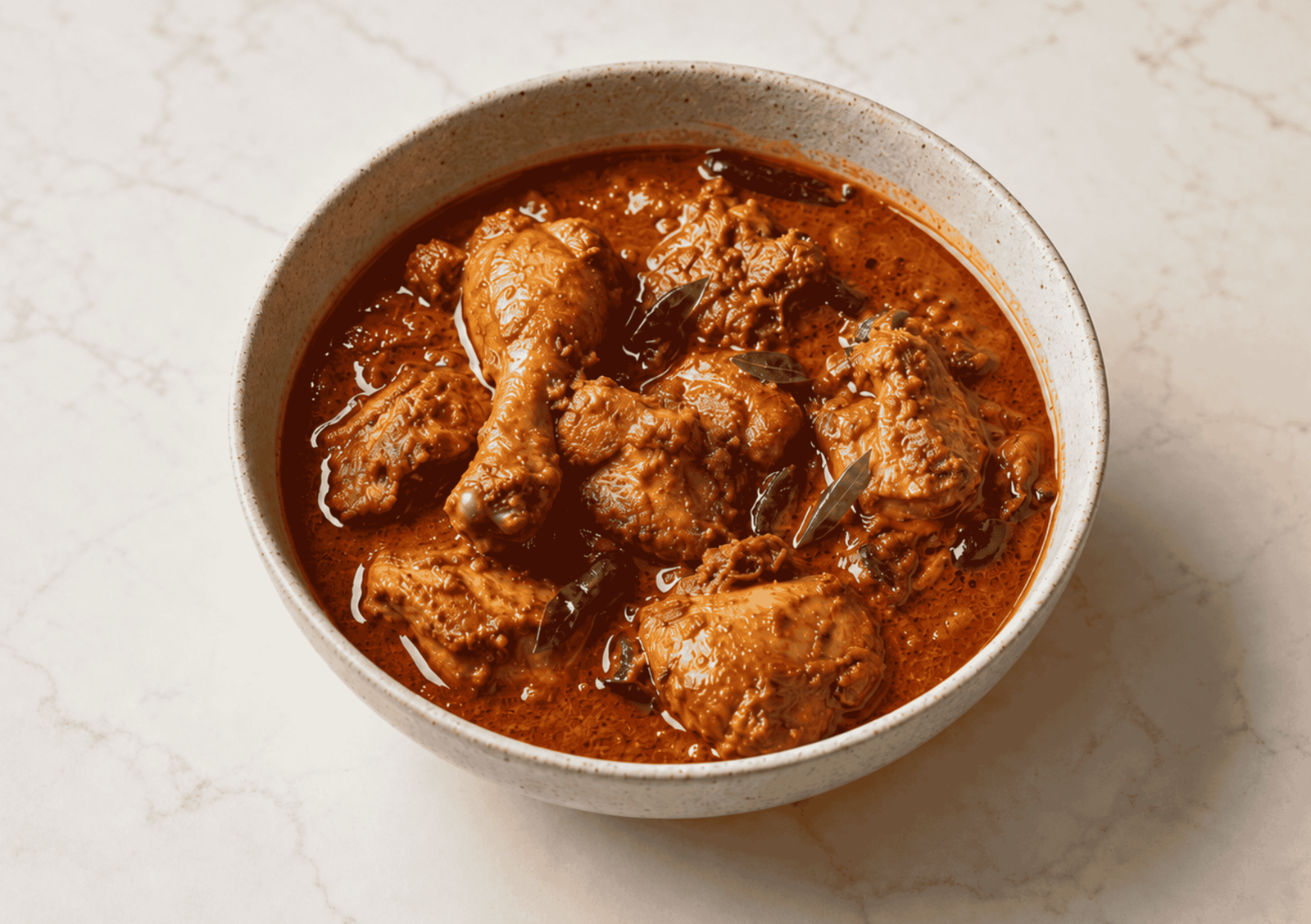
Serve the dal with Basmati Rice for a simple meal. It also makes a cooling partner for Sri Lankan Chicken Curry.
For a fuller Sri Lankan meal, add coconut sambol and one or two vegetable curries. The fresh lime and coconut in the sambol provide a useful contrast to the soft, creamy lentils.
How to Store and Reheat Sri Lankan Dal
Cool leftovers promptly, transfer them to a covered container and refrigerate within two hours. Use refrigerated dal within two days. It will thicken as it chills, so stir in a small splash of water before reheating.
Reheat gently in a saucepan over a medium low heat, stirring regularly, until piping hot throughout. Add water a little at a time so the dal remains creamy rather than watery.
The dal can be frozen in portions for up to three months for best quality. Defrost it in the refrigerator, then reheat thoroughly. The coconut milk may appear slightly separated after thawing, but steady stirring over gentle heat should bring it back together.

Sri Lankan Red Lentil Dal (Parippu Curry)
Ingredients
- 20 ml coconut oil or neutral cooking oil
- 50 g red onion thinly sliced
- 1 teaspoon black mustard seeds
- ½ teaspoon cumin seeds
- 1 dried red chilli broken in half
- 8 fresh or frozen curry leaves
Instructions
- Put the red split lentils in a bowl and rinse them in several changes of cold water until the water is much less cloudy. Drain thoroughly.
- Put the drained lentils, 650ml water, onion, tomato, garlic, ginger, green chilli, 10 curry leaves, turmeric, ground cumin, ground coriander and hot chilli powder in a medium saucepan. Bring to the boil and skim off any foam. Reduce the heat and simmer partially covered for 15 to 18 minutes, stirring every few minutes, until the lentils are tender and beginning to break down.
- Stir in the coconut milk and 1¼ teaspoons salt. Simmer gently, uncovered, for 5 to 7 minutes, stirring regularly. Add up to 100ml hot water as needed to maintain a creamy, spoonable consistency.
- Heat the oil in a small frying pan over a medium heat. Add the red onion and cook for 4 to 5 minutes until softened and lightly golden. Add the mustard seeds and cumin seeds. When the mustard seeds begin to pop, add the dried chilli and 8 curry leaves. Cook for 20 to 30 seconds, then immediately remove the pan from the heat.
- Stir about three quarters of the tempering into the lentils. Taste and add more salt if needed. Transfer the dal to a serving bowl, spoon over the reserved tempering and serve hot.
Notes
- Red split lentils do not need soaking.
- Brands of lentils absorb water differently. Use the optional hot water only if the dal becomes too thick.
- The green chilli can be left whole for gentle heat or sliced for a hotter result.
- Dry the curry leaves thoroughly before putting them into hot oil.
- Refrigerate leftovers promptly and use within two days, or freeze in portions for up to three months for best quality.