Homemade Mango Chutney
Homemade mango chutney brings together sweet mango, sharp vinegar, gentle chilli and warming aromatics in a thick, glossy condiment. It is familiar from curry house poppadom trays, but it is just as useful with samosas, grilled meat, cheese and leftover roast chicken.
This recipe makes a manageable small batch for four people, approximately 350g. Firm mango pieces simmer with onion, ginger, garlic, mustard seeds, Kashmiri chilli and golden raisins until the fruit is tender and the liquid has reduced to a spoonable syrup.
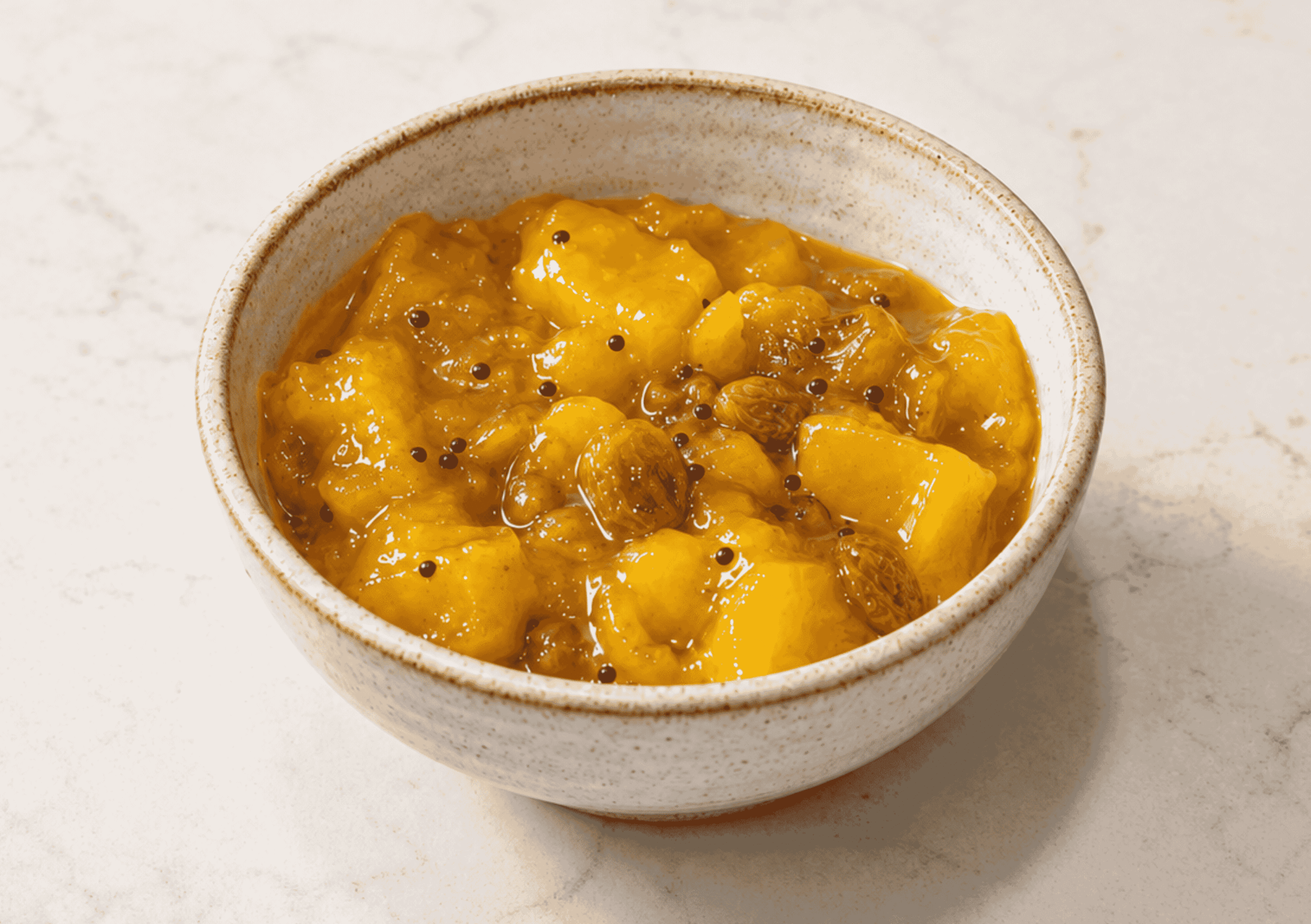
The finished chutney is sweet without becoming cloying. Vinegar and slightly underripe mango provide acidity, while mustard seeds and ginger keep the flavour savoury enough to serve alongside a full curry house meal.
What Is Mango Chutney?
Mango chutney is a cooked condiment made by simmering mango with vinegar, sugar and seasonings. Some versions remain pale and fruity, while others are dark, heavily spiced or hot. The familiar curry house style is usually sweet, mildly tangy and soft enough to spoon onto poppadoms.
Fresh chutneys made with herbs or yoghurt rely on their raw ingredients for texture. Cooked mango chutney develops its consistency through reduction. The sugar dissolves into the vinegar and mango juices, forming a syrup that thickens as it cools. Raisins add small pockets of sweetness and body.
This is a refrigerator chutney rather than a shelf stable preserve. It is cooked, transferred to a clean container and refrigerated once cool. Long term cupboard storage requires a properly tested preserving process and should not be improvised from a general chutney recipe.
Should You Use Ripe or Green Mangoes?
Firm, slightly underripe mangoes are the most reliable choice. Their flesh holds its shape during simmering and their natural acidity balances the sugar. The mango should yield only slightly when pressed and should not feel hard and completely unripe.
Fully ripe mangoes can be used, but they break down more quickly and create a smoother, sweeter chutney. If your fruit is very ripe, reduce the sugar by 15 to 20g and begin checking the texture earlier because the mixture may reach the correct consistency sooner.
Very hard green mango is much sharper and may require a little more sugar or cooking time. Taste the fruit before starting, then make the final sweetness adjustment near the end rather than adding a large amount of sugar immediately.
Always weigh the mango after peeling and removing the stone. Whole mangoes differ greatly in size and the stone can account for a substantial part of the weight.
How Large Should the Mango Pieces Be?
Cut the mango flesh into cubes of about 1.5cm. Pieces this size soften during cooking while leaving some recognisable fruit in the finished chutney. Smaller cubes break down more readily, and larger pieces can remain firm after the syrup has reduced.
For a chunky chutney, stir gently and stop cooking when the mango is tender but several pieces remain intact. For a smoother curry house texture, press some of the softened fruit against the side of the pan during the final ten minutes.
There is no need to blend the chutney. Blending incorporates the raisins and mustard seeds into the fruit and can make the texture more uniform than the soft, spoonable chutney normally served with poppadoms.
Which Vinegar Is Best for Mango Chutney?
Distilled white vinegar gives a clean acidity and keeps the chutney fairly bright. Cider vinegar has a softer, fruitier character and is the alternative I prefer when a less pointed vinegar flavour is wanted.
White wine vinegar can also be used. Avoid balsamic vinegar because its dark colour and pronounced sweetness overwhelm the mango. Malt vinegar is more assertive and produces a noticeably darker, more savoury chutney.
Do not reduce the vinegar simply because the mixture smells sharp at the beginning. Its raw aroma softens during simmering, and the acidity is needed to balance the sugar. Judge the final flavour only after the chutney has cooled.
How to Make Homemade Mango Chutney
Prepare and weigh the mango first, then cook the onion gently before adding the ginger, garlic and mustard seeds. Dissolve the sugar in the vinegar, add the remaining ingredients and simmer uncovered until the mango is tender and the syrup coats the fruit. Keep the heat low and stir more frequently as the mixture thickens. See the recipe card at the bottom for exact quantities and printable directions
Ingredients You Will Need
- Firm mango
- Rapeseed oil
- Onion
- Fresh root ginger
- Garlic
- Black mustard seeds
- Caster sugar
- Distilled white vinegar or cider vinegar
- Golden raisins
- Kashmiri chilli powder
- Ground turmeric
- Fine salt
- Water, only if needed during cooking
Cooking Instructions
Step 1: Prepare the mango. Peel the mangoes and slice the flesh away from the stones. Weigh the prepared flesh, then cut it into even cubes. Prepare the remaining ingredients before placing the pan over the heat.
Step 2: Soften the onion. Heat the rapeseed oil in a small, heavy based saucepan over a low to medium heat. Add the chopped onion and cook for about 5 minutes, stirring often, until softened but not browned.
Step 3: Add the aromatics. Add the ginger, garlic and black mustard seeds. Stir briefly, just until the mustard seeds begin to pop and the raw aroma of the garlic softens. Do not allow the garlic to colour.
Step 4: Dissolve the sugar. Reduce the heat to low. Add the sugar and vinegar, then stir until the sugar has dissolved. Avoid boiling the mixture vigorously while sugar crystals remain visible.
Step 5: Simmer the chutney. Add the mango, raisins, Kashmiri chilli powder, turmeric and salt. Bring the mixture to a gentle simmer, then cook uncovered over a low heat until the mango is tender and the liquid has reduced. Stir every few minutes at first and more frequently towards the end.
Step 6: Adjust the texture. Press a few softened mango pieces against the side of the pan if you prefer a smoother chutney. If the liquid reduces before the mango becomes tender, add water sparingly to prevent the syrup from catching.
Step 7: Check the consistency. Remove the pan from the heat when the mango is tender and the syrup leaves a brief clear trail when a wooden spoon is drawn across the base. The chutney should remain slightly looser than the desired final consistency because it thickens as it cools.
Step 8: Cool and refrigerate. Leave the chutney in the pan briefly, then spoon it into a clean heatproof jar or container. Cool completely, cover and refrigerate. For a more settled flavour, chill it overnight before serving.
Does Mango Chutney Thicken as It Cools?
Yes. Hot chutney contains fluid syrup, but the dissolved sugar and softened fruit set to a thicker consistency as the temperature drops. Removing it from the heat only when it looks as thick as a chilled chutney often leads to an overly sticky result.
Use the spoon trail test near the end of cooking. Draw a wooden spoon across the base of the pan. The trail should remain visible briefly before syrup slowly flows back into it. The chutney should fall from the spoon rather than remaining in a solid clump.
If the cooled chutney is too thick, stir in one or two teaspoons of just boiled water until it reaches the preferred consistency. If it remains too loose, return it to a clean saucepan and simmer for a few more minutes, stirring carefully to prevent scorching.
How Sweet and Spicy Should Mango Chutney Be?
Mango chutney should taste sweet, tangy and gently spiced. The mango must remain identifiable, rather than serving only as a base for sugar. Slightly underripe fruit helps achieve that balance because it contributes its own acidity.
Kashmiri chilli powder provides colour and mild warmth. Half a teaspoon gives a family friendly result with most brands. Add another quarter teaspoon for more heat, or use a small pinch of cayenne if Kashmiri chilli powder is unavailable. Cayenne is hotter, so it is not a direct equal quantity substitute.
Taste a cooled spoonful before adjusting the sugar, vinegar or chilli. Heat can exaggerate sharpness and conceal sweetness, so a chutney tasted straight from the pan does not give an accurate picture of its final balance.
Cooking Tips
- Weigh the prepared mango flesh rather than whole fruit.
- Use a heavy based saucepan to reduce the risk of the sugary syrup catching.
- Soften the onion without browning it so the mango remains the main flavour.
- Dissolve the sugar before bringing the mixture to a steady simmer.
- Keep the pan uncovered so excess moisture can evaporate.
- Stir more frequently during the final ten minutes when the syrup is thickest.
- Remove the chutney while it is slightly looser than you want it to be when cold.
- Taste a cooled sample before making the final adjustment.
Variations and Substitutions
For a smoother chutney, dice the mango into 1cm pieces and crush most of it during the final stage of cooking. For a chunkier texture, keep the 1.5cm cubes and stir gently so they are not broken unnecessarily.
Golden raisins can be replaced with ordinary seedless raisins. Dark raisins give the chutney a deeper colour and a slightly stronger dried fruit flavour. They can also be omitted, although the batch will be less sweet and have less body.
A small pinch of ground cardamom can be added with the turmeric for a more aromatic version. Keep the quantity restrained because cardamom can quickly dominate mango. For additional heat, add one finely chopped green chilli with the ginger and garlic.
Light brown sugar can replace caster sugar in the same weight. It creates a darker chutney with a mild caramel flavour. Do not use mango pulp as a straight substitute for fresh mango because its added liquid and, in some products, added sugar will change both the cooking time and balance.
What to Serve with Mango Chutney
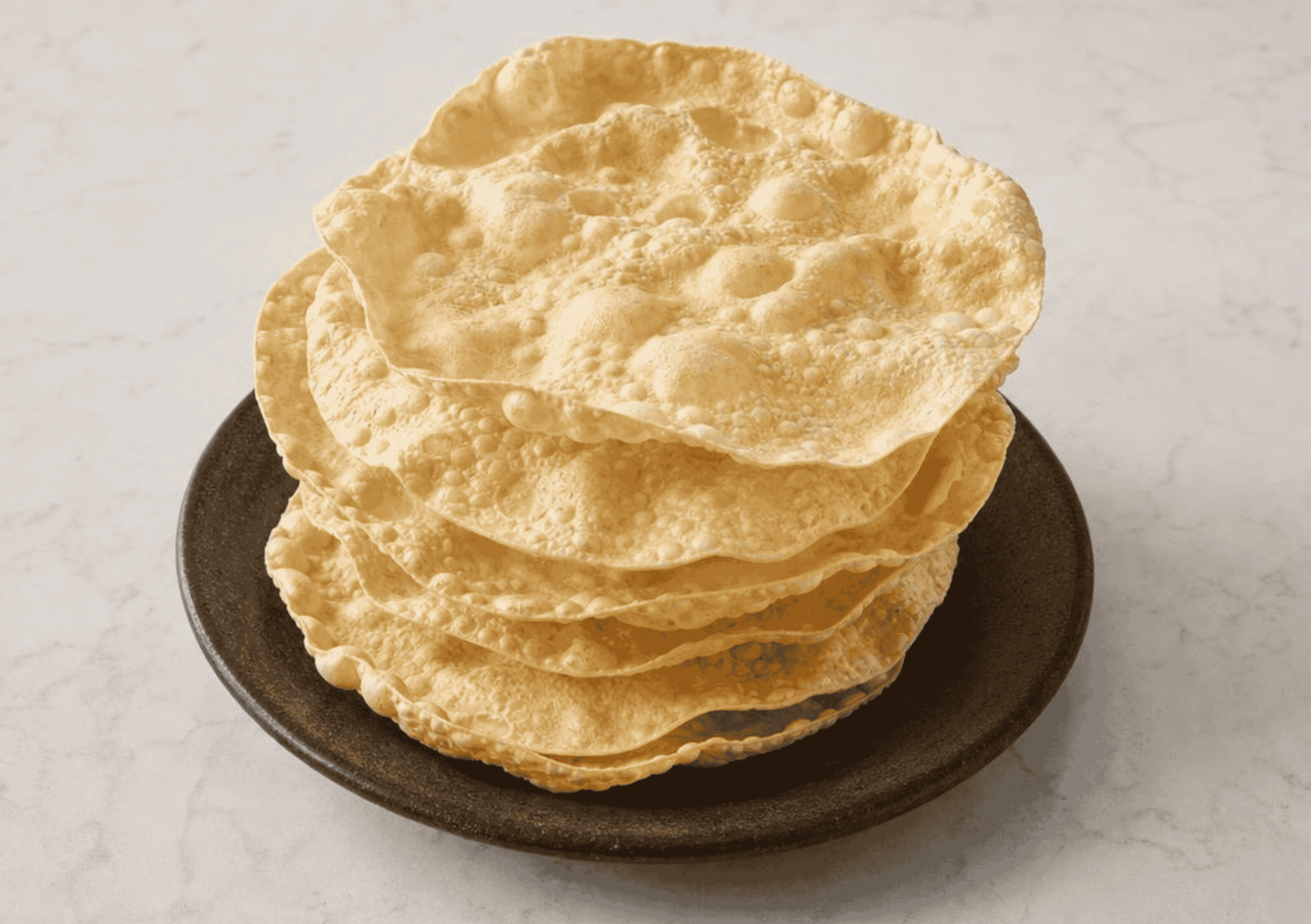
Mango chutney belongs naturally on a poppadom tray with curry house onion chutney, Indian mint sauce and lime pickle. Its sweetness balances hot pickles and gives a useful contrast to salty, crisp poppadoms.
Serve it with onion bhajis, vegetable samosas, chicken tikka, tandoori lamb tikka or paneer tikka. It also works in a cheese sandwich, with mature Cheddar, beside cold roast meat or stirred in a small quantity through a yoghurt dressing.
How to Store Homemade Mango Chutney
Spoon the chutney into a clean heatproof jar or airtight container, cool it completely and refrigerate it promptly. Always use a clean, dry spoon to remove a portion because crumbs and moisture shorten the useful life of condiments.
This small batch recipe is intended for refrigerator storage and is not presented as a shelf stable canned preserve. Use it within 10 days and discard it sooner if you notice mould, fermentation, an unusual odour or other signs of spoilage.
Do not use this recipe for room temperature canning. Safe cupboard storage requires a preservation recipe with tested ingredient proportions, vinegar acidity, jar size and processing time. Use a recipe published by a recognised home preservation authority if you want to can mango chutney.
Mango chutney can be frozen in a freezer safe container with a little room for expansion. Defrost it in the fridge and stir thoroughly before serving. The mango pieces may soften slightly, but the chutney remains suitable as a condiment.

Homemade Mango Chutney
Ingredients
- 300 g firm mango flesh peeled, stoned and cut into 1.5cm cubes
- 1 teaspoon rapeseed oil
- 60 g onion finely chopped
- 15 g fresh root ginger peeled and finely grated
- 1 garlic clove finely grated
- 1/2 teaspoon black mustard seeds
- 100 g caster sugar
- 80 ml distilled white vinegar or cider vinegar
- 30 g golden raisins
- 1/2 teaspoon Kashmiri chilli powder or to taste
- 1/4 teaspoon ground turmeric
- 1/4 teaspoon fine salt
- 2 to 3 tablespoons water only if needed during cooking
Instructions
- Prepare and weigh the mango, then cut it into 1.5cm cubes.
- Heat the oil in a heavy based saucepan and soften the onion for 5 minutes without browning.
- Add the ginger, garlic and mustard seeds. Stir for 45 seconds.
- Add the sugar and vinegar. Stir over a low heat until the sugar dissolves.
- Add the mango, raisins, chilli powder, turmeric and salt. Simmer uncovered for 30 to 40 minutes, stirring regularly.
- Crush some mango for a smoother texture. Add a little water only if the syrup reduces before the fruit is tender.
- Remove from the heat when the mango is tender and the syrup briefly holds a spoon trail.
- Rest for 10 minutes, transfer to a clean heatproof container and cool completely before covering and refrigerating.
Notes
– The chutney thickens noticeably as it cools. – Cider vinegar gives a softer, fruitier acidity than distilled white vinegar. – This recipe is intended for refrigerated storage, not untested cupboard storage. – Refrigerate and use within 10 days. – Do not treat this recipe as a shelf stable preserve. Use a tested canning recipe for room temperature storage.