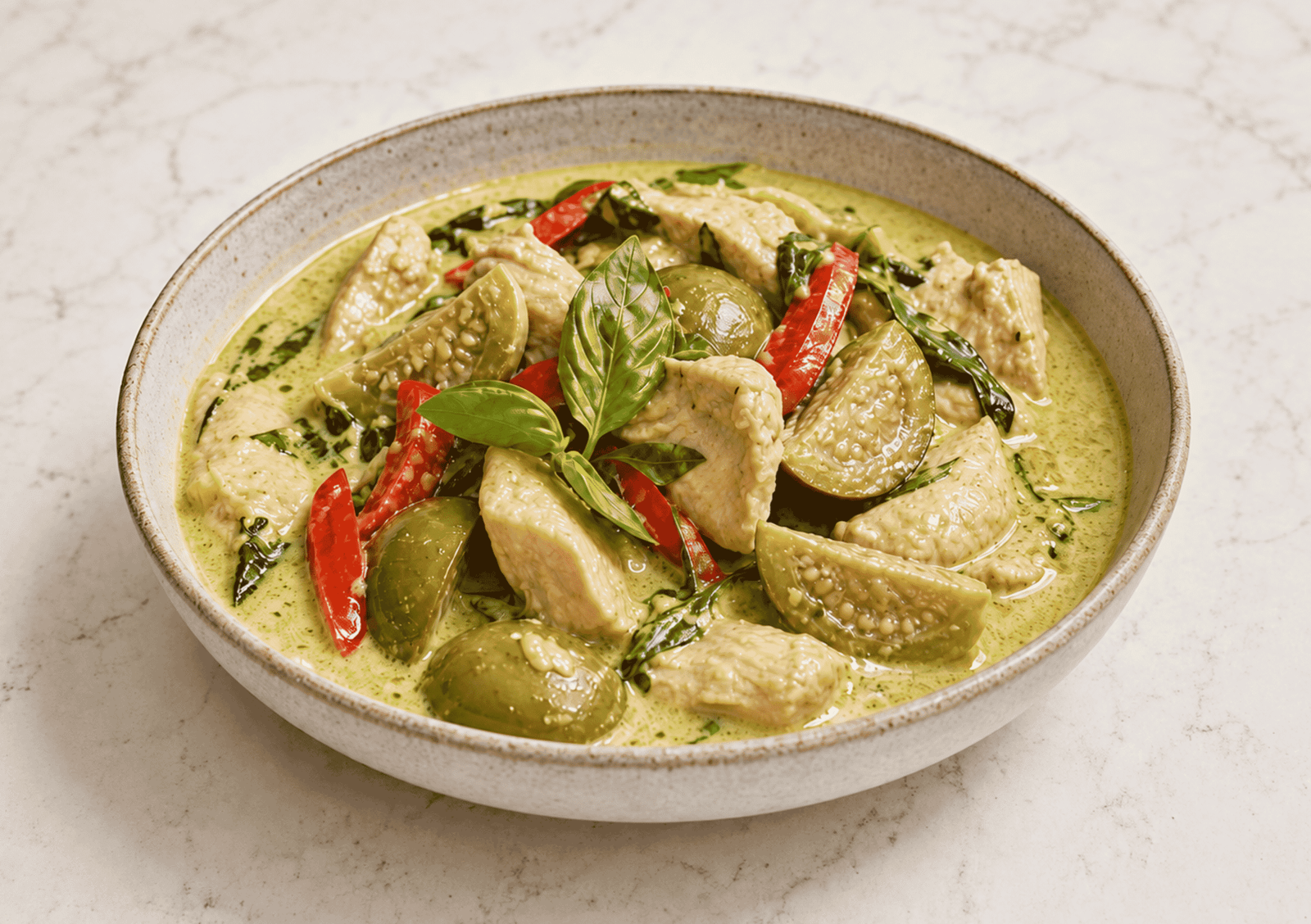
Thai Red Chicken Curry Recipe
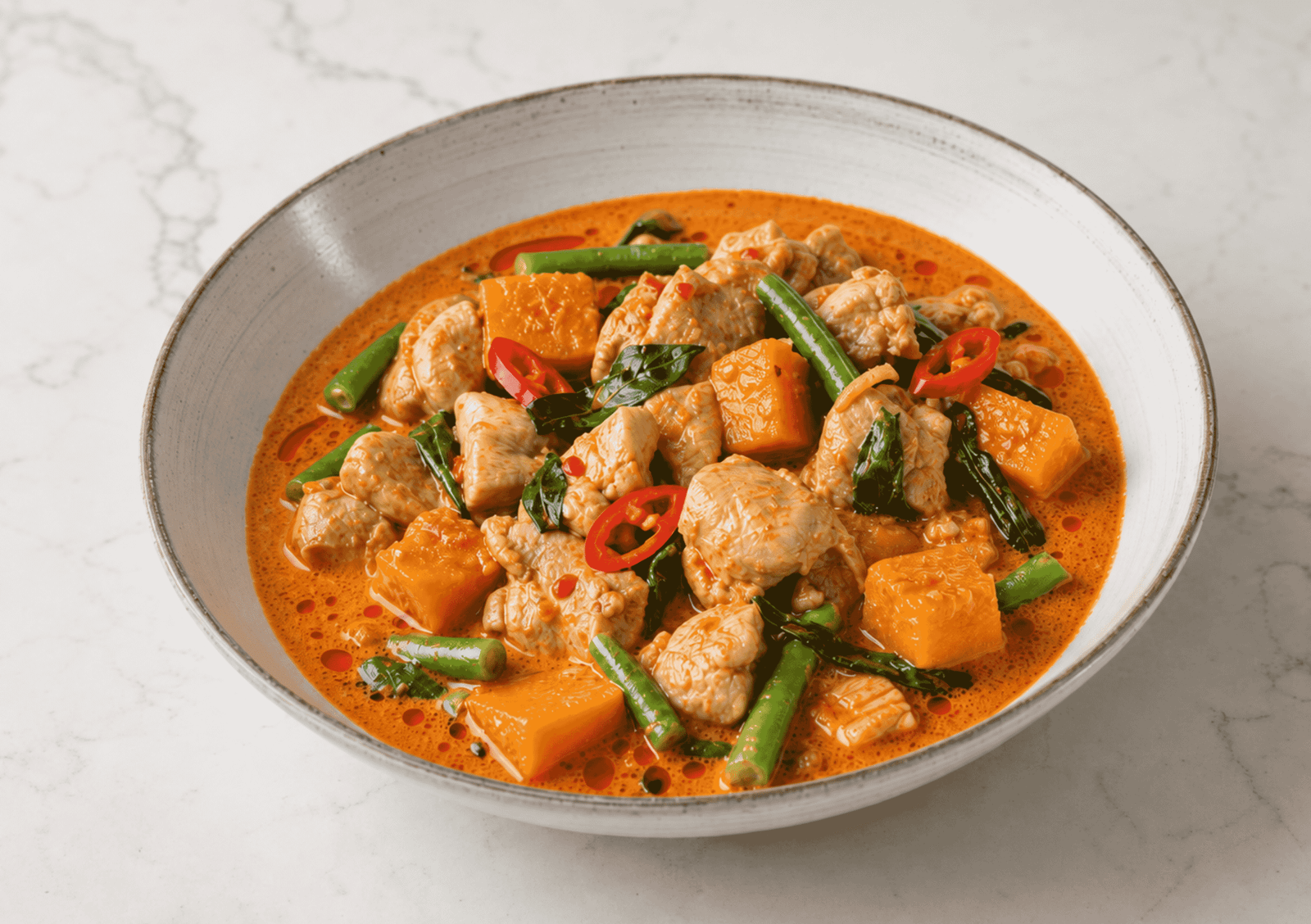
Thai red chicken curry brings together chicken thighs, butternut squash and green beans in a coconut sauce flavoured with red curry paste, makrut lime leaves and Thai basil. The squash adds a little sweetness, while fish sauce keeps the curry savoury.
This version makes four lighter servings with jasmine rice, or two to three generous servings. Prepared red curry paste keeps the preparation manageable, while a little fresh garlic, ginger and lemongrass adds aroma to a shop bought paste. The vegetables go into the pan in stages, giving the squash time to soften without overcooking the beans.
What Is Thai Red Curry?
Thai red curry is a coconut milk curry built around a paste made with dried red chillies and aromatics such as lemongrass, galangal, garlic, shallots and makrut lime zest. Some pastes also contain fermented shrimp paste.
The dried chillies give the paste its colour and a different character from green curry paste, which uses fresh green chillies. Red curry is not automatically hotter or milder than green curry. The chillies used and the amount of paste in the sauce make a bigger difference than the colour.
The chicken and vegetables should hold their shape in a pourable coconut sauce. It needs enough body to carry the paste, but should still flow easily around the rice.
Choosing Red Curry Paste
Use Thai red curry paste rather than a ready-made red curry cooking sauce. Paste is the concentrated seasoning that needs cooking before the main liquid is added; a cooking sauce already contains liquid and cannot be substituted in the same quantity.
The paste quantity in the card is intended for Maesri red curry paste. Begin with the lower amount for a moderately spiced sauce; the larger amount gives a stronger curry. Brands differ considerably, so check the packet guidance before using the same amount of a hotter or saltier paste.
For shop bought paste, cook fresh garlic, grated ginger and lemongrass with it. They supplement the aromatics already in the paste, rather than replacing them. Omit these extras when using a freshly made homemade red curry paste.
If you use homemade paste, prepare it before beginning this recipe. Its concentration may differ considerably from a commercial paste, so use the amount its recipe recommends for four servings rather than assuming the same weight will work. The timing below covers making the curry with paste that is ready to use.
Ingredients and Flavour
Use full fat coconut milk intended for cooking, whether it comes in a tin or a carton. Thin coconut drinks are too dilute for this recipe. Stir or shake the coconut milk until evenly combined before adding it to the sauce.
Unsalted chicken stock gives you more control over seasoning because both the curry paste and fish sauce already contain salt. It is reduced before the coconut milk goes in, concentrating the sauce without having to cook the chicken for longer at the end.
Butternut squash is peeled and cut fairly small so it cooks in the sauce. Green beans are added later, keeping a little bite alongside the softer squash. Avoid increasing the vegetable quantities substantially without adjusting the liquid and checking that everything can simmer evenly.
Makrut lime leaves perfume the sauce during cooking. Thai basil goes in after the heat is switched off, keeping its aniseed aroma noticeable. Sugar rounds out the seasoning, but the finished curry should not taste sugary. Start with the measured sugar and fish sauce, then taste the cooked sauce before making small adjustments.
How to Make Thai Red Chicken Curry
Cut the vegetables and chicken before heating the pan, keeping raw chicken separate from the other ingredients. Use a wide, deep saucepan with enough room to stir gently once the squash has softened. See the recipe card at the bottom for exact quantities and printable directions
Ingredients
- Vegetable oil
- Thai red curry paste
- Garlic, for shop bought paste
- Fresh ginger, for shop bought paste
- Lemongrass paste or finely minced fresh lemongrass, for shop bought paste
- Unsalted chicken stock
- Full fat coconut milk
- Boneless, skinless chicken thighs
- Makrut lime leaves
- Palm sugar, light brown sugar or white sugar
- Fish sauce
- Butternut squash
- Green beans
- Thai basil leaves
- Hot water, if needed to loosen the sauce
- Mild red chilli, optional
- Steamed jasmine rice, to serve
Cooking Instructions
Step 1: Prepare the ingredients. Peel and deseed the squash, then cut it into even 2cm cubes. Trim the beans and cut them into short lengths. Tear the makrut lime leaves, keeping the pieces large enough to remove later, and pick the basil leaves. Prepare the garlic, ginger and lemongrass if using shop bought paste. Stir the coconut milk until combined. On a separate board, cut the chicken into 3cm pieces.
Step 2: Fry the curry paste and aromatics. Heat the vegetable oil in a wide saucepan over a medium heat. Add the red curry paste and, for shop bought paste, the prepared garlic, ginger and lemongrass. Stir for 2 to 3 minutes, until aromatic and slightly darker. Reduce the heat if the garlic starts browning quickly. Loosen with a small splash from the measured stock if needed.
Step 3: Reduce the stock. Pour in the stock not used in Step 2, scraping the base of the pan to dissolve the cooked paste. Bring to a brisk simmer and cook uncovered for about 3 to 4 minutes, until the stock has reduced by roughly half. Stir regularly so the paste does not catch.
Step 4: Add the coconut milk and chicken. Stir in the coconut milk, lime leaves, the initial measured sugar and fish sauce, then add the chicken. Bring back to a gentle simmer and cook uncovered for 4 minutes, stirring occasionally. There is no need to brown the chicken separately.
Step 5: Add the squash. Stir in the squash and simmer gently for 8 to 10 minutes, or until a knife enters the pieces with just a little resistance. Turn them occasionally so they cook evenly. If they are still hard in the centre, continue simmering before adding the beans.
Step 6: Cook the beans and check the chicken. Add the beans and simmer for another 4 to 5 minutes, or until the squash is tender and the beans are cooked with a little bite. Check the centre of a thick chicken piece with a clean food thermometer; it should reach 75°C for at least 30 seconds. Continue simmering if needed, adding a splash of hot water if the sauce becomes too concentrated.
Step 7: Adjust the seasoning and finish. Taste the cooked sauce. Add a little extra fish sauce if it needs salt, or a little extra sugar if the flavour needs rounding out. Make each adjustment separately and taste again. Remove the lime leaf pieces, switch off the heat and fold in the Thai basil. Serve with jasmine rice and the sliced mild red chilli, if using.
Why Has Oil Appeared on My Curry?
A few red tinted droplets on the surface are normal. This recipe uses oil to fry the paste, and coconut milk may release more oil as the sauce simmers. The curry paste gives the oil its red colour.
Some coconut milk stays emulsified and does not visibly separate. Follow the stock reduction and vegetable tenderness cues in the method rather than cooking indefinitely in pursuit of an oily surface. If the paste begins sticking during frying, lower the heat and loosen it before continuing.
Can I Use Chicken Breast Instead?
Yes, but add it later. Use the same weight of chicken breast, cut across the grain into slices about 1cm thick. Fry the paste and reduce the stock as directed, then build the coconut sauce without adding the chicken.
Follow the sauce stage without chicken, then simmer the squash for 8 to 10 minutes, or until almost tender as described in Step 5. Add the sliced breast and beans together and bring back to a gentle simmer. Begin checking the chicken after 4 minutes; it may take about 5 to 7 minutes, depending on the thickness and pan temperature. Use the same temperature check as the main method and stop cooking as soon as the chicken and vegetables are ready.
Adjusting Heat and Sauce Consistency
For a milder result, choose a milder paste or reduce the amount according to the brand’s guidance. The lower quantity in the card is intended for Maesri and may still be hot with other brands. Simply adding sugar will make the curry sweeter without removing the chilli heat. Extra coconut milk can soften the intensity, although it also increases the amount of sauce.
If you need more curry paste after tasting, cook it separately in a little additional coconut milk before adding it to the curry. Allow it to become fragrant rather than stirring uncooked paste into a finished sauce. Any coconut milk used for this adjustment is extra to the amount in the card.
If the sauce reduces too far, stir in a little hot water. If it is too thin once the chicken and vegetables are ready, lift them out with a slotted spoon, reduce the sauce briefly, then return them to the pan. This avoids turning the squash to a purée while waiting for liquid to evaporate.
Variations and Substitutions
Pumpkin can replace the butternut squash by prepared weight, although softer varieties may cook sooner. Check the pieces with a knife rather than relying solely on the timer.
Replace the squash with the same drained weight of tinned bamboo shoots if preferred. During Step 5, simmer the chicken and sauce without the squash for 8 to 10 minutes, then add the bamboo shoots with the beans in Step 6. This preserves the chicken’s cooking time while heating the already cooked shoots. The curry will lose the squash’s sweetness, so taste before deciding whether it needs any further adjustment.
For a meat-free version, use the same weight of drained firm tofu, cut into 3cm cubes, and unsalted vegetable stock. Choose red curry paste without shrimp or fish ingredients and replace the fish sauce with a vegetarian fish sauce alternative, adjusting to taste. Add the tofu with the coconut milk at Step 4, stir gently and follow the remaining vegetable stages until the tofu is hot throughout and the squash and beans are tender. The chicken temperature check does not apply to this variation.
Palm sugar, light brown sugar or white sugar can be used. If Thai basil is unavailable, a small handful of sweet basil adds freshness, although it will give the curry a different aroma.
What to Serve with Thai Red Chicken Curry
Steamed jasmine rice absorbs the sauce without adding competing seasoning. Start the rice while preparing the curry so both are ready together.
A cucumber salad also works well alongside it. Keep any additional side dishes fairly light because the coconut sauce already provides plenty of richness.
How to Store and Reheat
Refrigerating
Divide leftover curry into shallow containers to cool promptly, then cover and refrigerate within two hours. Keep the fridge at 5°C or below and eat the curry within 48 hours, or freeze it.
Store rice separately and cool it as quickly as possible, ideally within one hour. Refrigerate and use within 24 hours. Reheat rice only once, until steaming hot throughout.
Freezing
Freeze cooled curry in individual portions and use within three months for best quality. The squash and beans will soften after freezing. Defrost fully in the fridge and use within 24 hours of thawing.
Reheating
Reheat in a saucepan, stirring gently, until steaming hot throughout. Add a little water if the sauce has thickened. Reheat only the portions needed and only once. Fold in fresh basil after reheating if available.
Notes
- The 5 to 6 tablespoon paste quantity is intended for Maesri: use 5 tablespoons for a less intense curry or 6 for a stronger one. Other brands vary in heat and salt; follow their guidance and start with less if particularly concentrated. Use level measuring tablespoons of 15ml each.
- If extra paste is needed, cook it separately in a little additional coconut milk until fragrant before adding it to the curry. This milk is extra to the measured 400ml.
- A little coconut oil on the surface is normal. Visible separation is not required before continuing with the recipe.
- Chicken breast variation: use 350g breast sliced about 1cm thick. Follow Steps 2 and 3, then make the sauce without chicken at Step 4. Cook the squash until almost tender in Step 5. Add the breast with the beans, return to a gentle simmer and begin checking after 4 minutes. Allow about 5 to 7 minutes, until the chicken reaches 75°C for at least 30 seconds and the vegetables are ready.
- Bamboo shoot variation: replace the squash with 150g drained tinned bamboo shoots. Keep the 8 to 10 minute simmer in Step 5 without squash, then add the shoots with the beans in Step 6.
- Tofu variation: replace the chicken with 350g drained firm tofu in 3cm cubes and use unsalted vegetable stock, fish-free and shrimp-free paste, and vegetarian fish sauce. Add tofu at Step 4, stir gently and continue until hot throughout and the vegetables are tender. Omit the chicken temperature check.
- Use prepared paste. For homemade paste, follow its recipe’s quantity guidance for four servings because strength varies. Making it is additional preparation outside the stated time.
- The garlic, ginger and lemongrass are included for shop bought paste; omit all three when using freshly made homemade red curry paste.
- Makes four lighter servings with rice, or two to three generous servings. Scale the whole recipe up for larger portions while keeping the sauce proportions consistent.
- The 35 minute cooking time allows for heating the sauce between stages. Use the tenderness checks rather than the timer alone; firmer squash may take longer. Rice preparation is separate from the curry timings.
- Refrigerate curry within two hours and use within 48 hours, or freeze for up to three months for best quality. Defrost in the fridge and use within 24 hours of thawing. Reheat once until steaming hot throughout.
- Cool rice separately, ideally within one hour, refrigerate and use within 24 hours. Reheat rice only once until steaming hot throughout.

Thai Red Chicken Curry
Ingredients
For the curry
- 45 ml vegetable oil 3 tablespoons
- 5 to 6 tablespoons Thai red curry paste 75 to 90ml, preferably Maesri; see notes for other brands
- 2 large garlic cloves finely minced; omit when using freshly made homemade curry paste
- 2 teaspoons finely grated fresh ginger; omit when using freshly made homemade curry paste
- 1 tablespoon lemongrass paste or 2 teaspoons very finely minced tender fresh lemongrass; omit when using freshly made homemade curry paste
- 250 ml unsalted chicken stock
- 400 ml full-fat coconut milk stirred until combined
- 6 makrut lime leaves torn into large pieces
- 1 tablespoon palm sugar light brown sugar or white sugar, plus a little extra to taste
- 10 ml fish sauce 2 teaspoons, plus a little extra to taste
- 350 g boneless skinless chicken thighs, cut into 3cm pieces
- 150 g butternut squash weighed after peeling and deseeding, cut into 2cm cubes
- 120 g green beans trimmed and cut into 4cm lengths
- 12 Thai basil leaves
- Hot water as needed to loosen the sauce
To serve
- 1 mild red chilli thinly sliced, optional
- Steamed jasmine rice
Instructions
- Prepare the squash, beans, lime leaves and basil as listed. Prepare the garlic, ginger and lemongrass if using shop bought paste, and stir the coconut milk until combined. Cut the chicken into 3cm pieces on a separate board.
- Heat the oil in a wide saucepan over a medium heat. Add the curry paste and, for shop bought paste, the garlic, ginger and lemongrass. Stir for 2 to 3 minutes until fragrant and slightly darker, lowering the heat if the garlic browns quickly. Loosen with a splash from the measured 250ml stock if needed.
- Add any stock not used in Step 2 and stir to dissolve the paste. Simmer briskly, uncovered, for about 3 to 4 minutes, stirring regularly, until the stock has reduced by roughly half.
- Stir in the coconut milk, lime leaves, 1 tablespoon sugar and 10ml fish sauce. Add the chicken, bring back to a gentle simmer and cook uncovered for 4 minutes.
- Add the squash and simmer gently for 8 to 10 minutes, stirring occasionally, until a knife enters with just a little resistance. If the centre is still hard, continue cooking before adding the beans.
- Add the beans and simmer for 4 to 5 minutes, or until the squash is tender and the beans are cooked with a little bite. Check a thick chicken piece with a clean food thermometer; the centre should reach 75°C for at least 30 seconds. Continue cooking if necessary, adding a splash of hot water if the sauce becomes too thick.
- Taste the cooked sauce and adjust with a little extra fish sauce or sugar as needed, tasting after each addition. Remove the lime leaves, turn off the heat and stir in the Thai basil. Serve with jasmine rice and the optional sliced chilli.
Notes
- The 5 to 6 tablespoon paste quantity is intended for Maesri: use 5 tablespoons for a less intense curry or 6 for a stronger one. Other brands vary in heat and salt; follow their guidance and start with less if particularly concentrated. Use level measuring tablespoons of 15ml each.
- If extra paste is needed, cook it separately in a little additional coconut milk until fragrant before adding it to the curry. This milk is extra to the measured 400ml.
- A little coconut oil on the surface is normal. Visible separation is not required before continuing with the recipe.
- Chicken breast variation: use 350g breast sliced about 1cm thick. Follow Steps 2 and 3, then make the sauce without chicken at Step 4. Cook the squash until almost tender in Step 5. Add the breast with the beans, return to a gentle simmer and begin checking after 4 minutes. Allow about 5 to 7 minutes, until the chicken reaches 75°C for at least 30 seconds and the vegetables are ready.
- Bamboo shoot variation: replace the squash with 150g drained tinned bamboo shoots. Keep the 8 to 10 minute simmer in Step 5 without squash, then add the shoots with the beans in Step 6.
- Tofu variation: replace the chicken with 350g drained firm tofu in 3cm cubes and use unsalted vegetable stock, fish-free and shrimp-free paste, and vegetarian fish sauce. Add tofu at Step 4, stir gently and continue until hot throughout and the vegetables are tender. Omit the chicken temperature check.
- Use prepared paste. For homemade paste, follow its recipe’s quantity guidance for four servings because strength varies. Making it is additional preparation outside the stated time.
- The garlic, ginger and lemongrass are included for shop bought paste; omit all three when using freshly made homemade red curry paste.
- Makes four lighter servings with rice, or two to three generous servings. Scale the whole recipe up for larger portions while keeping the sauce proportions consistent.
- The 35 minute cooking time allows for heating the sauce between stages. Use the tenderness checks rather than the timer alone; firmer squash may take longer. Rice preparation is separate from the curry timings.
- Refrigerate curry within two hours and use within 48 hours, or freeze for up to three months for best quality. Defrost in the fridge and use within 24 hours of thawing. Reheat once until steaming hot throughout.
- Cool rice separately, ideally within one hour, refrigerate and use within 24 hours. Reheat rice only once until steaming hot throughout.