Curry House Pre-Cooked Spinach
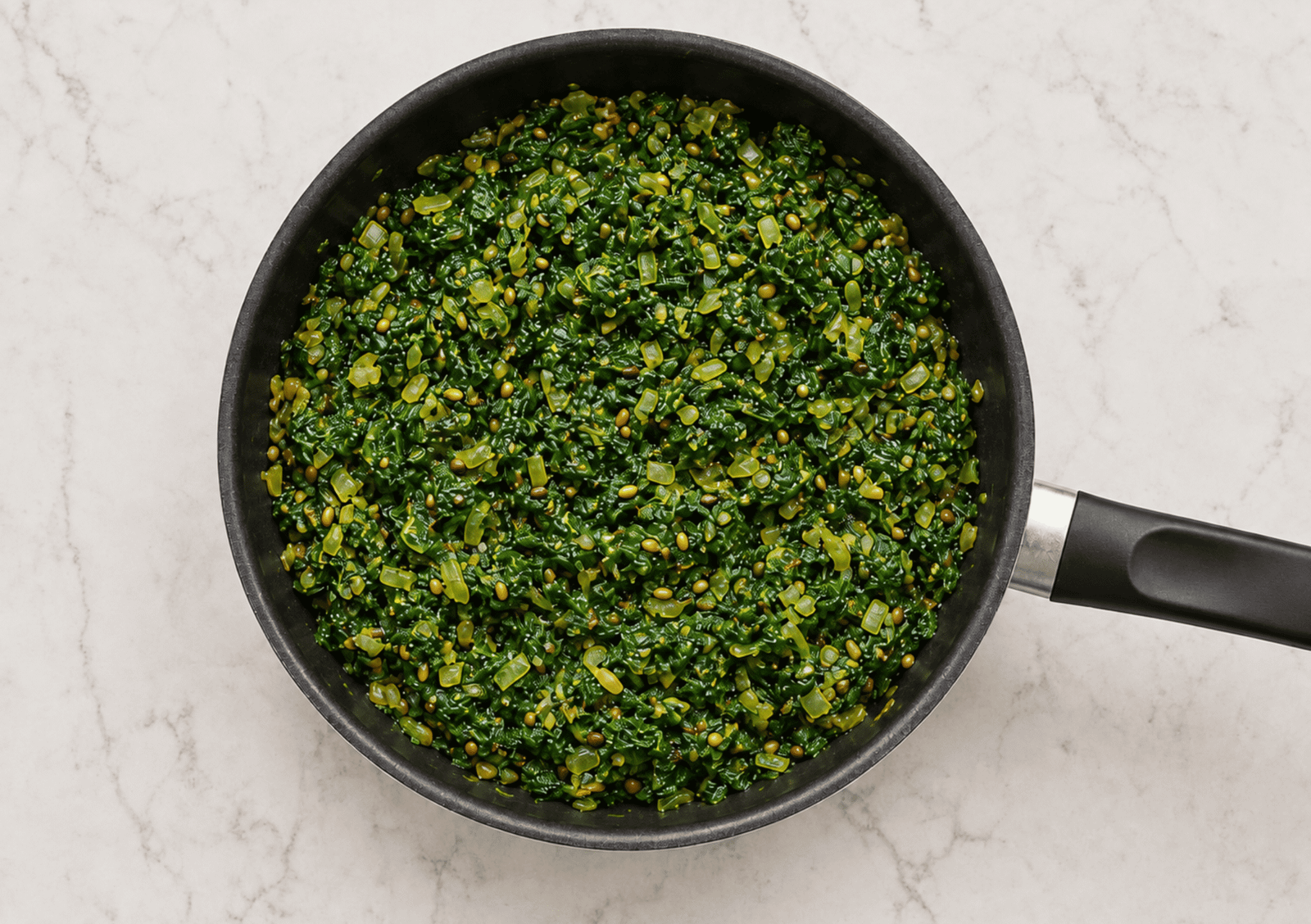
Curry house pre-cooked spinach is a mild, finely chopped spinach preparation kept ready for saag dishes, vegetable curries and restaurant style sauces. The leaves are briefly blanched, cooled and squeezed before being cooked with onion, garlic and whole spices.
Preparing spinach this way removes excess water and concentrates its flavour before it reaches the final curry. It also allows a saag curry to come together quickly without flooding the pan with liquid released by raw leaves.
This version contains no chilli and only a small amount of turmeric. The restrained seasoning makes one batch useful in mild dishes such as saag paneer as well as hotter chicken, lamb and vegetable curries.
What Is Curry House Pre-Cooked Spinach?
Pre-cooked spinach is a prepared curry component rather than a complete dish. It combines cooked spinach with softened onion, garlic and a light whole spice seasoning, ready to be reheated in a finished curry sauce.
In British Indian restaurant cooking, advance preparation helps dishes reach the table quickly. A portion of spinach can be added to a hot pan with base curry sauce, pre-cooked meat, paneer or potatoes without waiting for a large volume of raw leaves to wilt and reduce.
The texture is finely chopped but not necessarily smooth. It should be moist enough to remain supple in storage, yet dry enough that no water runs into the pan when a portion is added to a curry.
Why Blanch Spinach Before Cooking It with the Spices?
Blanching collapses the leaves in less than a minute, making a large batch easier to drain, squeeze and chop evenly. Cooling the spinach immediately stops the residual heat from continuing to cook it.
This separate first step also provides direct control over moisture. Raw spinach releases a surprising amount of water as it wilts. If that happens inside a nearly finished curry, the sauce can become thin before the spinach is tender and evenly distributed.
The blanching time is deliberately short. Prolonged boiling softens the leaves unnecessarily and gives the spinach a duller colour and more muted flavour.
Which Spinach Should I Use?
Fresh baby spinach is convenient because the stems are tender and the leaves require little preparation. Check the bag carefully, remove any damaged leaves and wash the spinach if the packaging does not state that it is ready to eat.
Mature spinach also works and often has a fuller flavour. Remove thick, fibrous stalks before weighing, then wash the leaves in several changes of cold water because soil can collect in the folds and around the stems.
You need more fresh spinach than the finished quantity suggests. A 500g batch reduces dramatically during blanching and squeezing, which is why it is practical to prepare several curry portions at once.
What Is Panch Phoron?
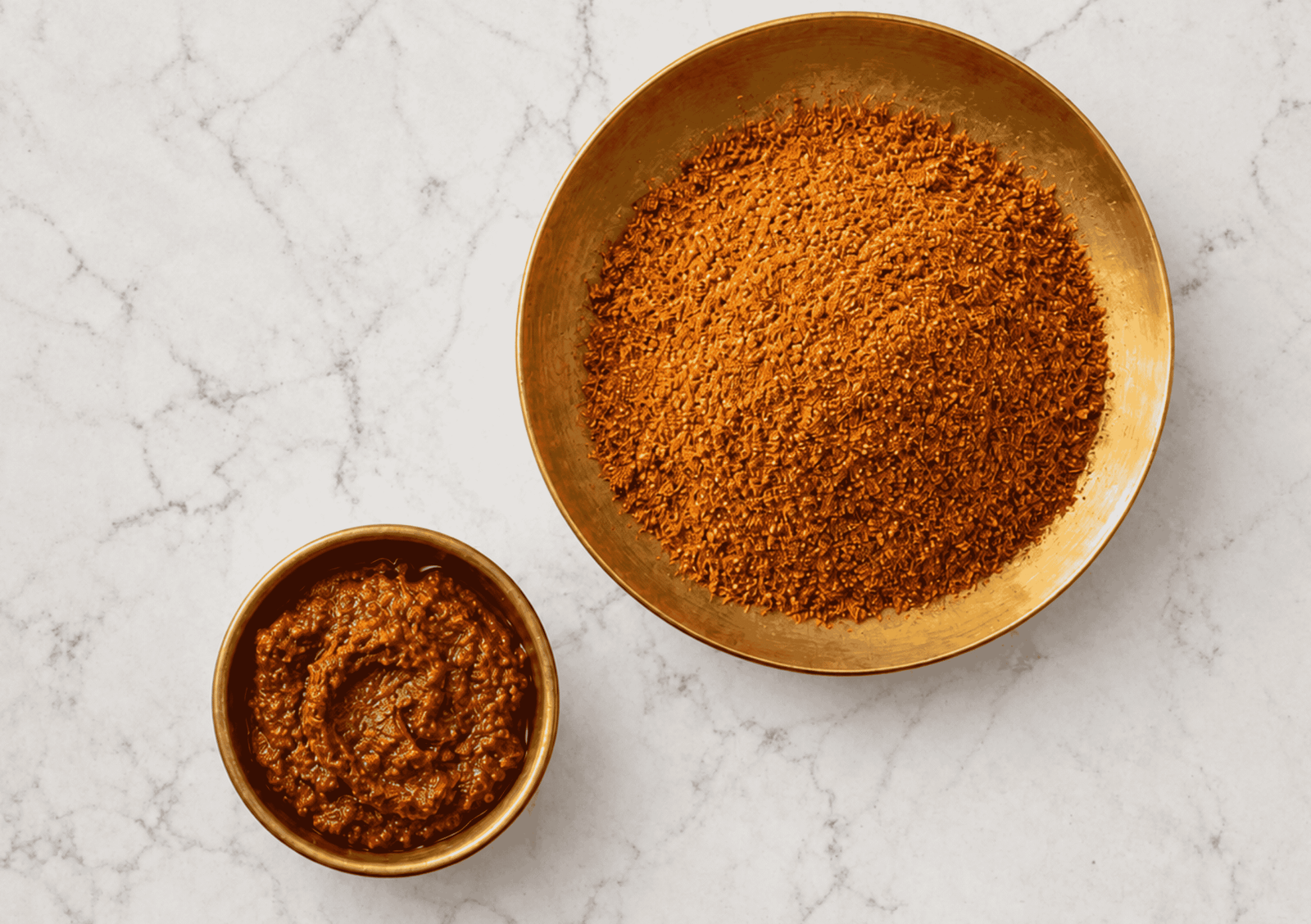
Panch phoron is a whole spice blend usually made with equal parts fenugreek, nigella, cumin, black mustard and fennel seeds. The name refers to five spices, although regional and commercial mixtures can vary slightly.
The seeds are fried briefly in oil so they release their aroma before the onion is added. Fenugreek and mustard can become bitter if scorched, so use medium heat and move on as soon as the seeds begin to sizzle.
Whole panch phoron remains in the spinach and gives occasional aromatic notes. If you prefer no whole seeds in the finished preparation, use ½ teaspoon ground cumin and ½ teaspoon ground coriander instead, although the flavour will be different.
How to Make Curry House Pre-Cooked Spinach
Prepare a bowl of very cold water and a colander before the spinach goes into the boiling water. The blanching takes only 30 seconds per batch, so everything needs to be ready. Cool and squeeze the leaves thoroughly, chop them, then fold them through the gently spiced onion mixture. See the recipe card at the bottom for printable directions
Ingredients
- 500g fresh baby spinach
- 2 tablespoons rapeseed oil or other neutral oil
- 1 x 5cm piece cassia bark
- 1 Indian bay leaf
- 2 teaspoons panch phoron
- 1 medium onion, about 150g, finely chopped
- 1 tablespoon finely chopped garlic or Curry House Garlic and Ginger Paste
- ¼ teaspoon ground turmeric
- ¾ teaspoon fine salt, or to taste
- 2 to 3 tablespoons water, only if needed
Cooking Instructions
- Bring a large saucepan of water to a rolling boil. Fill a large bowl with very cold water and add a handful of ice if available.
- Add the spinach to the boiling water in two batches. Press the leaves below the surface and blanch each batch for 30 seconds, just until completely wilted.
- Lift the spinach into the cold water with tongs or a slotted spoon. Once cool, drain it thoroughly. Gather it in handfuls and squeeze firmly until it no longer drips, without crushing the leaves into pulp.
- Place the squeezed spinach on a board and chop it finely in several directions. Keep some texture rather than reducing it to a completely smooth purée.
- Heat the oil in a wide frying pan over a medium heat. Add the cassia and Indian bay leaf and fry for 30 seconds. Add the panch phoron and stir for 15 to 20 seconds, until the seeds begin to sizzle and smell fragrant.
- Add the onion and half the salt. Cook for 6 to 8 minutes, stirring regularly, until soft and lightly golden. Add the chopped garlic or Curry House Garlic and Ginger Paste and stir for 30 seconds.
- Reduce the heat to medium low. Add the turmeric and immediately stir in the chopped spinach. Cook for 3 to 4 minutes, turning it through the onions until evenly combined and hot. Add 2 to 3 tablespoons water only if the mixture begins to catch.
- Remove and discard the cassia and bay leaf. Stir in the remaining salt, taste and adjust if needed. Use immediately, or spread the spinach in a shallow container and cool promptly before portioning.
How Much Water Should I Squeeze from the Spinach?
Squeeze firmly enough that the spinach no longer drips when pressed. A ball of prepared leaves should feel damp and pliable, not saturated. Removing this water is one of the main reasons for preparing the spinach separately.
Work with handfuls rather than trying to squeeze the entire batch at once. Clean hands are effective, although a potato ricer can press out water quickly if used gently and in small amounts.
Do not chase complete dryness. Spinach squeezed until crumbly can catch in the pan and may need extra water to mix with the onion. The finished preparation should hold together on a spoon without leaving a puddle.
Should the Spinach Be Chopped or Blended?
Fine chopping gives the prepared spinach enough texture for saag aloo, vegetable bhaji and rustic paneer dishes. Use a large sharp knife and cut across the compacted leaves several times, then turn the board and repeat.
For a smoother curry house saag, pulse the finished preparation briefly with a stick blender or food processor. Stop before it becomes a uniform liquid. A little texture prevents the sauce feeling thin or baby food smooth.
Do not blend hot spinach in a sealed jug blender. Steam can build pressure, and the small quantity may not circulate properly. Allow it to cool slightly and follow the appliance instructions.
Can I Use Frozen Spinach?
Frozen leaf spinach is a useful alternative and is often more economical for a large batch. Use 500g frozen spinach, thaw it fully, then squeeze out the excess liquid before chopping if necessary.
Skip the blanching and cold water stages because the spinach has already been processed before freezing. Begin with the spiced onion mixture, then add the thawed spinach and cook until hot and any remaining loose water has evaporated.
Avoid frozen creamed spinach because dairy and seasoning make it unsuitable as a neutral prepared ingredient. Frozen chopped spinach produces a finer result than whole leaf blocks, so choose according to the texture you want.
Can I Use Tinned Spinach?
Tinned spinach can be used in an emergency, but its flavour, colour and texture are softer than fresh or frozen leaves. Drain it extremely well and check the label for added salt before seasoning the pan.
The spinach is already fully cooked, so add it after the onion and spices and heat it only long enough for the flavours to combine. Extended frying will not restore texture and can make the colour duller.
For a prepared batch intended for several curries, fresh or frozen spinach is the more reliable choice.
How Much Pre-Cooked Spinach Goes into One Curry?
For a curry serving four where spinach is an addition rather than the main ingredient, begin with 100g prepared spinach. This is suitable for turning chicken tikka masala, bhuna or a mixed vegetable curry into a saag variation.
For chicken saag, lamb saag or saag paneer serving four, use 250 to 400g depending on how spinach led you want the sauce to be. The entire batch produces a generous spinach base for one main curry.
Add the spinach after the base sauce has heated and begun to reduce. Loosen the chilled portion with a spoon, fold it through the sauce and simmer until steaming hot throughout.
Which Recipes Use Pre-Cooked Spinach?
The obvious choices are Chicken Saag, Lamb Saag, Saag Paneer, Saag Aloo and Chana Saag. It can also be added to dhal, vegetable bhaji, keema, Balti sauce and mild curries that need an earthy green element.
Combine a 100g portion with Curry House Pre-Cooked Potatoes for a quick saag aloo. For saag paneer, prepare the spinach sauce first and add Fried Paneer near the end so the cubes remain tender.
A smaller spoonful can enrich a curry without turning it into a full saag dish. Add it gradually because spinach has a recognisable flavour and darkens the finished sauce.
Why Is My Prepared Spinach Watery?
The spinach was probably not squeezed firmly enough, or it was added to the pan while still holding water between the leaves. Continue cooking uncovered over medium heat, stirring regularly, until the loose moisture evaporates.
A crowded, narrow pan can trap steam. A wide frying pan exposes more surface area and helps the onion and spinach mixture become moist rather than wet.
Do not thicken the batch with flour or ground nuts. Those ingredients restrict how the spinach can be used later and may alter a future curry. Reducing the water is the cleaner solution.
Why Does the Spinach Taste Bitter?
Scorched panch phoron is a common cause. Fenugreek and mustard seeds need only a brief tempering, so add the onion as soon as the blend sizzles and smells fragrant.
Too much turmeric can also create a dusty bitterness. The small measured quantity in this recipe supports the colour without dominating the leaves.
Mature spinach naturally has a stronger flavour than baby leaves. Salt, a balanced curry sauce and a small squeeze of lemon in the finished dish can soften that edge, but lemon is not added to the master batch because it will not suit every future curry.
Variations and Substitutions
- Mustard oil: Replace 1 tablespoon of the neutral oil with mustard oil for a sharper flavour. Check that the product is sold for culinary use and heat it according to its label.
- Garlic only: Finely chopped garlic keeps the preparation spinach forward. Garlic and Ginger Paste adds a gentle ginger background and links it to the wider curry house system.
- No panch phoron: Use ½ teaspoon cumin seeds and ½ teaspoon nigella seeds for a simpler whole spice seasoning.
- Smoother saag base: Blend the cooled preparation briefly, adding no water unless the blades cannot move.
- Hot version: Add chopped green chilli with the onion, but only when the whole batch is intended for hot dishes.
- No onion: Omit it for a more concentrated spinach preparation. Reduce the oil to 1 tablespoon and watch the garlic carefully so it does not brown.
- Vegan preparation: The recipe is naturally vegan when made with neutral oil.
Cooking Tips
Blanch in batches so the water returns to the boil quickly. Overloading the saucepan lowers the temperature and leaves some spinach boiling for longer while you try to submerge the rest.
Have the cold water ready before the leaves go into the pan. The blanching stage moves quickly, and leaving hot spinach in a colander allows residual heat to keep softening it.
Count the cassia and bay leaf going into the pan and remove both before portioning. Their dark colour makes them harder to spot once the spinach is chopped and cooked.
Keep the seasoning mild. Salt and chilli become more concentrated when a curry sauce reduces, so the final dish is the right place to make strong adjustments.
How to Store and Freeze Pre-Cooked Spinach
Spread the cooked spinach in a shallow container so it cools quickly. Cover and refrigerate or freeze it within two hours of cooking rather than leaving the batch in a warm pan.
Use refrigerated spinach within 48 hours. Divide it into 100g portions if you plan to add it to different curries, or store the complete batch for one spinach led dish.
Spinach freezes well for this purpose. Pack it into airtight containers or freezer bags, press out excess air and use within three months for best quality. Flattened bags stack neatly and thaw more quickly.
Defrost overnight in the fridge and use within 24 hours. Reheat the spinach as part of the finished curry until steaming hot throughout, and reheat it only once.

Curry House Pre-Cooked Spinach
Ingredients
- 500 g fresh baby spinach
- 2 tablespoons rapeseed oil or other neutral oil
- 1 x 5cm piece cassia bark
- 1 Indian bay leaf
- 2 teaspoons panch phoron
- 1 medium onion about 150g, finely chopped
- 1 tablespoon finely chopped garlic or Curry House Garlic and Ginger Paste
- ¼ teaspoon ground turmeric
- ¾ teaspoon fine salt or to taste
- 2 to 3 tablespoons water only if needed
Instructions
- Bring a large saucepan of water to a rolling boil and prepare a large bowl of very cold water.
- Blanch the spinach in two batches for 30 seconds each, then transfer it immediately to the cold water.
- Drain the cooled spinach and squeeze it firmly in handfuls until it no longer drips.
- Chop the spinach finely in several directions, retaining a little texture.
- Heat the oil in a wide frying pan over a medium heat. Fry the cassia and bay for 30 seconds, then add the panch phoron for 15 to 20 seconds.
- Add the onion and half the salt. Cook for 6 to 8 minutes, until soft and lightly golden, then stir in the garlic or Curry House Garlic and Ginger Paste for 30 seconds.
- Reduce the heat to medium-low. Add the turmeric and spinach, then cook for 3 to 4 minutes until evenly combined and hot. Add 2 to 3 tablespoons water only if the mixture catches.
- Remove the cassia and bay leaf. Stir in the remaining salt, adjust to taste and use immediately, or cool promptly before portioning.