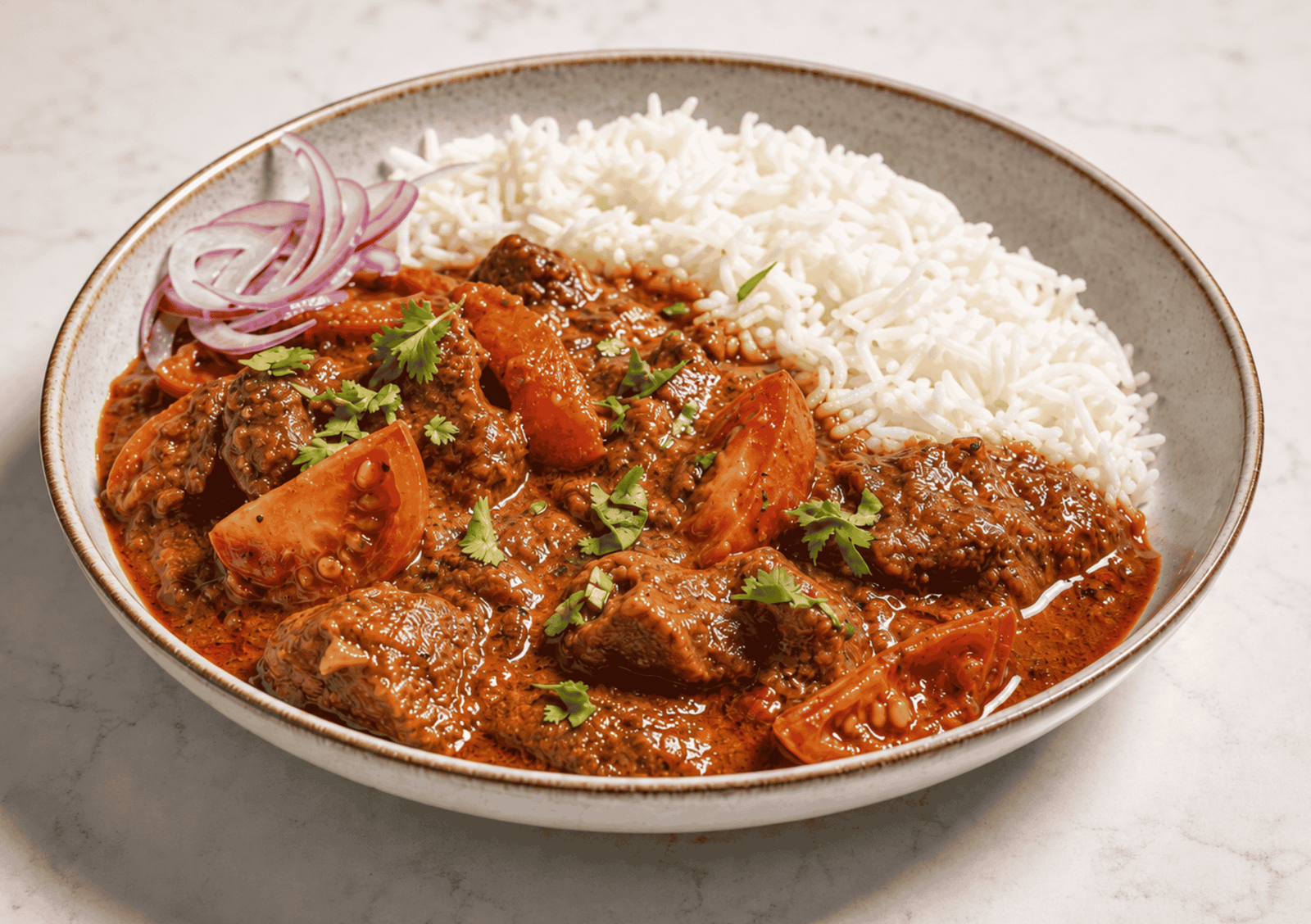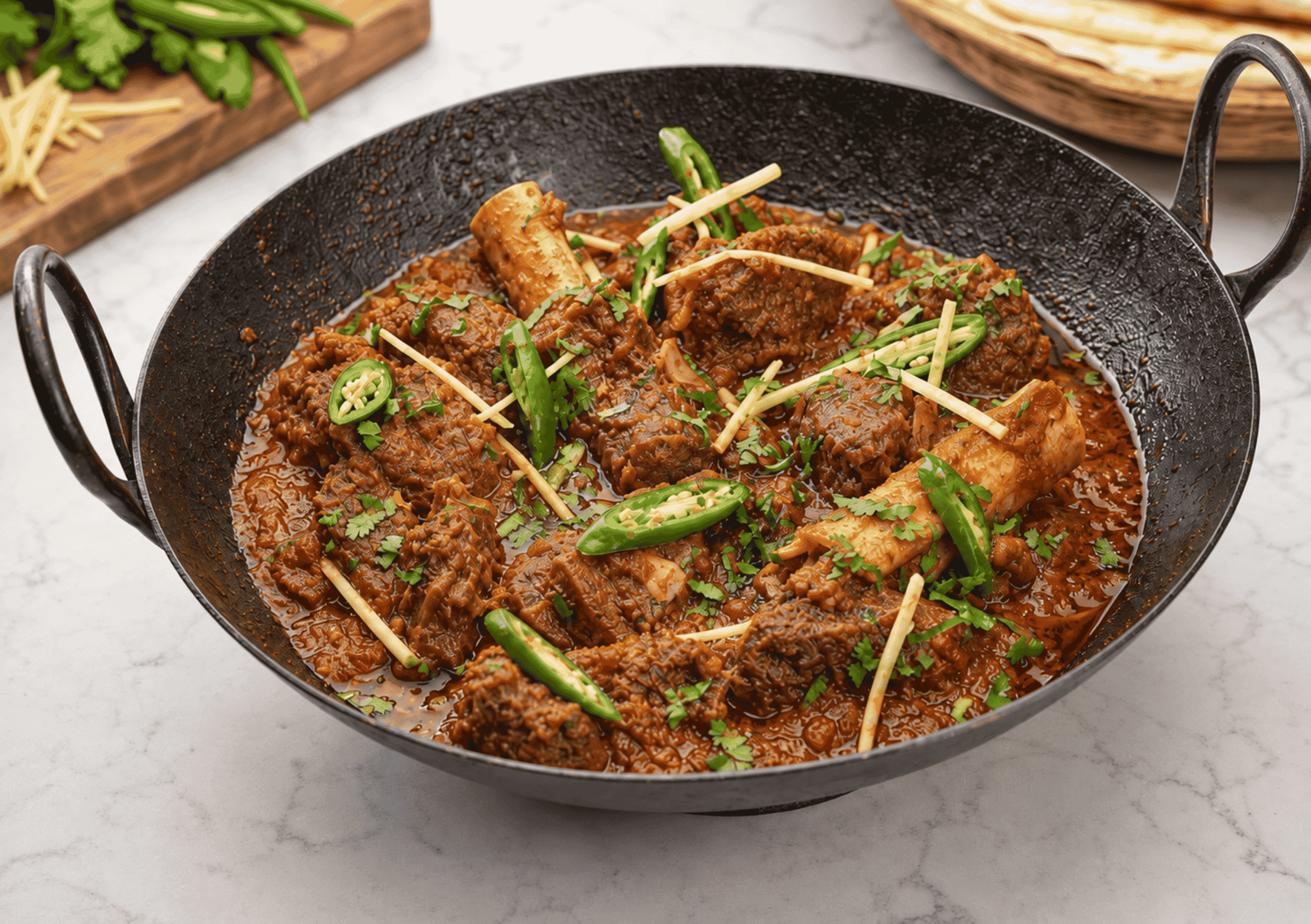
Indonesian Beef Rendang (Rendang Sapi)
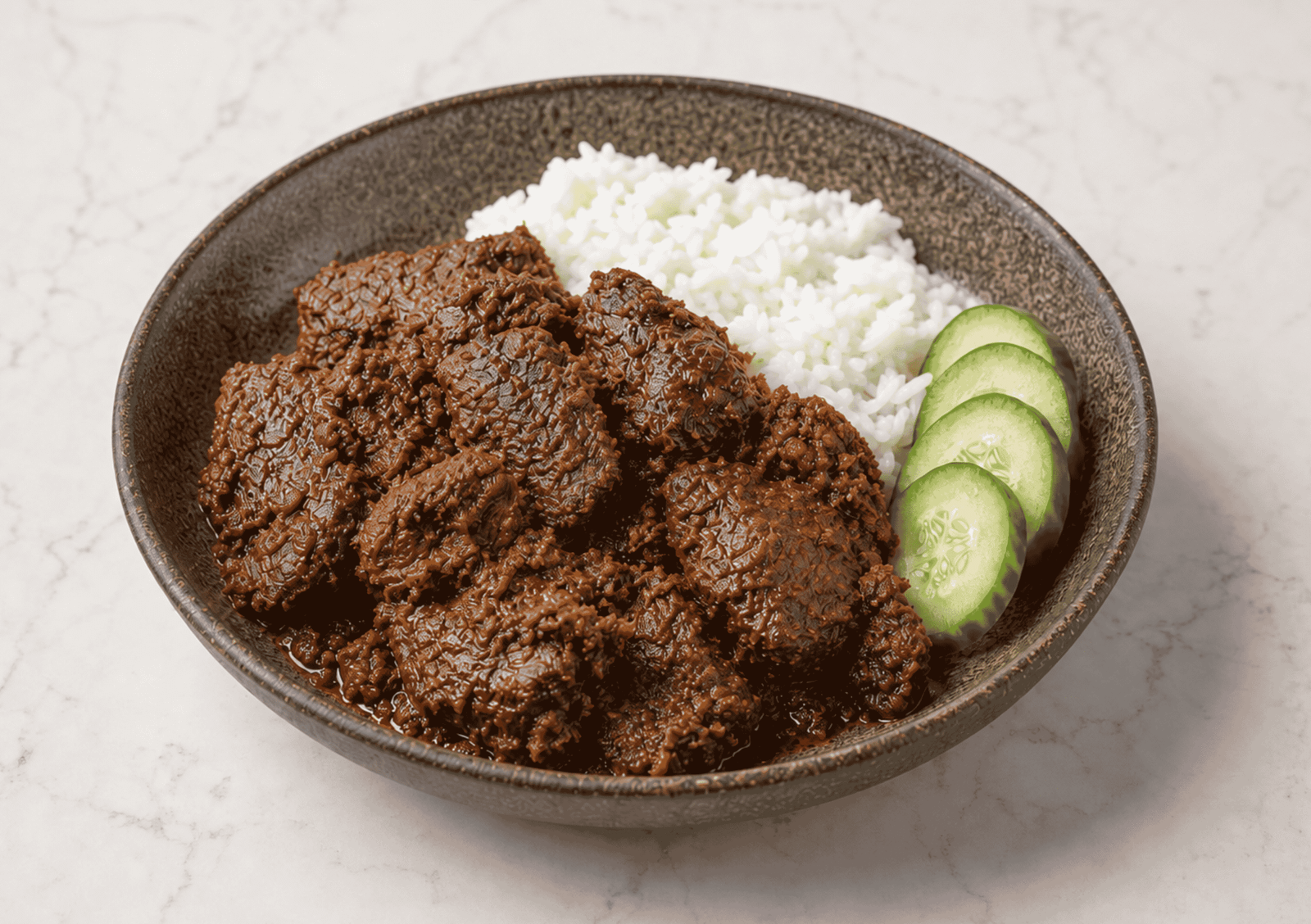
Indonesian beef rendang is a slow cooked Minangkabau dish in which beef, coconut milk, chillies and fresh aromatics are reduced until the meat is tender and coated in a dark, concentrated layer of toasted coconut solids. In Indonesia it is called rendang sapi, with sapi meaning beef.
This is not a curry with plenty of sauce. The pan begins with a generous amount of coconut milk, but patient uncovered cooking changes it completely. The liquid first becomes a soupy curry, then a thick brown gravy and finally a rich coating that clings to the beef. That final reduction is what gives rendang its depth.
The method takes time, but none of the individual steps is difficult. A wide, heavy pan helps the liquid evaporate evenly, while more frequent stirring near the end prevents the coconut solids from catching. The result is deeply savoury, aromatic and gently hot, with enough rendang to serve six alongside rice and vegetables.
What Is Rendang Sapi?
Rendang sapi is Indonesian beef rendang. It comes from the Minangkabau food tradition of West Sumatra and is strongly associated with Padang cooking. Beef is simmered with coconut milk, red chillies, shallots, garlic, ginger, galangal, lemongrass and fragrant leaves until very little free liquid remains.
The long reduction matters as much as the ingredients. As moisture evaporates, the coconut milk releases its oil and the remaining solids begin to toast around the beef. A finished dry rendang should be dark brown rather than pale or bright red, and the coating should be concentrated rather than runny.
There are many household and regional versions. Some contain candlenuts, fresh turmeric, coriander or Indonesian bay leaves, while others use a shorter ingredient list. This version focuses on fresh chilli, shallot, galangal, ginger, lemongrass, lime leaf and tamarind, with practical quantities and clearly defined reduction stages.
Why Rendang Needs a Wide Pan and Slow Reduction
- A suitable stewing cut stays succulent. Beef chuck contains enough connective tissue to soften during the long simmer without becoming dry.
- Canned coconut milk gives a repeatable ratio. It is easier to buy and measure than freshly pressed coconut milk, while still providing enough fat for the final toasting stage.
- A wide pan encourages steady evaporation. The sauce reduces more predictably and there is more room to turn the beef without crushing it.
- The method follows visible stages. Colour, texture and tenderness determine when to move on, so the recipe does not rely on the clock alone.
- A water correction protects the beef. If the sauce becomes thick before the meat is tender, hot water extends the braise without adding more coconut richness.
Indonesian Rendang and Malaysian Rendang
Rendang is cooked across Indonesia, Malaysia and neighbouring countries, with considerable variation within each place. The boundaries are not absolute, so one ingredient cannot define every version.
This Indonesian recipe is built around a fresh bumbu paste and the slow reduction of coconut milk. It does not use kerisik, the toasted coconut paste found in many Malaysian rendang recipes, and it avoids the prominent cinnamon, star anise, cardamom and clove profile used in some Malaysian versions. The finished dish is almost dry, dark and intensely coated.
The separate Malaysian beef rendang recipe has a different ingredient profile and cooking method. Keeping the country names clear helps readers choose the version they want rather than treating the two methods as interchangeable.
Choosing the Beef
Beef chuck is the best straightforward choice for this method. Buy it as a whole piece or as stewing beef and cut it into generous 4 to 5cm chunks. Small pieces can break apart before the coconut milk has reduced sufficiently.
Brisket also works, although it can release more fat and may need a little longer to become tender. Lean frying steak, fillet and quick cook beef are poor choices because the extended simmer can make them dry. Trim only thick external fat and tough silverskin; some internal marbling is useful.
Key Ingredients in Indonesian Beef Rendang
Beef chuck
Chuck becomes tender during slow cooking and has enough flavour to stand up to the concentrated spice paste. Keep the pieces large so they remain intact through repeated stirring.
Long red chillies
Long red chillies supply colour, fruitiness and moderate heat. Their strength varies, so remove the seeds and membranes for a gentler result. Add small hot chillies only when you know the heat level suits your table.
Shallots, garlic, ginger and galangal
These form the body of the bumbu paste. Galangal has a piney, citrus aroma that is distinct from ginger. Fresh or frozen galangal works well; ground galangal does not provide the same fresh character.
Turmeric
A small amount of ground turmeric supports the warm colour during the early cooking stages. A fresh turmeric leaf is optional but adds a subtle herbal aroma when available.
Full fat coconut milk
Use unsweetened full fat coconut milk rather than a reduced fat product or drinking coconut milk. Rendang depends on coconut fat separating during the final reduction. Shake the tins before measuring.
Lemongrass and makrut lime leaves
Bruised lemongrass and torn lime leaves perfume the coconut milk as it reduces. Fresh or frozen leaves are suitable. Remove the woody stalks and leaves before serving.
Indonesian bay leaves
Daun salam has a different flavour from Mediterranean bay. It is optional because it can be difficult to find, but do not replace it with an ordinary bay leaf.
Tamarind and palm sugar
Tamarind provides a restrained sour note that keeps the coconut richness in balance. Palm sugar rounds the seasoning without making the rendang sweet. Tamarind products vary in concentration, so the recipe uses smooth tamarind paste rather than a highly concentrated extract.
How to Make Indonesian Beef Rendang
Use a wide, heavy casserole or sauté pan with a capacity of at least 5 litres. A pan around 28 to 30cm across gives the coconut milk enough surface area to reduce while leaving safe headroom for stirring. The mixture needs more attention as it thickens, so allow an uninterrupted afternoon and keep a sturdy spatula nearby. See the recipe card at the bottom for exact quantities and printable directions
Ingredients
- Beef chuck or stewing beef
- Long red chillies
- Shallots
- Garlic
- Fresh ginger
- Fresh or frozen galangal
- Ground turmeric
- Full fat coconut milk
- Water
- Lemongrass
- Makrut lime leaves
- Indonesian bay leaves, optional
- Fresh turmeric leaf, optional
- Tamarind paste
- Palm sugar
- Fine salt
Cooking Instructions
Step 1: Make the bumbu paste. Blend the chillies, shallots, garlic, ginger, galangal and turmeric with some of the measured coconut milk. Stop and scrape down the blender as needed, then continue until the paste is smooth enough that no large pieces remain.
Step 2: Build the coconut mixture. Scrape the paste into a wide, heavy pan. Add the remaining coconut milk, water, bruised lemongrass, torn lime leaves, optional Indonesian bay leaves, optional turmeric leaf, tamarind, palm sugar and salt. Stir thoroughly and bring it slowly to a gentle simmer over medium heat.
Step 3: Add the beef. Add the beef pieces and turn them through the coconut mixture. Let the pan return to a gentle simmer, then reduce the heat. Keep the pan uncovered throughout cooking so moisture can escape.
Step 4: Cook to the gulai stage. Simmer gently for about 1 hour, stirring from the base every 15 minutes. At this stage the liquid will still be plentiful and the colour will move from pale orange towards golden brown. Avoid a vigorous boil, which can toughen the meat and make the base catch.
Step 5: Reduce to the kalio stage. Continue cooking for 45 to 60 minutes, stirring every 8 to 10 minutes. The sauce will thicken, darken and coat the beef. Check the meat. If it is still firm and the sauce is already very thick, add a measured splash of hot water and continue simmering until a fork enters the beef with little resistance.
Step 6: Finish the rendang. Turn the heat to low once the sauce is thick and the beef is nearly tender. Cook for another 35 to 50 minutes, stirring and scraping every 2 to 3 minutes at first and almost continuously near the end. The coconut oil will separate, the solids will turn deep brown and the mixture will change from saucy to a dark coating around the meat.
Step 7: Check the final texture. Stop cooking when the beef is fork tender, there is no pool of watery sauce and the dark coconut solids cling to the pieces. Taste carefully and adjust the salt. Remove the lemongrass and whole leaves.
Step 8: Rest and serve. Take the pan off the heat and rest the rendang for 15 minutes. Turn the beef gently through the coating once more, then serve with rice and simple vegetable dishes.
Understanding the Three Cooking Stages
The same pot passes through three recognisable stages. Knowing them removes much of the uncertainty from rendang.
Gulai
During the first stage, the beef sits in a generous, lightly coloured coconut gravy. The aromatics are still fresh and the liquid pours easily. If cooking stopped here, the result would be a coconut curry rather than rendang.
Kalio
As water evaporates, the sauce becomes thick, glossy and brown. It coats a spoon but still settles around the meat. Kalio is served as a dish in its own right, but it has not yet reached the dry, toasted stage required here.
Rendang
In the final stage, the coconut milk releases oil and its solids begin to fry gently against the pan. The coating turns deep brown, loses its wet appearance and gathers around the beef. Stirring becomes essential because the change from darkly toasted to burnt can happen quickly.
How Dark and Dry Should Rendang Be?
Aim for a deep brown coating with no loose watery gravy. A small sheen of coconut oil is normal and helps carry the aroma. The pan does not need to be dusty dry, and the beef should remain succulent inside.
For a slightly moister finish, stop when the coating is thick and dark but still soft. For a drier Padang style finish, continue over low heat until the solids become darker and more crumbly. Do not increase the heat to hurry this stage. High heat can scorch the paste before the beef becomes tender.
What If the Beef Is Still Tough?
Tenderness and reduction do not always finish together. Beef varies by cut, age and piece size, while pan width and hob strength change the evaporation rate.
If the coating is becoming dry but the beef is still firm, add 150ml hot water, stir it in and return to a gentle simmer. Repeat only if necessary. Wait until the beef is tender before beginning the final almost dry frying stage. Adding more coconut milk at this point would increase the fat and restart a much longer reduction.
Can I Make Rendang Less Hot?
Yes. Choose long, relatively mild red chillies and remove their seeds and pale inner membranes. The chillies still provide body and colour, so replacing all of them with hot chilli powder would change both texture and flavour.
For more heat, add one or two small red chillies to the paste. Chilli strength is inconsistent, so taste a tiny piece before deciding how much to use and take care when handling it.
What to Serve with Indonesian Beef Rendang
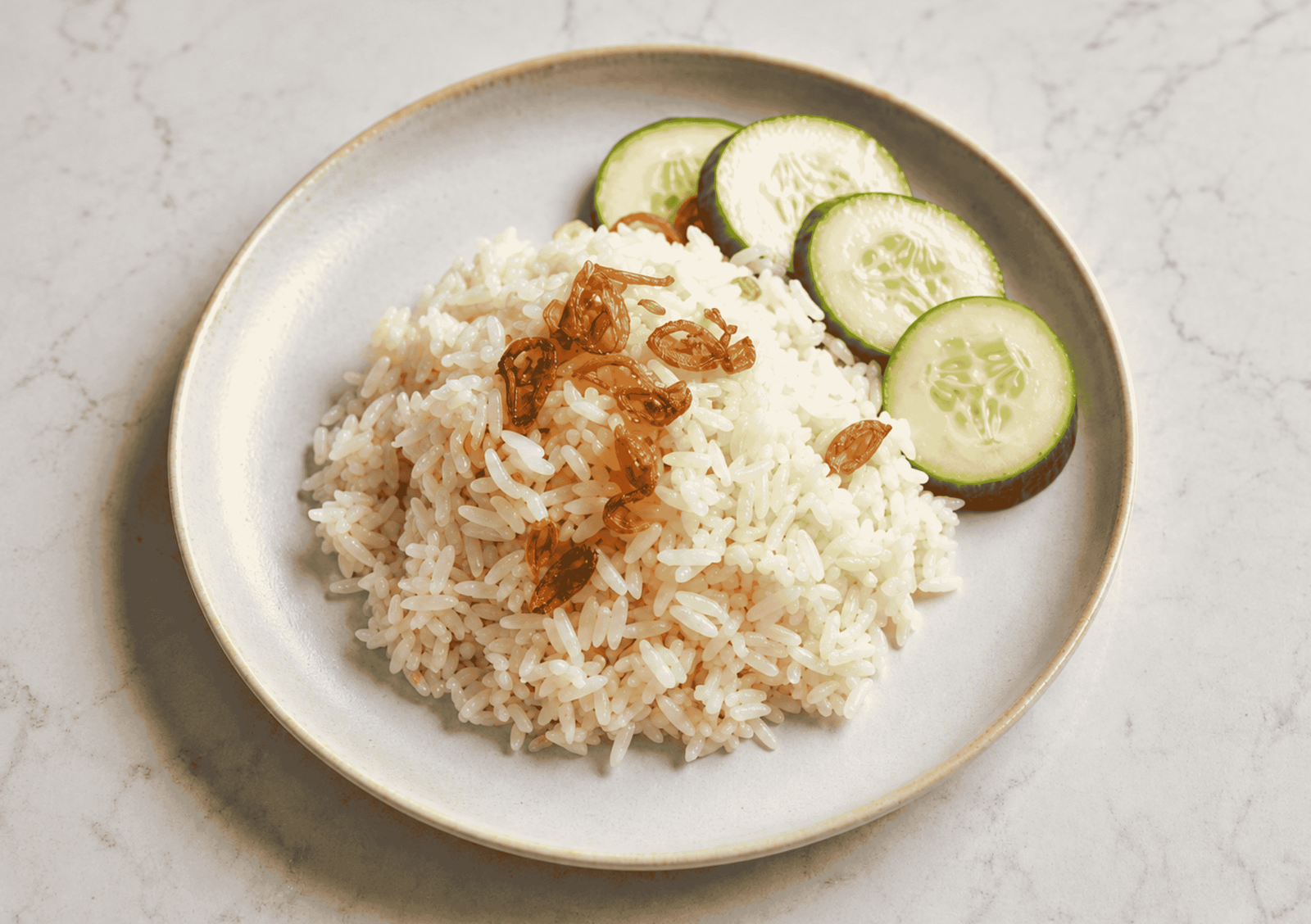
Plain steamed rice is the simplest accompaniment because it absorbs the concentrated coating without competing with it. Nasi uduk adds coconut, lemongrass and pandan, making it a richer option for a larger meal.
Add something fresh or plainly cooked alongside, such as cucumber, blanched greens or green beans. A sambal can be offered separately for diners who want extra heat. Rendang is rich and intensely seasoned, so several heavily spiced side dishes are unnecessary.
Making It Ahead
Rendang is well suited to advance preparation. Once cooled and chilled, the coconut fat firms and the seasoning settles through the meat. Reheat it gently in a covered pan with one or two tablespoons of water, stirring occasionally until the beef is piping hot throughout. Remove the lid for the final few minutes if the added water has not evaporated.
Storage and Freezing
Cool the rendang promptly and transfer it to a covered container. Refrigerate for up to 3 days. Freeze in meal sized portions for up to 3 months, then thaw in the refrigerator before reheating.
Do not leave the finished dish at room temperature for extended periods. Traditional dry rendang was developed for keeping qualities, but a home version should still be handled as cooked meat and chilled safely.
Frequently Asked Questions
Do I need to fry the spice paste first?
No. In this method, the fresh paste cooks directly in the coconut milk. It loses its raw aroma during the long simmer, then fries gently in the coconut oil released near the end. This also reduces the chance of scorching a dense paste at the beginning.
Why has my coconut milk split?
Separation is expected. As water evaporates, coconut oil becomes visible and helps toast the spice coated solids. Continue on low heat and stir frequently. A split appearance near the end is a sign of progression, not a failed sauce.
Can I use light coconut milk?
Full fat coconut milk is strongly recommended. A reduced fat product contains less coconut fat, so the final coating will not fry and darken as effectively. Coconut drink sold for beverages is too thin for this method.
Can I cook it with the lid on?
Keep the pan uncovered. The recipe relies on steady evaporation, and a lid traps the moisture that needs to escape. If the pan is reducing too quickly before the beef is tender, lower the heat and add hot water rather than covering it for the full cook.
Can I use a slow cooker?
A slow cooker can tenderise the beef, but it cannot complete the necessary uncovered reduction efficiently. The mixture would still need to be transferred to a wide pan and cooked down carefully. Using one pan on the hob gives better control and avoids a risky transfer of a large quantity of hot coconut liquid.
Is turmeric leaf essential?
No. It adds an appealing regional aroma but is not widely stocked. Leave it out when unavailable. Do not add extra ground turmeric to compensate because the two ingredients contribute differently.
Can I substitute ordinary bay leaves for daun salam?
No. Mediterranean bay has a different flavour. Omit Indonesian bay leaves if you cannot find them; the lemongrass and lime leaves still give the dish a clear aromatic profile.

Indonesian Beef Rendang (Rendang Sapi)
Ingredients
- 1 kg beef chuck or stewing beef trimmed of thick external fat and cut into 4 to 5cm pieces
- 8 long red chillies approximately 150g, stalks removed and deseeded if preferred
- 250 g shallots peeled and roughly chopped
- 6 garlic cloves peeled
- 40 g fresh ginger peeled and roughly chopped
- 50 g fresh or frozen galangal thinly sliced
- 1 teaspoon ground turmeric
- 800 ml full fat coconut milk shaken before opening
- 300 ml water
- 3 lemongrass stalks tough outer layer removed, then bruised and knotted
- 6 makrut lime leaves torn
- 3 Indonesian bay leaves optional
- 1 fresh turmeric leaf knotted, optional
- 1 tablespoon smooth tamarind paste not concentrated extract
- 20 g palm sugar finely grated
- 2 teaspoons fine salt plus more if needed
- Up to 300ml additional hot water only if needed to finish tenderising the beef
Instructions
- Put the chillies, shallots, garlic, ginger, galangal and turmeric in a blender. Add 200ml of the measured coconut milk and blend, stopping to scrape down the sides, until no large pieces remain.
- Scrape the paste into a wide, heavy pan. Add the remaining 600ml coconut milk, 300ml water, lemongrass, lime leaves, optional Indonesian bay leaves, optional turmeric leaf, tamarind paste, palm sugar and salt. Stir thoroughly and bring slowly to a gentle simmer over medium heat.
- Add the beef and turn the pieces through the coconut mixture. Return to a gentle simmer, then reduce the heat. Keep the pan uncovered throughout cooking.
- Simmer gently for about 1 hour, stirring and scraping the base every 15 minutes. The liquid should remain plentiful while changing from pale orange to golden brown. Do not let it boil vigorously.
- Continue cooking for 45 to 60 minutes, stirring every 8 to 10 minutes, until the sauce is thick and brown. Test the beef. If it remains firm and the sauce is very thick, stir in 150ml hot water and continue simmering. Add the remaining hot water only if needed, allowing the first addition to reduce before deciding.
- When the beef is nearly tender, turn the heat to low. Cook for 35 to 50 minutes more, stirring and scraping every 2 to 3 minutes at first and almost continuously near the end. Continue until the coconut oil separates and the solids form a deep brown coating around the meat.
- Stop when the beef is fork tender and no watery sauce remains. Taste and add more salt if needed. Remove and discard the lemongrass and whole leaves.
- Remove the pan from the heat and rest for 15 minutes. Turn the beef gently through the coating, then serve with rice and vegetables.
Notes
- Use a wide pan rather than a narrow stockpot. The greater surface area allows the coconut milk to reduce within the stated time.
- Keep the beef pieces generous. Pieces smaller than 4cm may break apart during the final stirring stage.
- Chilli heat varies. Removing the seeds reduces some heat, but the flesh can still be hot. Add small hot chillies only after checking their strength.
- Fresh or frozen galangal is preferable to ground galangal. It is not interchangeable with ginger.
- Makrut lime leaves and galangal are often available frozen and can be used without thawing.
- Daun salam means Indonesian bay leaf. Do not substitute Mediterranean bay leaves.
- The optional additional water is a correction for beef that needs longer. It is not added unless the sauce has thickened before the meat is tender.
- A little separated coconut oil is normal. Spoon off a small amount after cooking only if the surface seems excessively oily.
- Cooking time can vary by 20 to 30 minutes according to the beef, pan width and heat level. Follow the tenderness and reduction cues rather than forcing the dish to match the clock.