Indonesian Fried Rice Recipe (Nasi Goreng)
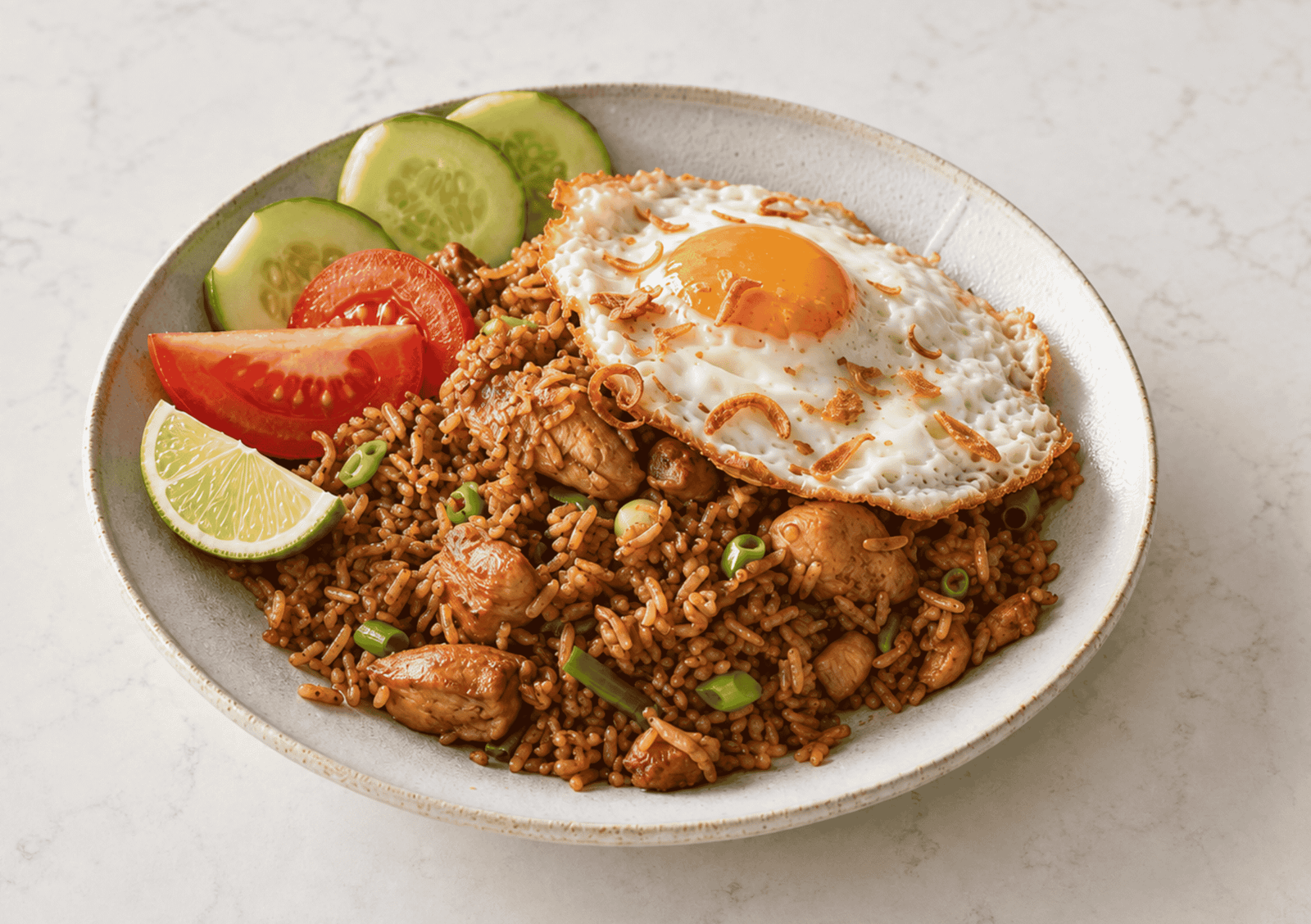
Nasi goreng is Indonesian fried rice cooked with kecap manis, fresh aromatics and chilli until the grains are hot, separated and lightly caramelised. It is commonly finished with a fried egg and served with fresh cucumber and tomato, turning a quick pan of rice into a complete meal.
The dark colour comes from kecap manis, a thick Indonesian sweet soy sauce. This version balances its sweetness with light soy sauce and fries the optional shrimp paste with the shallots, garlic and chilli so its savoury flavour spreads evenly through the rice.
Cold, properly chilled rice is essential for a dry, separated texture. Have every ingredient prepared before heating the wok because the cooking moves quickly once you begin.
What Is Nasi Goreng?
Nasi means rice and goreng means fried. Nasi goreng is therefore fried rice, but its flavour is distinct from Chinese style egg fried rice. Kecap manis gives it a darker colour and a mild caramel sweetness, while shallots, garlic, chilli and optional terasi provide its aromatic and savoury foundation.
There are many Indonesian versions, ranging from simple rice with egg to combinations containing chicken, prawns, vegetables or leftover meat. This recipe includes optional chicken thigh and serves the rice with a fried egg, cucumber, tomato and lime.
What Gives Nasi Goreng Its Distinctive Flavour?
Nasi goreng depends on a small number of strongly flavoured ingredients rather than a long spice list.
Kecap manis
Kecap manis is Indonesian sweet soy sauce. It is thicker and sweeter than ordinary soy sauce and coats the rice with a glossy brown finish. Using too much can make the whole dish sugary, so this recipe combines a measured amount with light soy sauce.
Shallots, garlic and chilli
These are pounded or blended into a coarse bumbu paste. The paste should retain a little texture rather than becoming watery. Cooking it until fragrant and slightly darker removes the raw flavour before the rice is added.
Terasi
Terasi is Indonesian fermented shrimp paste. A small amount provides considerable savoury depth. It is optional, but the finished rice will taste less complex without it. Frying the paste with the bumbu softens its strong raw aroma and distributes it evenly.
Cold jasmine rice
Jasmine rice has a fragrant aroma and a tender grain suited to Southeast Asian fried rice. Chilling firms the cooked grains and dries their surface, helping them separate in the wok. Ordinary long grain or basmati rice can be used, although the aroma and texture will differ.
How to Cool Rice Safely for Nasi Goreng
Cooked rice requires careful handling because bacterial spores can survive cooking. If preparing the rice in advance, spread it in a thin layer on a clean tray so the steam escapes quickly. Refrigerate it within 1 hour, cover it once cold and use it within 24 hours.
Do not leave cooked rice in the saucepan or rice cooker to cool slowly. Rice that has remained at room temperature for several hours should not be used.
For a quicker option, use two plain 250g pouches of microwave jasmine rice directly from the packets without heating them first. Break up the compacted grains before they enter the wok.
How to Make Nasi Goreng
Use a wok measuring approximately 35cm across or a heavy frying pan at least 30cm across. A smaller pan will trap steam and make the full batch difficult to toss. Prepare the sauce, separate the rice grains, slice the garnishes and have the serving plates ready before heating the oil. See the recipe card at the bottom for exact quantities and printable directions
Ingredients
- Cold cooked jasmine rice
- Boneless chicken thigh, optional
- Eggs
- Shallots
- Garlic
- Long red chilli
- Bird’s eye chilli, optional
- Indonesian shrimp paste, optional
- Kecap manis
- Light soy sauce
- Ground white pepper
- Spring onions
- Rapeseed or sunflower oil
- Cucumber
- Tomato
- Lime
- Crispy fried shallots, optional
Cooking Instructions
Step 1: Prepare the rice and seasoning. Break apart every clump of cold rice with clean hands or a fork. Mix the kecap manis, light soy sauce and white pepper in a small bowl. Keep both beside the hob.
Step 2: Make the bumbu paste. Pound or process the shallots, garlic, long red chilli, optional bird’s eye chilli and optional shrimp paste into a coarse paste. Avoid adding water because extra moisture makes the rice harder to fry.
Step 3: Fry the eggs. Heat part of the oil in the wok or a separate frying pan. Fry the eggs until the whites are set and the edges are lightly crisp, leaving the yolks soft or cooking them through according to preference. Transfer them to a plate.
Step 4: Cook the chicken. Return the wok to high heat and add more oil. Stir fry the optional chicken in a single layer until lightly browned and cooked through. Transfer it to a clean plate while the bumbu cooks.
Step 5: Fry the bumbu. Add the remaining oil and reduce the heat to medium high. Fry the bumbu for 4 to 5 minutes, stirring continuously, until the shallots have softened, the paste smells aromatic and its raw edge has disappeared.
Step 6: Add the rice and sauce. Increase the heat to high and add the cold rice. Toss and press out any remaining clumps for 2 minutes, then pour the seasoning around the hot sides of the wok. Return the chicken, if using, and toss thoroughly until the grains are evenly brown.
Step 7: Caramelise and finish. Continue stir frying for 2 to 3 minutes until the rice is steaming hot, separated and beginning to catch very lightly in places. Add the spring onions and toss for another 30 seconds. Taste and add a small splash of light soy sauce only if needed.
Step 8: Serve immediately. Divide the nasi goreng between warm plates. Top each portion with a fried egg and add cucumber, tomato, lime and optional crispy shallots at the side.
Why Must the Rice Be Cold?
Freshly cooked rice contains surface moisture and soft starch. When it enters a hot wok, that moisture creates steam and the grains can become sticky before the sauce caramelises.
Cold rice is firmer and drier, allowing the grains to separate as they are tossed. It does not need to be several days old. Rice cooked earlier the same day and chilled safely works well, provided it is fully cold before frying.
If there is no time to cook and chill rice, unopened pouches of plain microwave jasmine rice are the most reliable shortcut. Add the rice directly from the packets and do not microwave it first.
How to Prevent Soggy Nasi Goreng
Use a wide pan, cold rice and high heat. Break up the grains before cooking so you do not spend valuable frying time pressing apart a solid block.
Avoid adding watery vegetables or an unmeasured quantity of sauce. Once the rice enters the wok, keep it moving so moisture escapes and the seasoning coats the grains rather than settling at the bottom.
If the pan is smaller than 30cm across, make half the recipe rather than overcrowding it. Overcrowded rice steams instead of frying.
Is Shrimp Paste Essential?
No, but it gives the dish a deeper savoury character. Use Indonesian terasi when available. Malaysian belacan or another firm fermented shrimp paste can be used in the same small quantity, although the flavour will not be identical.
Shrimp paste must be cooked with the bumbu rather than stirred into the finished rice. If omitting it, taste the rice after frying and add a little more light soy sauce only when necessary. Do not automatically add extra kecap manis because that increases sweetness as well as seasoning.
Can I Make Nasi Goreng Without Chicken?
Yes. Leave out the chicken and continue directly from frying the eggs to cooking the bumbu. The fried egg still makes the rice substantial enough for a light meal.
Small cooked prawns, firm tofu or thin strips of beef can also be used. Raw meat or seafood must be cooked through and moved to a clean plate before the bumbu is fried. Return it with the rice so it reheats without becoming dry.
What If I Cannot Find Kecap Manis?
Kecap manis is central to the recognisable flavour and colour, so a bottle is worth buying when possible. It is sometimes labelled Indonesian sweet soy sauce.
For a temporary substitute, simmer light soy sauce with dark brown sugar over low heat until slightly syrupy, then cool it before measuring. Because the substitute already contains soy sauce, omit the additional light soy sauce from the main recipe until the final tasting stage. The result will be useful but will not have exactly the same depth as commercial kecap manis.
What to Serve with Nasi Goreng
A fried egg, fresh cucumber and tomato are enough to turn the rice into a complete plate. Lime cuts through the sweet and savoury seasoning, while crispy shallots add texture.
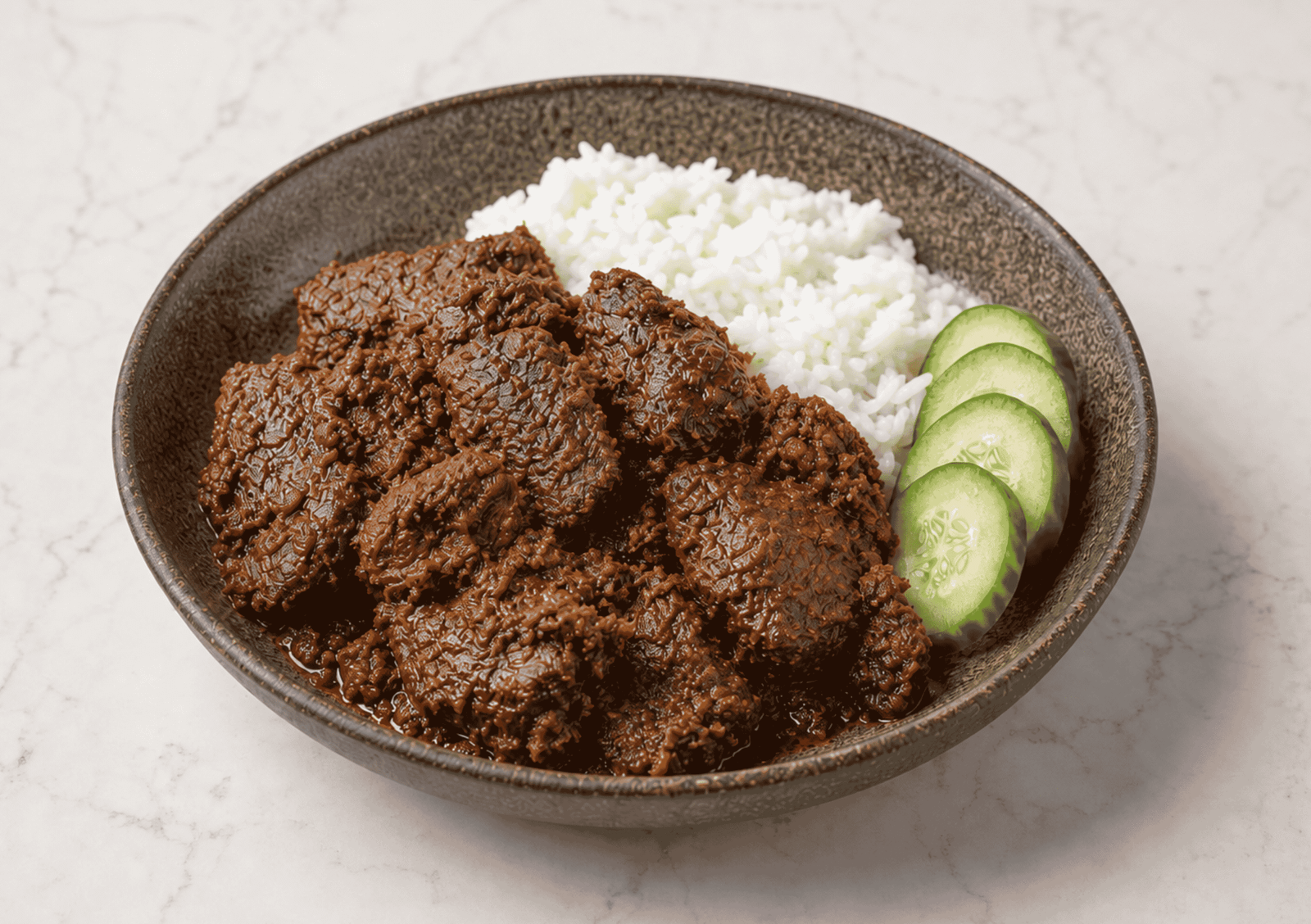
For a larger Indonesian meal, serve smaller portions beside beef rendang, chicken satay, grilled fish or plainly cooked vegetables. Sambal can be placed on the table so each person controls the heat.
Can Nasi Goreng Be Stored and Reheated?
The chilled rice is reheated when it is stir fried, so serve the finished nasi goreng immediately and do not cool it for another reheating. Rice should be reheated only once and must be steaming hot throughout.
Prepare only the amount needed. The bumbu can be made earlier in the day and refrigerated in a covered container, but fry the rice shortly before serving.
Frequently Asked Questions
Can I use freshly cooked rice?
Not directly from the saucepan. Spread it on a clean tray, let the steam escape and refrigerate it within 1 hour. Use it only when completely cold. If you need the meal immediately, use plain microwave rice directly from unopened pouches.
Is nasi goreng very spicy?
It does not need to be. One long red chilli provides colour and moderate warmth. Omit the bird’s eye chilli for a milder dish or add it when stronger heat is wanted. Chilli strength varies, so adjust by variety rather than relying only on the number used.
Can I add peas, carrots or peppers?
You can, but keep the amount modest and cook the vegetables before adding the rice. Large quantities release moisture and shift the dish towards a mixed vegetable fried rice. Finely diced carrots should be stir fried until almost tender before the bumbu is added.
Why is my rice pale?
The rice may need a little more kecap manis or more contact with the hot wok. Add only a teaspoon at a time because kecap manis is sweet. Pale rice can still be properly seasoned, so taste before adding more.
Why is my rice too sweet?
Too much kecap manis is the usual cause. Balance the rice with a small amount of light soy sauce and lime rather than adding more chilli. Measure the sweet soy sauce instead of pouring it directly from the bottle.

Indonesian Fried Rice (Nasi Goreng)
Ingredients
For the Nasi Goreng
- 500 g cold cooked jasmine rice chilled safely and used within 24 hours, or two 250g pouches plain microwave jasmine rice used without heating
- 250 g boneless skinless chicken thigh, cut into thin bite sized strips, optional
- 4 medium eggs
- 45 ml rapeseed or sunflower oil divided
- 35 ml kecap manis divided into 15ml for the chicken and 20ml for the rice
- 10 ml light soy sauce plus up to 5ml more after tasting
- ¼ teaspoon ground white pepper
- 2 spring onions thinly sliced
For the Bumbu Paste
- 120 g shallots peeled and roughly chopped
- 3 garlic cloves peeled
- 1 long red chilli stalk removed and roughly chopped
- 1 red bird’s eye chilli optional
- 1 teaspoon Indonesian shrimp paste or terasi approximately 5g, optional
To Serve
- ½ cucumber sliced
- 2 medium tomatoes cut into wedges
- 1 lime cut into wedges
- 20 g crispy fried shallots optional
Instructions
- Break apart every clump of cold rice with clean hands or a fork. In a small bowl, mix the 20ml kecap manis for the rice with 10ml light soy sauce and the white pepper. Keep the 15ml kecap manis for the chicken separate.
- Pound or process the shallots, garlic, long red chilli, optional bird's eye chilli and optional shrimp paste into a coarse paste. Do not add water.
- Heat 15ml oil in the wok or a separate frying pan over medium high heat. Fry the eggs individually or in two batches until the whites are set and the edges are lightly crisp. Cook the yolks to preference, then transfer the eggs to a plate.
- Return the wok to high heat and add 15ml oil. Add the optional chicken in a single layer and stir fry for 3 to 4 minutes until lightly browned. Add the reserved 15ml kecap manis and cook for another minute, until the chicken is cooked through with no pink remaining. Transfer it to a clean plate. If omitting the chicken, omit this step's oil and reserved kecap manis.
- Add the remaining 15ml oil to the wok and reduce the heat to medium high. Fry the bumbu for 4 to 5 minutes, stirring continuously, until the shallots have softened, the paste smells aromatic and its raw edge has disappeared.
- Increase the heat to high. Add the cold rice and stir fry for 2 minutes, breaking apart any remaining clumps. Pour the prepared kecap manis and soy mixture around the hot sides of the wok. Return the chicken, if using, and toss until the grains are evenly brown.
- Stir fry for another 2 to 3 minutes until the rice is steaming hot, separated and catching very lightly in places. Add the spring onions and toss for 30 seconds. Taste and add up to 5ml more light soy sauce only if needed.
- Divide the rice between four warm plates. Top each serving with a fried egg and add cucumber, tomato, lime and optional crispy shallots at the side. Eat immediately.
Notes
- The preparation time assumes the cooked rice is already cold. If cooking rice specifically for this recipe, allow additional cooling time.
- Cooked rice must be cooled quickly, refrigerated within 1 hour and used within 24 hours. Never use rice left at room temperature for several hours.
- Plain microwave jasmine rice can be used directly from the packet without heating. Break up the grains before adding them to the wok.
- A wide pan is important. If your pan is smaller than 30cm, make half the recipe so the rice fries rather than steams.
- Kecap manis is thick Indonesian sweet soy sauce. It is not the same as ordinary light or dark soy sauce.
- To replace the 35ml kecap manis, gently simmer 30ml light soy sauce with 20g dark brown sugar until slightly syrupy, then cool it. Use it in the same divided amounts and omit the additional 10ml light soy sauce from Step 1 until the final tasting stage.
- Shrimp paste is optional but contributes savoury depth. It contains crustaceans and must be omitted for anyone with a shellfish allergy.
- If the chicken is omitted, leave out the 15ml oil and 15ml kecap manis assigned to Step 4. The rice seasoning quantities remain unchanged.
- The eggs may be cooked until the yolks are fully set when preferred or when serving anyone who should avoid lightly cooked eggs.
- The rice is reheated once during stir frying. Serve immediately and do not cool it for another reheating.